Home Blog

New Restaurants to Try in Boston, November 2026

0

News

New and exciting restaurants to check out, plus good reasons to visit older spots.

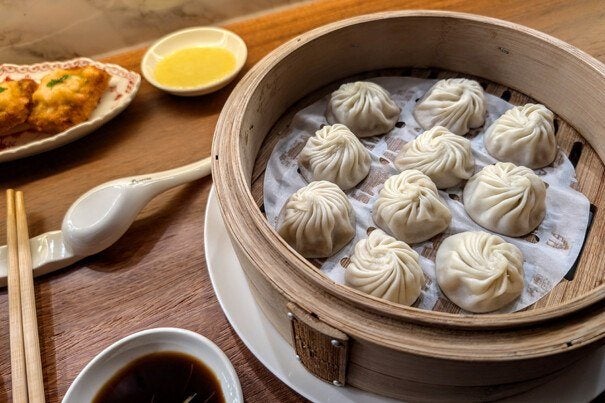
Xiao long bao at Zhu, with crispy shrimp toast in the background. / Photo by Rachel Leah Blumenthal

November is for soup dumplings and hand-pulled noodles: Luckily we’ve got several recent openings specializing in each. (Perfect for cold weather, but just as good for these eerily warm 70-degree days.) We’re back with our monthly where-to-eat guide: new restaurant openings, expansions and revamps of existing businesses, and a couple upcoming debuts we’re watching closely. This month’s list includes a cozy Irish pub, pretty pastries, several exciting Chinese restaurants, and more. (Check out last month’s guide here.)

Jump to: 

Also, check out recently updated guides: Top 50 restaurants in Boston | Top new restaurants in Boston | (Allegedly) haunted restaurants around Boston | Cider doughnuts | Clam chowder | Harvard Square restaurants | Martha’s Vineyard restaurants | Pumpkin patches | Salem restaurants

New Restaurants to Try This Month

Recent (or imminent) openings to check out.

Black Bamboo (West End)

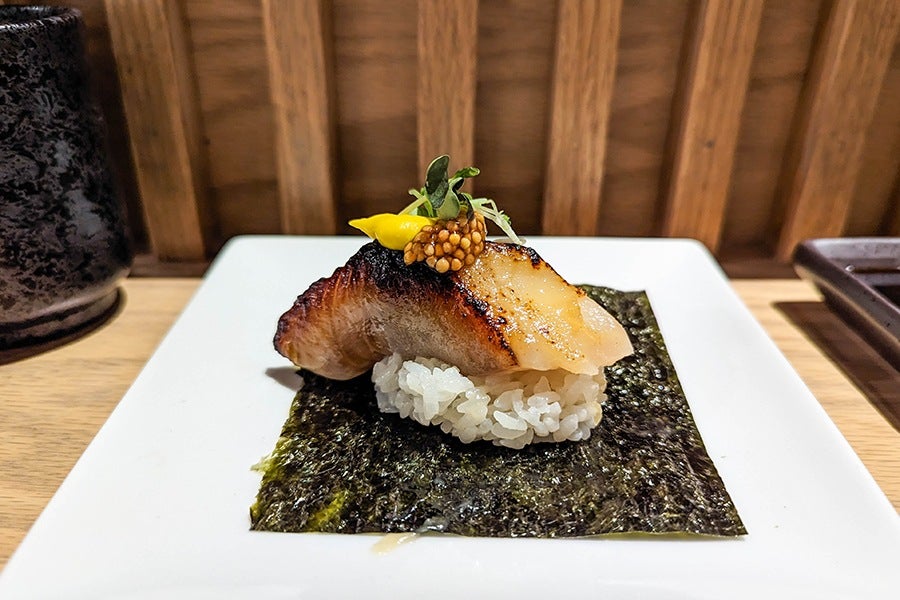
Canal Street has a new, uh, “eat-tertainment” venue: part sushi bar and Asian fusion restaurant, part bar and lounge, a short walk from TD Garden. Pregame with Korean fried chicken wings and mango sticky rice cocktails; celebrate a win with wagyu-and-uni handrolls topped with caviar and gold flakes. (Sushi fans, take note: Black Bamboo’s kitchen team comes from the recently closed South End stalwart Oishii.)

57 Canal St., West End, Boston, 617-668-6088, blackbambooboston.com.

A person with a tattoo on their upper arm is holding a bottle of red wine, pouring it into one of two wine glasses on a round black table. The table also has small bowls containing snacks such as chips, olives, and possibly nuts, set against a wooden bench and dark red paneled walls.First Crush. / Photo by Ling Zi

First Crush (Somerville)

The latest pop-up-to-brick-and-mortar success story, Gabrielle Malina’s wine-focused event series has evolved into a Union Square wine bar. Watch for wines from the Iberian Peninsula and beyond; wine-friendly snacks, like cheeseboards, tinned fish, and olives; and vinyl nights.

259 Washington St., Union Square, Somerville, firstcrushboston.com.

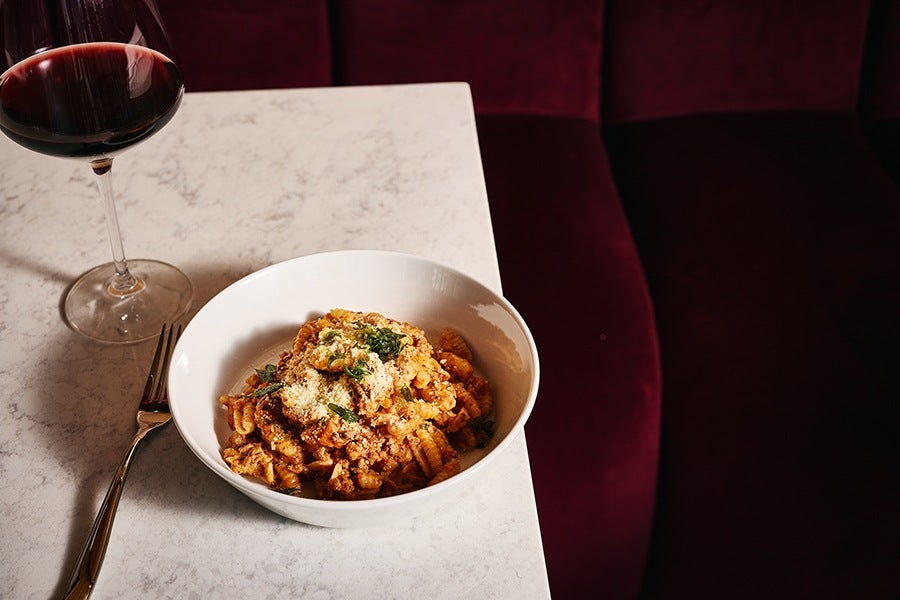
A white bowl filled with pasta topped with grated cheese and chopped herbs, placed on a white marble table. Next to the bowl is a fork and a glass of red wine. The background features a dark red upholstered seat.The Moseley’s cavatelli Bolognese. / Photo by Michael Piazza

The Moseley (Downtown)

Head up, up, up to the ninth floor of the shiny new tower above South Station for something quite a bit nicer than your usual train station grab-and-go dining. This full-service restaurant invites lingering before your trip over lobster rolls, piri piri chicken, cavatelli Bolognese, and wine.

682 Atlantic Ave., 9th floor, Downtown Boston, the-moseley.com.

Saint Brigid’s Well (Somerville)

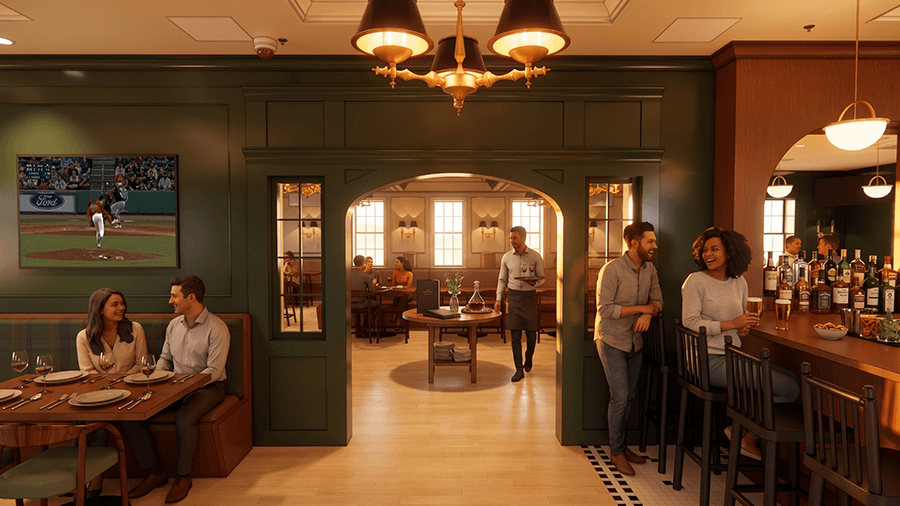
Nature is healing: Magoun Square has a saloon and a pub once again, following the 2021 closure of Dark Horse Public House. Irish pub Saint Brigid’s Well is now open in the former Daddy Jones space across from Olde Magoun’s Saloon, and the Irish-Chinese spice bag—crispy chicken, pepper, and onions in curry spices—is already proving popular. We can’t wait to see what the staff does with the expansive patio space come spring.

525 Medford St., Magoun Square, Somerville, stbrigidswellpub.com.

Xi’an Cool Noodle (Cambridge)

One of two recent openings spotlighting Northwestern Chinese cuisine—see also: Xi’an Famous Foods below—Xi’an Cool Noodle features liangpi (cold skin noodles) and thick, hand-pulled biangbiang noodles with garlic and chili. The restaurant also touts its house-made, 3o-ingredient chili oil and rou jia mo, flatbread sandwiches stuffed with braised pork. Find it inside the Lesley University Porter Exchange building in the former Yume Ga Arukara space. (Yume has since moved to a bigger space at the front of the same building.)

1815 Massachusetts Ave., Porter Square, Cambridge, xiancoolnoodlema.com.

Wu Li Xiang (Cambridge)

Meanwhile in Central Square, Shanghai cuisine stars at a new spot focused on xiao long bao (soup dumplings). Wu Li Xiang’s concise menu also includes a handful of other items, including pork-and-bamboo soup, chili oil shrimp wontons, and rice ball soup for dessert.

411 Massachusetts Ave., Central Square, Cambridge, 857-999-2211, instagram.com/wulixiang.cambridge.

Zhu (Back Bay)

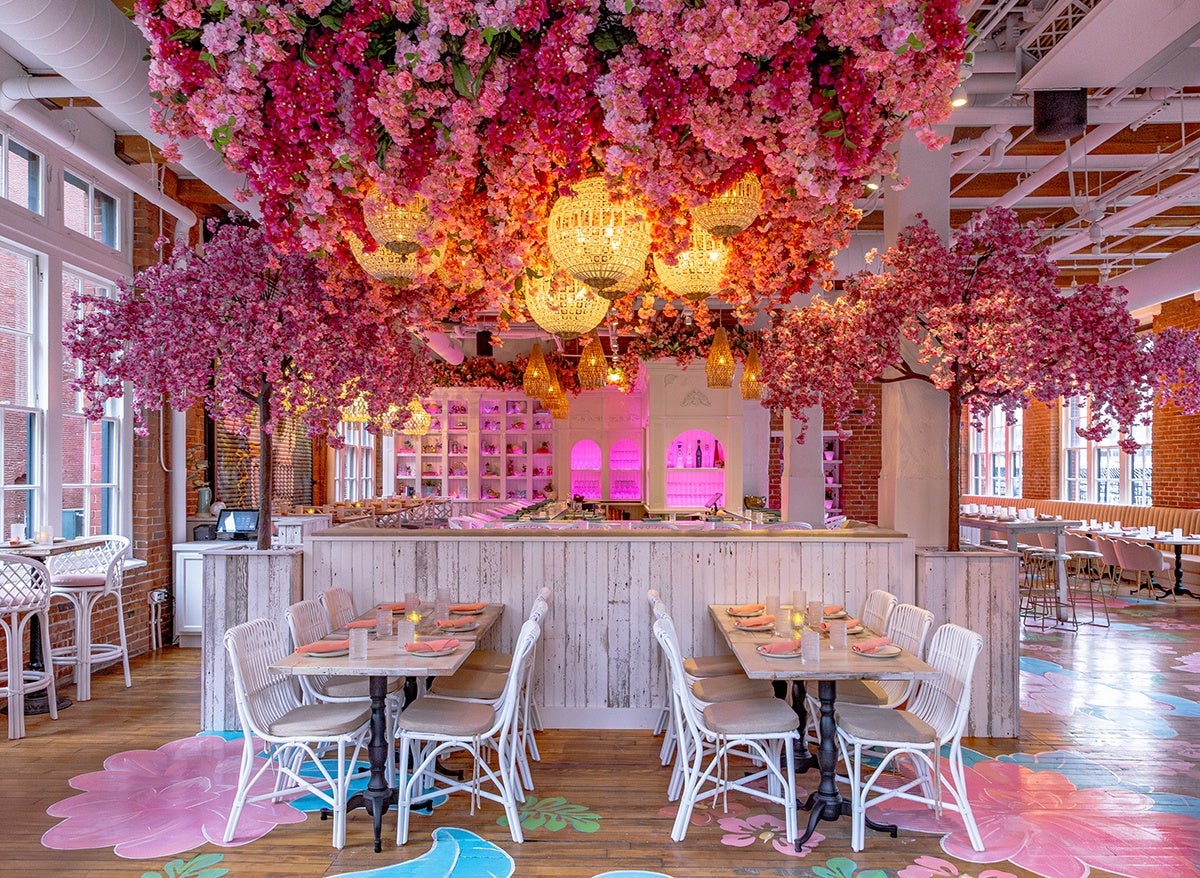
For soup dumpling fans on the other side of the river, the swanky, two-story Zhu awaits with truffle-and-Berkshire-pork-stuffed xiao long bao, apple char siu puffs, and crispy shrimp toast. Also: dessert dumplings (chocolate mochi or lava custard). Aside from the spiral staircase—and even that was completely redone—you’d never know this was the longtime Lir space, with the cozy Irish pub vibes replaced with a decidedly modern, date-night ambience.

903 Boylston St., Back Bay, Boston, 617-888-2388, instagram.com/zhuboston.

New Locations of Familiar Restaurants

Expansions and moves.

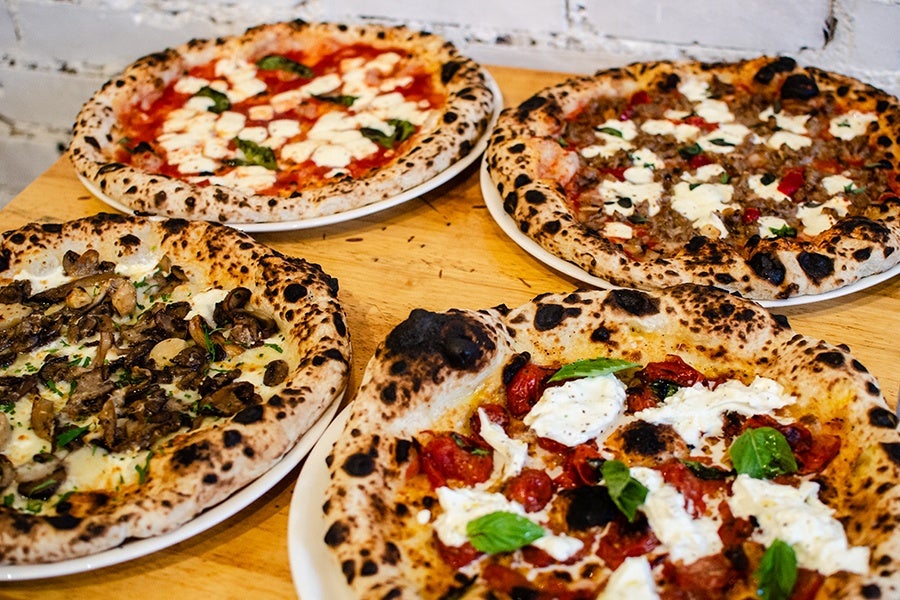
A quartet of leopard-spotted pizzas with various toppings sits on a table.A selection of Ciao! pizzas at the Somerville location. / Photo by Rachel Leah Blumenthal

Local Favorites

Pizza fans, good news times three: Ciao! Pizza and Pasta, the Chelsea-born Neapolitan-style pizzeria whose Somerville expansion won a 2024 Best of Boston award, has expanded again, this time to Lynn (41 Sutton St.). Try the salsiccia, with house-made fennel sausage and cherry peppers. Plus, two pizza pop-ups have put down roots. Scrappie’s Pizzeria, a sustainability project using leftover bread from local restaurants in its pizza dough, opened a Beacon Hill brick-and-mortar location (42 Charles St.). Doors open at 4:30 (pies topped with ample parm come out of the oven 5 to 9 p.m. or sell-out) Wednesday through Sunday. And the Old Friend pop-up—slow-fermented, crisp-edged, Detroit-style rectangles—now has a West Roxbury storefront (5272 Washington St.).

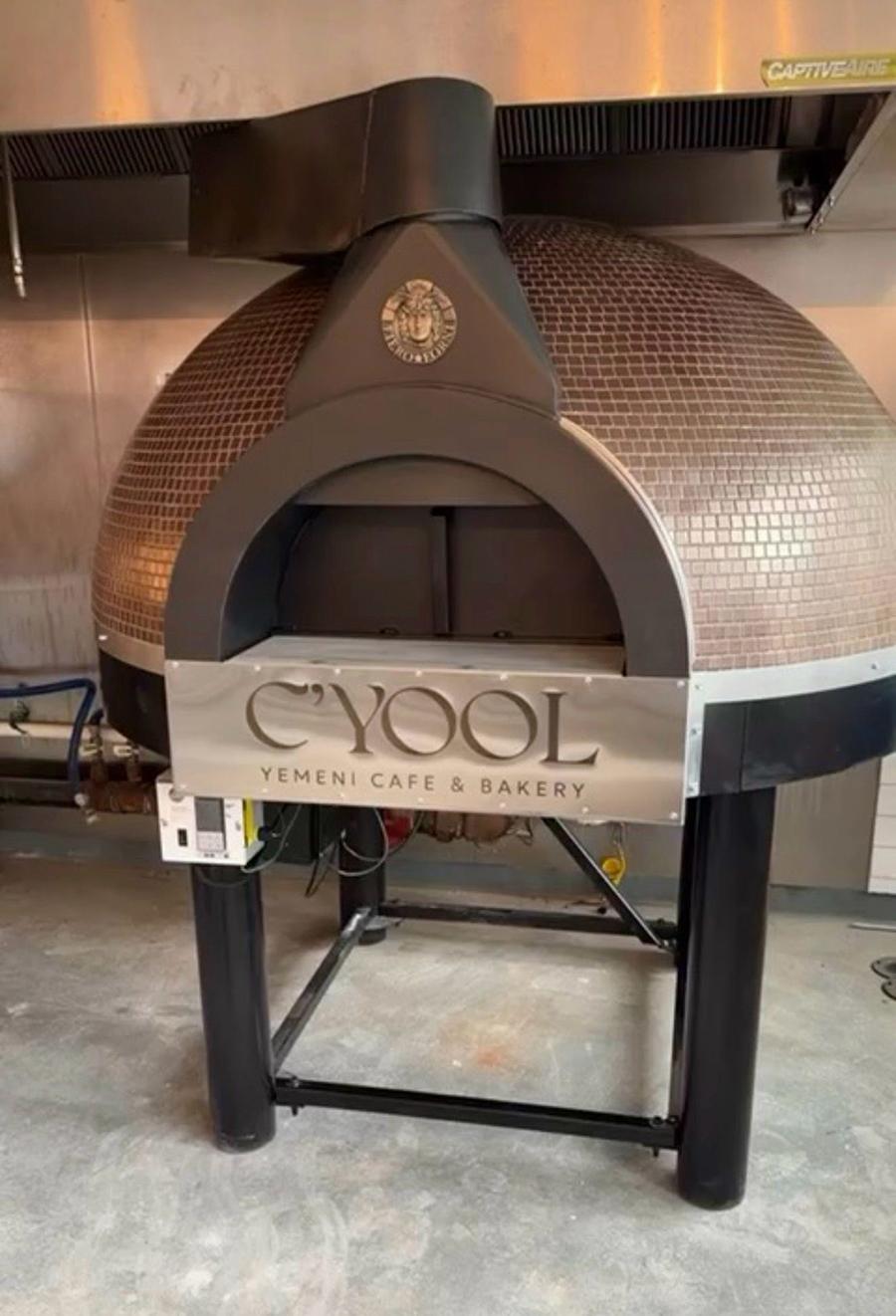
Local cafés are expanding, too. Best of Boston bakery Michette, whose tiny original location in Somerville frequently has lines out the door for tasty pastries, has added a bigger sibling in Cambridge’s Inman Square (305 Webster Ave.). We suggest starting with the spanakopita croissant, cardamom bun, and any cookie. Boston’s Caffè Ducali will have a spacious Winchester sibling any day now (959 Main St.), complete with this gorgeous brick oven and room for birthday parties and cooking classes. And French bakery Colette—beloved in Medford, Melrose, and Boston’s South End—has just expanded to Arlington (681 Massachusetts Ave.) with pâtisserie and viennoiserie galore.

The Mushroom Shop & Market—forager Tyler Akabane‘s delightful destination for (culinary) mushrooms, artisanal pantry items, and mushroomy trinkets—has moved from Somerville to Cambridge (484 Cambridge St.). It’s a fun place for fungi lovers to browse, but we’re also big fans of the home-delivery monthly mushroom club.

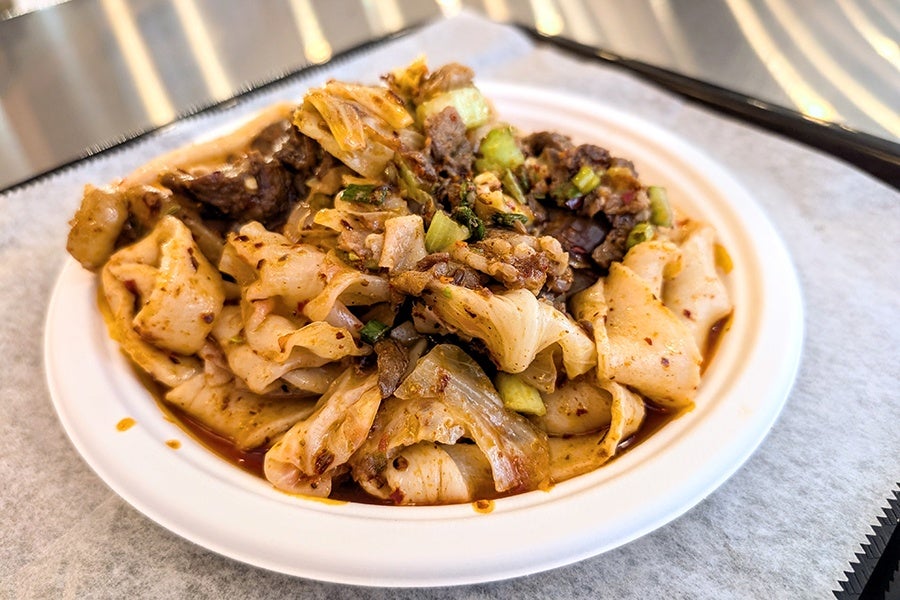
Wide, flat noodles mixed with pieces of cooked beef, chopped green onions, and cabbage, all coated in a reddish-brown spicy sauce, served on a white disposable plate.Spicy cumin lamb hand-ripped noodles at Xi’an Famous Foods in Boston’s Downtown Crossing. / Photo by Rachel Leah Blumenthal

Out-of-Towners

Flushing, New York-born hand-pulled noodle chain Xi’an Famous Foods—endorsed by the late Anthony Bourdain, among other food-world celebs—has finally made its official Boston debut, over 14 years after announcing plans to expand here. (This Downtown Crossing brick-and-mortar location [255 Washington St.] was preceded by a now-closed Roxbury ghost kitchen last year.) The fast-casual spot features ordering kiosks and a large window into the kitchen so diners can watch the noodle-pulling onsite. For your first visit, try the spicy cumin lamb noodles; when you return, venture into the dumpling and burger options.

Cruller alert, courtesy of another New York group: Greater Boston’s third location of famed restaurateur Danny Meyer’s Daily Provisions opens in Back Bay on November 4 (501 Boylston St.). With the opening of its newest all-day café, the company is debuting a Boston cream pie cruller at the three local outposts.

And from warmer climes, another all-day café: Pura Vida Miami opens November 5 in Harvard Square (95 Mount Auburn St.) with avocado toast, froyo, açaí bowls, salads, and more.

Older Restaurants Doing New Things

New services and such.

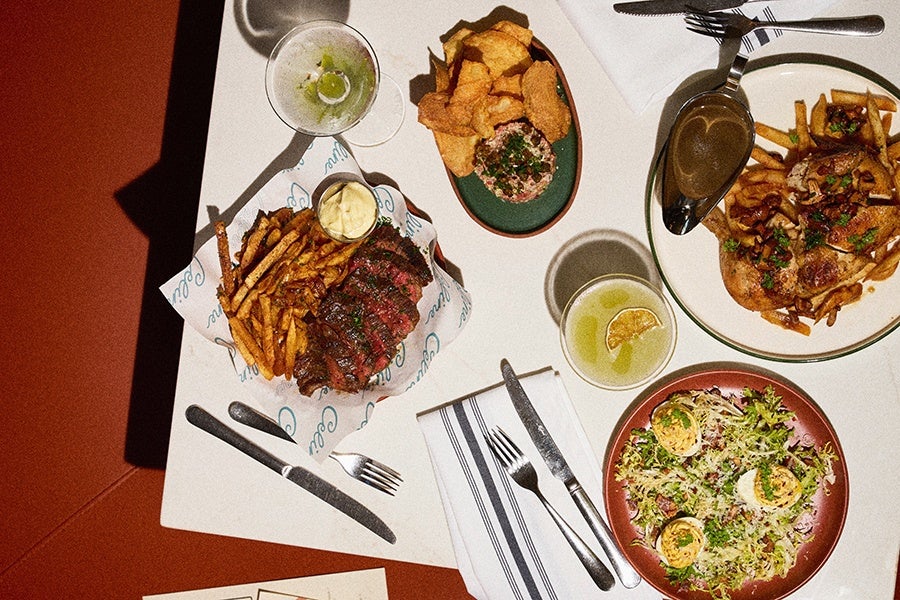
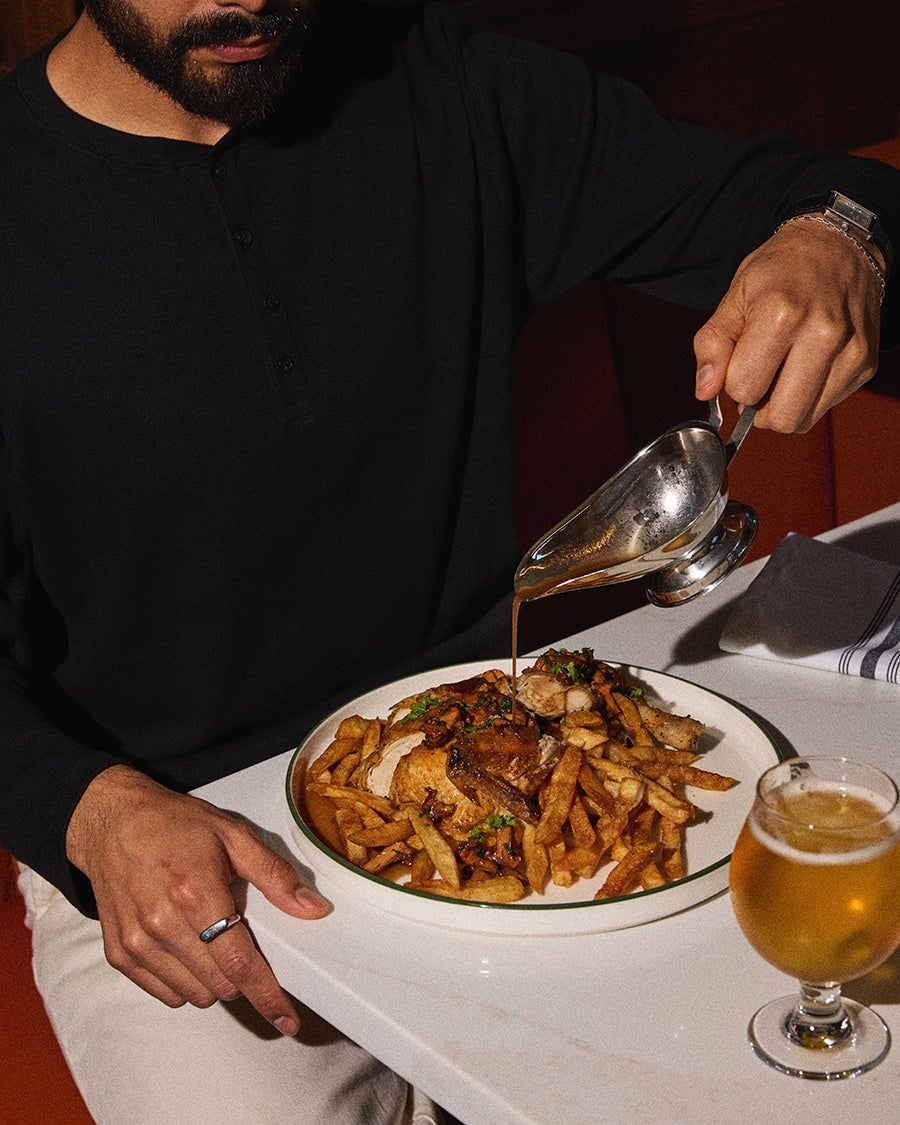
A table set with various dishes including a plate of sliced steak with fries and a small cup of sauce, a plate of potato chips with a dip topped with herbs, a plate of roasted chicken served with fries and a gravy boat, and a salad plate featuring deviled eggs on a bed of greens. There are also two cocktails, one with a lime garnish and the other with a lemon slice, along with utensils and napkins.Celine’s steak frites, steak tartare, half chicken, and Lyonnaise salad. / Photo by Emily Kan

Two new lunch services of note: French-Canadian Fort Point newbie Celine (324 A St.)—from the group behind Baleia, SRV, and more—is now serving weekday lunch (11:30 a.m. to 3 p.m.), with weekend brunch on track to start later in November. Dishes include rotisserie chicken croque monsieur, steak frites, and more. And in Brookline, Best of Boston Korean restaurant Iru (238 Washington St.), which specializes in samgyetang, ginseng chicken soup, is now serving lunch Friday through Sunday. The three lunch sets feature samgyetang, bulgogi, or simmered mackerel with rice and seven banchan.

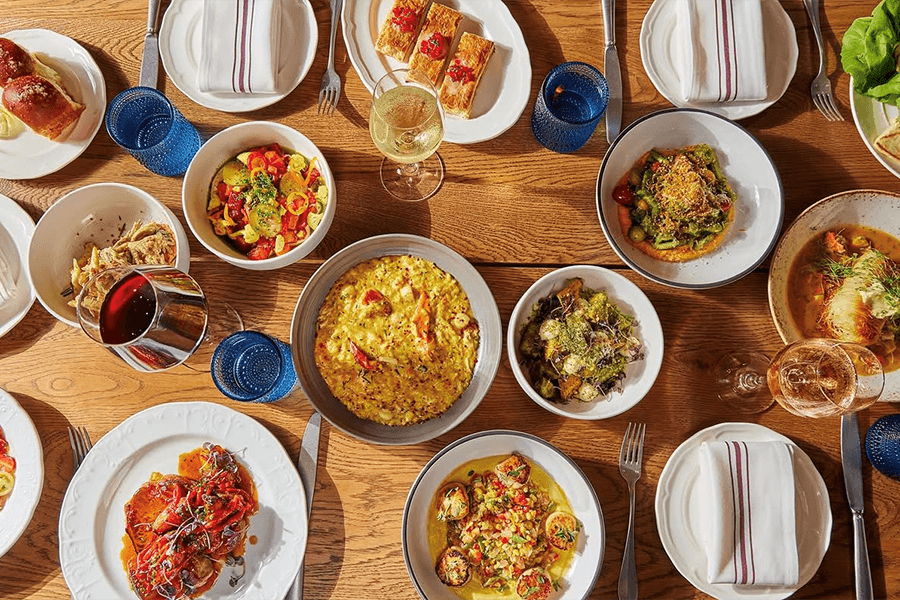
And a new restaurant within an old bar: The South End’s Wink & Nod, a cocktail bar/culinary incubator, has welcomed its latest resident chef. Dandelion, by chef Anthony James, offers coastal French cuisine featuring New England seafood. Think: Maine lobster thermidor, littleneck clams marinière, and grilled whole branzino with citrus-saffron beurre blanc.

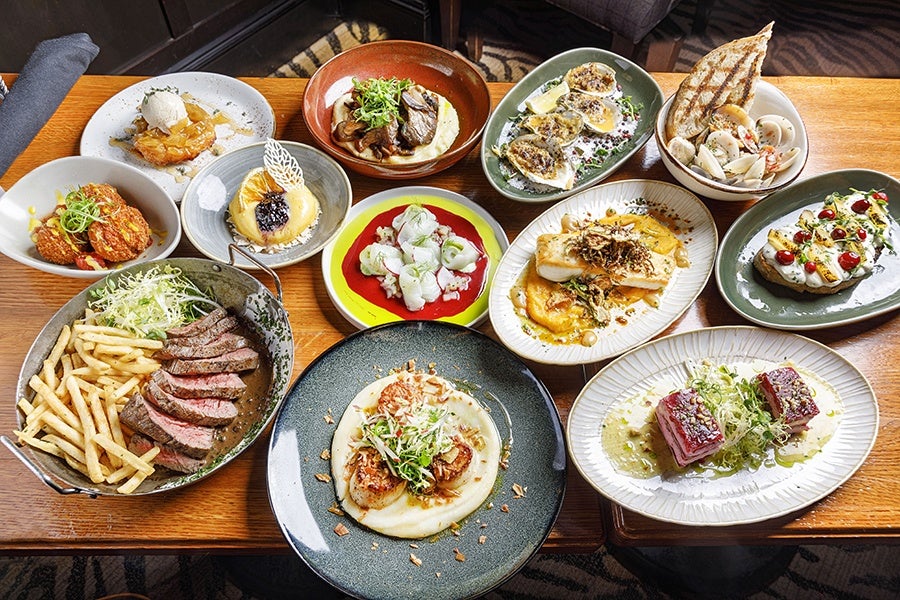
A wooden table displays an assortment of plated dishes including a pan with sliced steak and French fries, a plate with seared scallops on a creamy puree, a dish with grilled fish topped with crispy onions and sauce, a plate of oysters with lemon wedges, a bowl of clams with grilled bread, a plate of sliced rare beef with greens, a dish with a dessert topped with a white decorative piece and jam, a plate with a white fish ceviche garnished with herbs, a dish with fried croquettes topped with greens, and a dessert plate with a scoop of ice cream on a caramelized fruit base.Wink & Nod’s newest culinary residency, Dandelion, late 2026. / Courtesy photo

Looking Ahead

Intriguing spots coming soon (or not-so-soon).

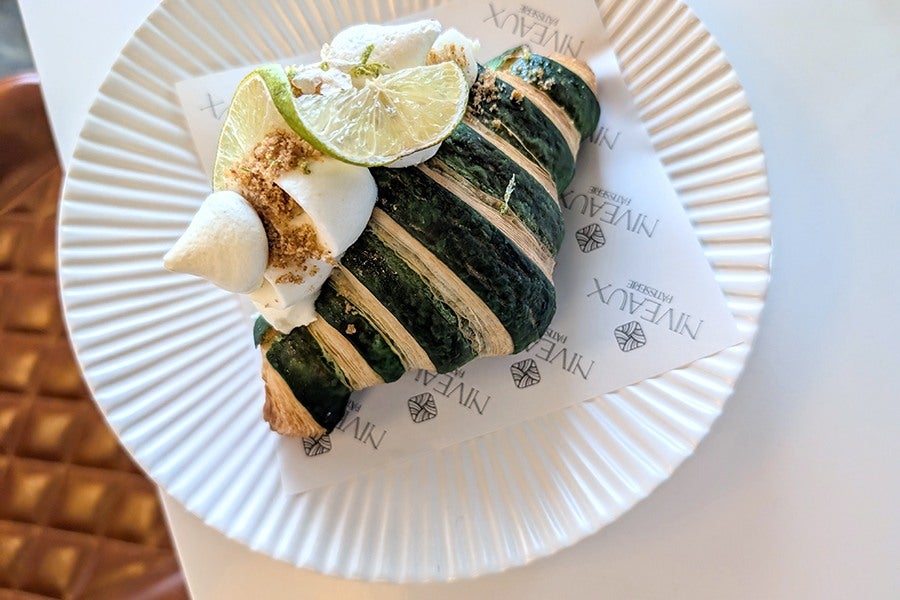
A green-striped croissant topped with whipped cream, a slice of lime, and brown sugar crumbs, served on a white ridged plate with branded paper underneath.A key lime croissant at Niveaux Pâtisserie in Quincy. / Photo by Rachel Leah Blumenthal

Niveaux Pâtisserie (Downtown)

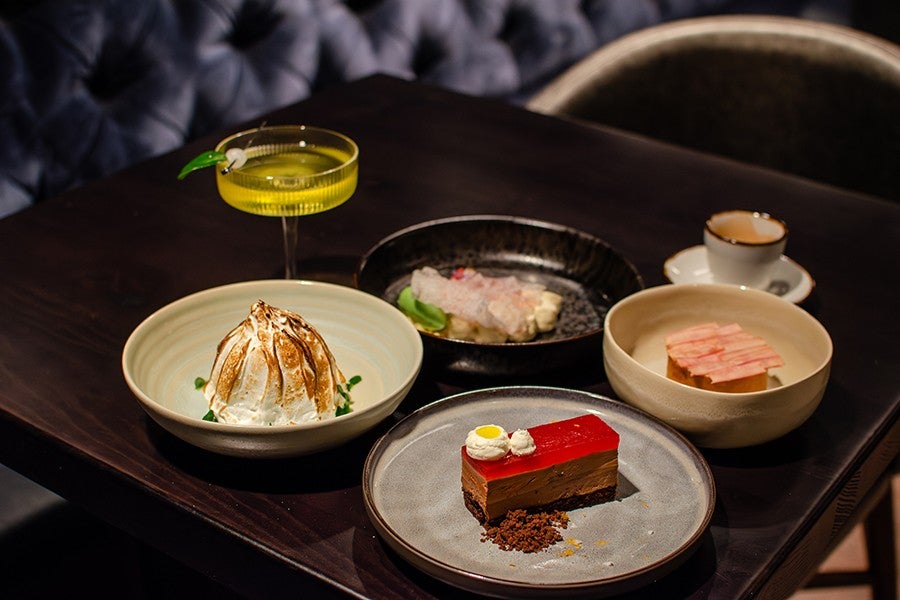
Pastry chef and cookbook author Robert Gonzalez’ destination-worthy Quincy pastry shop is expanding to Boston’s Financial District in 2027. Expect dreamy entremets, croissants, and other sweet treats that meld French and Asian baking techniques. (Fingers crossed that the original location’s tea service with dessert tower is available at the new location, too.)

75 State St., Downtown Boston, niveauxpatisserie.com.

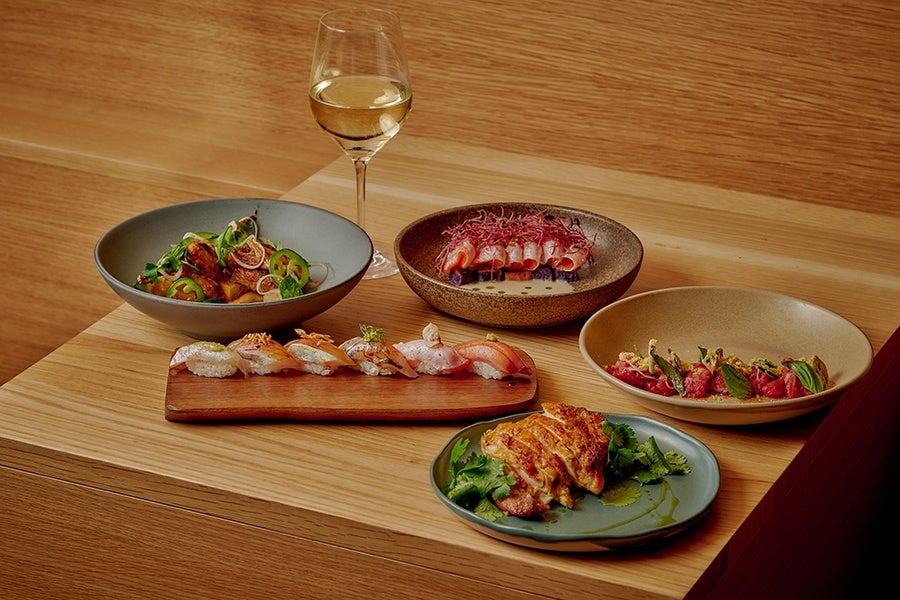
A wooden table displays an assortment of dishes including a wooden board with six pieces of sushi, a gray bowl with a dish garnished with sliced jalapeños and greens, a brown bowl with a dish topped with red sprouts, a beige bowl with a dish featuring green leaves and small yellow elements, and a green plate with grilled chicken served on a bed of cilantro. A glass of white wine is placed behind the dishes.Uchi. / Photo by Shelby Moore

Uchi (Fort Point)

Award-winning chef-restaurateur Tyson Cole is bringing his Austin, Texas-based Japanese fine-dining restaurant Uchi to Boston. The first restaurant in Cole’s now-expansive group Hai Hospitality, Uchi opened in 2003 and now has 10 locations nationwide, with four more in the works, and a variety of sibling concepts. Uchi features a wide range of nigiri, sashimi, and more, including omakase (chef’s tasting menus)—joining Boston’s crowded high-end Japanese seafood scene—and extensive vegetarian options, too.

374 Congress St., Fort Point, Boston, uchi.uchirestaurants.com.

Catch up on other recent restaurant openings:

News

New and exciting restaurants to check out, plus good reasons to visit older spots.

News

New and exciting restaurants to check out, plus good reasons to visit older spots.

News

New and exciting restaurants to check out, plus good reasons to visit older spots.

Guides

New and exciting restaurants to check out, plus good reasons to visit older spots.

Guides

New and exciting restaurants to check out, plus good reasons to visit older spots.

See all posts >>

How Boston Real Estate Agents Can Thrive During the Winter Season

0

/* =========================
CARD
========================= */
.sound-wave-box {
–bsp-media-width: 160px;
–bsp-content-gap: 16px;
–bsp-soundbox-media-button-size: 66px;
–bsp-content-width: calc((100% – var(–bsp-content-gap)) – var(–bsp-media-width));
/* min-height: 180px; */
/* display: grid;
grid-template-columns: 130px 1fr; */
display: flex;
align-items: flex-start;
flex-wrap: wrap;
gap: var(–bsp-content-gap);
max-width: 100%;
padding: 18px 22px;
border-radius: 14px;
background: #f4f7f8;
margin-bottom: 16px;
}

.sw-responsive-wrapper .sw-title {
display: none;
}

/* =========================
IMAGE
========================= */
.sw-cover-wrap {
width: var(–bsp-media-width);
height: 110px;
border-radius: 0;
overflow: hidden;
flex: 0 0 auto;
}

.sw-cover {
width: 100%;
height: auto;
object-fit: cover;
}

/* =========================
RIGHT CONTENT
========================= */
.sw-content {
display: flex;
flex-direction: column;
gap: 10px;
width: var(–bsp-content-width);
}

/* TITLE */
.sw-title {
margin: 0;
font-size: 20px;
font-weight: 500;
line-height: 1.3;
color: #444444;
}

/* =========================
CONTROLS ROW
========================= */
.sw-controls {
display: flex;
align-items: center;
gap: 14px;
/* height: 56px; fixed control row */
}

/* PLAY BUTTON */
.play-btn {
font-size: var(–bsp-soundbox-media-button-size);
width: 1em;
height: 1em;
border-radius: 50%;
border: 4px solid #9aa5b1;
background: transparent;
display: flex;
align-items: center;
justify-content: center;
cursor: pointer;
flex-shrink: 0;
}

/* Dynamic button position control */
.sw-controls .btn-left {
order: 0;
}

.sw-controls .btn-right {
order: 1;
}

@media screen and (min-width: 1200px) {
.sound-wave-box.title-bottom .sw-content {
flex-direction: column-reverse;
}
}

@media screen and (max-width: 1200px) {
.sound-wave-box.title-bottom {
flex-direction: column-reverse;
}
}

.play-btn .pause,
.play-btn .play {
font-size: .25em;
}

.play-btn .pause {
display: none;
}

/* TIME */
.sw-time {
font-size: 13px;
color: #9aa5b1;
min-width: 45px;
}

/* WAVEFORM */
.wave-canvas {
flex: 1;
height: 100%;
display: flex;
align-items: center;
}

.wave-canvas canvas {
width: 100%;
height: var(–bsp-soundbox-media-button-size);
display: block;
}

/* LOADING */
.loading-text {
font-size: 12px;
color: #9aa5b1;
}

@media screen and (max-width: 1199px) {
.sound-wave-box {
/* –bsp-media-width: 160px;
–bsp-content-gap: 16px;
–bsp-soundbox-media-button-size: 66px; */
–bsp-content-width: 100%;
}

.sw-title {
display: none;
}

.sw-responsive-wrapper {
display: flex;
align-items: flex-start;
gap: 10px;
}

.sw-responsive-wrapper .sw-title {
display: block;
}
}

@media screen and (max-width: 575px) {
.sound-wave-box {
–bsp-media-width: 80px;
–bsp-soundbox-media-button-size: 44px;
}

.sw-cover-wrap {
height: auto;
}

.sw-title {
font-size: 16px;
}
}

How Boston Real Estate Agents Can Thrive During the Winter Season

How Boston Real Estate Agents Can Thrive During the Winter Season


00:00

00:00

Loading waveform…

If you are a Boston real estate agent heading into the Winter of 2026-2027, you are within your rights to ask some hard questions about your current brokerage. “Am I at the right real estate office?” “Can they provide me with enough listings, leads and technology to be successful during the tough times?” With high interest rates and a stubbornly slow buyers and sellers’ market– those questions probably matter more than nearly any other time in real estate. Long gone are the days of 2-3 percent interest rates where nearly anyone could close and the market moved fast. So you may be asking yourself – what are my five next moves?

Many agents spent 2026 waiting for rates to come down. Instead, the Federal Reserve raised its benchmark rate by a quarter point on September 16, 2026, to a range of 3.75% to 4.00%. Mortgage rates followed. Freddie Mac’s weekly survey put the 30-year fixed at 7.32% on October 22, 2026, compared with roughly 6.34% a year earlier. Buyers and sellers who were inching back into the market are once again sitting on the sidelines. It’s a brutal game if you are only locked into residential sales and are boxed out or don’t have the knowledge of the multi-family sales or apartment leasing market.

The apartment rental side of things has also evolved, and many real estate companies simply didn’t have the technology or know how to adapt.

Since August 1, 2025, Massachusetts law has required that the party who hires the broker pays the broker’s fee. At the same time, apartment availability across Boston has climbed to its highest level in many years. Agents who relied on primarily tenant-paid fees and a hyper-tight market are learning that the old playbook no longer works. New technologies and systems needed to be deployed to keep top companies performing at a high level.

The confluence of high interest rates and changing real estate laws have exposed some harsh truths for traditional real estate companies regarding durability, adaptability and controlling their own destiny. Nearly all Boston real estate offices never invested enough in their own proprietary local technology search engine optimization (SEO) and Artificial Intelligence Engine Optimization (AIEO) to thrive in tougher times. Most rely on off-the-shelf software or are held hostage to the national online real estate portals that often don’t have the influence and impact of custom-built, localized real estate technology. In a stalled or shifting market, those custom advantages can often separate offices that grow from the ones that shrink. The results can often be quick and dramatic.

In the months ahead, you will most likely see more Boston offices consolidate, merge, or close their doors. There are several real estate offices shopping for buyers as we speak. Adapt or perish has always been the golden rule of business, and real estate is no exception. If you are seeing fewer commissions and transactions, step back and ask what your brokerage is actually providing. Is it giving you new revenue streams or holding you back? Does it have the technical expertise to bring opportunities directly to you? Does it have a sound business plan for a market where rates went up instead of down? What does your company actually spend on Tech improvements? How often do they tell you to keep spending more of your hard earned money on tech that doesn’t meet your needs?

Boston Real Estate Agent in the Fall

Winter 2026-2027 Is a Great Time to Switch to an Advanced Real Estate Ecosystem

“Times change and we change with it” -it’s an old expression that rings true today! The multifamily and residential sales market have changed. The buyers and sellers have altered their tastes and NOI assumptions. Renting apartments has also shifted to better decision making engines helping consumers and owners come together faster. Today, Boston’s Real-Time Availability Rate (RTAR) is 3.35%, up 53.67% from last year, and the Real-Time Vacancy Rate (RTVR) is 2.59%, up 68.18%. Rents can go up and down in many areas quite quickly – and incentives can change too! That comes after a spring when citywide availability passed 8% and kept rising at a time of year when apartment inventory normally levels off. Softer hiring, federal research funding cuts and flattening student enrollment are all part of the picture, and larger 3- to 6-bedroom apartments are taking longer to rent. You can track the live numbers on our real-time data page. When you have the best real time data – you are more confident. Confidence can probably help you close a lot more deals than some bloviating sales manager that tells you to spend more money on marketing and try harder.

What if it isn’t your fault? What if you just need a better solution?

More inventory does not mean less opportunity- quite the contrary. It means more landlords, investors and clients need help. No landlord wants a unit sitting empty through a Boston winter. They want agents who can price correctly, market aggressively and fill units fast. If you have the listings and the reach, a higher-inventory market is a market full of motivated landlords. When you rent properties for landlords – they want you to help them in all facets of real estate. Many landlords and investors want you to help them find their next property to buy and renovate – or sell and trade up in a 1031 like kind exchange.

A lot of struggling agents at traditional real estate offices see the winter as the “slow season.” That couldn’t be further from the truth if you are working at the right office powered by the right technology stack. If your brokerage encourages you to take this time off, it likely has access to the same limited pool of tired listings the entire city does. If your broker tells you it is slow every Winter, it’s time to recognize that all brokerages are not created equal. Ask yourself: “Does my office have any competitive advantages in this marketplace?” “How many offices do they have that are networked together – how many keys do they have- how many exclusive listings do they have?” Not all real time real estate database are equal. Some tech stacks have a bigger orbital draw through years of SEO and AIEO. Some brokers might not even know what those two phrases mean and how to implement that to bring business in the door.

What if your real estate office had a technology platform that brings in new listings EVERY SINGLE DAY?

What if the breadth and scope of its reach gave you great listings to show and close across the entire Massachusetts Area? During the winter, you want to be with an office that expands the geographic range of your closing footprint, and a platform that serves up opportunities through massive eyeball reach. Have you ever asked your broker how many unique visitors come to your company site each day? What if your broker doesn’t even know that answer? Do you think you would be able to close more deals if your website had more visitors such as investors and landlords, not just renters. Compare that traffic to the number of agents in your office. If your broker can’t tell you, that could be a signal you are in the wrong place at the wrong time in the real estate cycle. The bottom line is that it often takes decades to acquire and work with the best landlords and investors in the state of MA. Success doesn’t come over night or even in a few years. Landlords and investors and often drawn to the most heavily trafficked websites because those companies produce.

Maybe it is time to part ways with that slow residential sales office and widen your focus to Boston multifamily homes, commercial and investment properties. You can also earn far more consistent monthly commissions in apartment leasing while you pursue large multifamily sales listings. Rentals are about more than a quick leasing commission. Under the new broker fee law, landlord-paid leasing work puts you in direct, recurring contact with the owners who run multifamily inventory across the entire state of MA.

As a landlord and developer, I can tell you I always appreciate agents who rent my properties, and I think of them first when I’m interested in selling one of my multifamily buildings. Having worked in this space spanning three decades, I can tell you most landlords feel the same way. Multifamily sales listings can also deliver much larger commissions than single-family homes. If you worked in an environment that fed you leasing opportunities and multifamily sales at the same time, your commissions could take off from multiple different touch points. Think of it this way – nothing would change in your quest for residential sales – but that would now be just one branch of a money-making tree. In challenging times – doesn’t it make more sense to widen your real estate fishing net?

Boston real estate agent

LEADS, LEADS, LEADS

High-quality sales and rental leads are vital to your success. If you are sitting in your office and the phone isn’t ringing every ten minutes, something isn’t right. What is your office doing to get the phones ringing? When leads are scarce and your broker tells you to call expired listings again, or hit your “circle of influence” for the 20th time, it’s probably time for an office change. Don’t just listen to what your broker tells you; ask what they are doing for you. Are they showing you a technology road map for 2027 that makes you more efficient and powerful? What type of technology training are they providing to you?

What do they spend each year on search engine optimization? How are they implementing AI into your daily activities? What unique localized and optimized real estate technologies does your office give you? If your broker keeps sending you to another training session you have to pay for, they may just be stringing you along. Are they still hoping rates will come down next year? Hope is not a course of action. In 2024 and 2025 a lot of brokers hoped for interest rate drops and in September 2026 the Fed raised rates instead. Waiting for rates to come down is not a business plan. You most likely need to make money today, not in 2027. Driving for Uber or taking a second job is probably not going to make you happy in your real estate career.

Practice Makes Perfect

The more leads you have, the better you become at closing deals. Every call is practice in pre-qualifying clients and making your pitch better. It works like a workout: your closing muscles stay in shape and grow stronger. Without leads, those skills go unused. You get rusty, and your closing ratio can drop sharply. Top producers in every sport and industry practice their fundamentals daily, and real estate is no different. Players like to play, and real estate agents get better when they have more clients.

Is your brokerage giving you enough leads to stay in game shape? Or does it tell you to mindlessly prospect for 12 hours a day because it has nothing else to offer? Right now, many Massachusetts agents are struggling to get the lead volume they need to keep closing and stay positive. Sometimes brokers keep the best leads for themselves and hand agents the weak ones, leaving agents to waste time and gas money. Are you competing with your broker? If so, look at offices where the broker hands out the best leads rather than keeping them.

Massachusetts is full of potential, but without the right technology, marketing, leads and inventory, those opportunities might as well be ghosts. Higher rates, rising rental inventory and a new broker fee law have reshaped the landscape. You need leads. How many can your office give you each week? That number will make all the difference in your financial success. If you go check out any new brokerage – ask them how many leads they can guarantee in writing that you can work with per month. Be direct – have them show you their lead portal. If they don’t have a lead portal and they tell you to go bother your Facebook friends from your high school class – it might be time to run.

The Listing to Agent Ratio is Key

Is your current brokerage giving you the most leads in the industry? If so, can it prove it in writing? Have you studied their roster and calculated the Listing to Agent Ratio (LTAR)? In other words, have you counted how many sales and rental listings a company’s website carries against the number of agents who work there? The results may surprise you.

The math is worth your time. You may have been dazzled by a charming recruiter who took you to lunch and promised you’d do better at their office. Let’s be candid – recruiters have a job to do. Recruiters want to recruit you and will often leave out critical components to your success. They may have pointed to a giant agent roster. But how many of those agents are working other jobs to make ends meet? A massive roster with few listings and leads should make you question what is being sold to you. Ask recruiters the hard questions – how many leads – keys – listings do you have? Can I show and close properties seven days per week?

If half the agents at an office are driving for Uber or painting on the side, that says a lot about the office and the brand. If the business were doing so well, why would so many need side hustles? The resources, listings and leads you receive define your path in our competitive real estate market. You will always benefit from more sales and rental leads, and you need them now. Look for offices with the most unique visitors per agent. Math is math. LTAR and unique visitor traffic make a massive difference in an agent’s success.

Handshake joining new real estate office

Make the Right Choice to Thrive as a Boston Real Estate Agent

Evaluate your current brokerage with a discerning eye and weigh what it offers against your goals. What worked in the low-rate, tenant-paid-fee, near-zero-vacancy market of a few years ago is not producing leads for you now. Rates are above 7%, landlords pay the fee more than before, and renters have more choices than they’ve had in years. If the scales tip toward complacency, thin support or limited growth, remember that Massachusetts is not just a hub of transactions but a market of real potential. To capture it, consider aligning with a brokerage that goes beyond the traditional role: a full-stack real estate ecosystem rather than an office still running a playbook built for a different market.

Consider the brokerages powered by Boston Pads as your allies as you build your career. After all, there is a reason why Boston Pads features the largest collection of real-time Boston apartments and Boston real estate in the area. More landlords trust Boston Pads than any other platform. Every quantifiable real estate metric out there proves that our specialized system will deliver you leads and listings unlike any other traditional real estate office you have ever encountered. Our real time systems provide landlords, investors, and clients with far more value- through our unrivaled real-time data, powerful Property Owner Portal, and informative market reports. The difference is dramatic and the outcome is beneficial for any agent.

If you are a Boston real estate agent– contact us today! We invite you to a confidential interview. Let’s explore how we can help you make more money for yourself than you ever thought possible.

A Day in the Life of a Boston Pads Powered Real Estate Agent

0

A Day in the Life of a Boston Pads Powered Real Estate Agent

A Day in the Life of a Boston Pads Powered Real Estate Agent


00:00

00:00

Loading waveform…

Multifamily investment sales are often where many Boston real estate careers are built. Three-deckers, apartment buildings, and mixed-use properties change hands across Greater Boston every week, and the agents who win that business usually aren’t ones with the slickest mailers. The real estate agents that generally tend to win in the multi-family sales arena are those that develop strong value-added relationships with landlords and investors. One of the best ways to enhance and build trust with landlords and decision makers is to assist in adding value through leasing and accurate rental data. When you provide property owners with accurate real- time data coupled with a solid sales strategy- the results can often be explosive.

Professional apartment leasing agents often have a huge advantage over many other real estate agents in the multi-family sales space. They can often see things that will increase Net Operating Income (NOI) so that the property can be maximized and sold for the highest and best use. The best agents in the multi-family sales business know how to build trust within the community over time. Landlords come to learn about agents through their: reliability, durability, and effective execution in leasing. In Boston’s housing market, the difference between signing a lease and losing a client can come down to minutes, even seconds. An apartment that goes live in the morning can have multiple applications by lunchtime. Landlords really enjoy working with agents that can help them rent their places and bring them sales deals because they know that a great leasing agent talks with other numerous landlords each week.

When an agent is active in the multi-family space- landlords know they are openly exposed to a lot of off-market deals. Landlords want to be around agents with speed and knowledge of the apartment leasing ecosystem. Boston Pads has built a framework where agents can move quickly and confidently, with technology that augments their sales and leasing endeavors. When you build the most powerful full stack ecosystem in MA- landlords and investors notice and want to work with a winning team. The formula for buying and selling multi-family properties is far different than the emotional decisions that residential real estate agents have to meander through over the course of time. Landlords and investors are more math and data oriented in their approach to real estate – and having that data in front of you can often help you win more real estate listings than just simply guessing.

From Leasing to Listings: Why Multifamily Sales Starts Here

Plenty of traditional brokerages with limited search engine and Artificial Intelligence engine optimization will tell a new agent to lease for several years and then “graduate” to sales. That framing can mislead newer agents to what’s truly happening in the real estate investment world. In multifamily, leasing is the apprenticeship, the lead source, and the credibility all at once. While you don’t have to do apartment leasing for extended periods of time to be great in multi-family- it will help you tremendously if you have the right team around you helping to validate your ideas and strategies and helping lease up the units for landlords that are ready to sell. You are going to want the force multiplier effect of having a huge leasing team around you providing great data and noticing interesting trends that can help you get listings. Your leasing team around you can be your secret weapon to getting more sales. Great data and superior teamwork can help you excel at both multi-family sales and apartment leasing at the same time if you so choose to go down that route. Many agents that are having a tough time with residential sales due to the high interest rates are now noticing the value of being able to perform in multi-family sales and apartment leasing to broaden their ability to make more money.

Leasing teaches the income side of the asset, which is the side that determines value. It builds relationships with the exact people who own the buildings, years before those buildings hit the market. And it earns trust in a way that no prospecting campaign can, because the owner has already watched the agent perform. You have already built “Know-Like-Trust” with those landlords and investors. One big key is to have a huge bullpen of leasing agents and a massive landlord database where familiarity makes phones calls a breeze. Warm calling landlords rather than cold calling all day is a much better position to be in when you’re looking to expand your business.

What Boston Pads provides far beyond traditional real estate offices is scale, infrastructure, and an impeccable track record. Thousands of landlords know like and trust the Bostonpads.com platform across MA. A database of more than 20,000 landlords and over 312,000 apartments. Bostonpads has also built proprietary off-market multi-family sales software called Property Vault, which can help them be exposed to more deals than they would have otherwise. Many landlords do not want their hoopla and noise of putting a property on MLS where tons of unqualified buyers show and often disturb their renters. Mult-family sales is different than a single-family residential sale. Landlords and investors want to be much more strategic and accurate about how they want to sell their property and not cause themselves a huge unnecessary headache. We have really focused on bringing unique and powerful technologies to help landlords because we are landlords as well.

So what does a day actually look like for a Boston Pads powered agent?

agent starting day early

7:30 AM: The Day Starts Before the Office

Before coffee is finished, the day is already underway. The first notification that matters isn’t a rental lead. An owner the agent leased two units for last fall has replied to a check-in message. He’s thinking about his three-family in Dorchester and wants to know what it might be worth. That conversation didn’t come from a cold call or a mailer. It came from two years of showing his apartments, filling his vacancies, and picking up the phone. The agent was able to not only take pictures and videos of the units but also instantly shared that information to multiple agents that also might want to help get it rented asap.

Two new leads came in overnight as well, one of them a couple relocating from Chicago who want to see two-bedrooms in Somerville this afternoon. With the new Boston Pads CRM mobile app, the agent opens the lead, reviews the full details of what the clients are looking for, and sends a quick text using one of the app’s prefilled messages, all before leaving the house. By the time the clients wake up, they already have a reply and a proposed showing time.

That speed isn’t an accident. Speed and organization are critical in Boston’s fast-moving housing market. Our new CRM app gives agents the tools they need to respond quickly, stay on top of every opportunity, and move deals forward, even when they are away from the office. The CRM also has the ability to help an agent consider other options beyond leasing. Perhaps the clients aren’t interested in any of the apartments they were shown- what if we could project what they could afford if they decided to buy? What if more options equaled more opportunities to help customers?

9:00 AM: Research and Matching, Powered by Data

This is where Boston Pads powered agents have yet another real advantage. The company’s database includes more than 20,000 Greater Boston landlords and over 312,000 apartments, and it’s what makes agents credible in front of investors. Multifamily value in Greater Boston is driven by income, and income is driven by rents. An agent who has personally leased in a neighborhood all year knows what a renovated two-bedroom actually achieves, how long it takes to fill, and which line items owners consistently underestimate. When it’s time to talk to a seller about value or walk a buyer through a rent roll, that knowledge isn’t theoretical. It comes from the units the agent showed last week. Bostonpads.com powered offices can bring together leasing experts across a larger swath of neighborhoods to collaborate and help landlords find and implement ideas and strategies they probably wouldn’t hear from traditional real estate players with limited leasing boots “on the ground.”

Boston Pads continues to reinvest in its platform, and that includes incorporating AI where it genuinely saves time and adds value. Instead of spending an hour sorting through listings that might not fit their client’s needs, agents can narrow options faster and focus their energy on what matters most: understanding the client and finding the right fit. The goal isn’t to replace the agent’s expertise; it’s to take a lot of the tedious work off their plate so they can spend more time with people.

training at real estate office

10:00 AM: Training and Team Huddle

Learning and optimizing value is built into the routine. The real estate market is at a unique crossroads right now where having exceptional data can help formulate your monthly or quarterly strategy. The smartest agents in the industry often pivot on a dime when they find new seams of opportunity. Boston Pads invests heavily in agent development, pairing mentorship and in-field training programs with industry leaders with ongoing sessions on market trends, negotiation, compliance, and, increasingly, how to get the most out of the company’s technology. While many companies may claim to have great technology – it is important to know that it is locally built and optimized for areas that you want to spend most of your time trying to master.

Veteran agents sharpen their skills on multi-family investment opportunities: how to read a rent roll, how operating expenses and vacancy assumptions move a valuation, how cap rates behave across different neighborhoods, and how to talk an owner through their options when they’re weighing a sale against a refinance or a 1031 exchange. They work on pricing strategy alongside it, because the two sides of the business feed each other.

Many days kick off with a class, with sessions starting at 10:00 AM. The lineup covers the practical skills agents use every day, including but not limited to: Advertising Analysis, CRM Training, Maximization of Time Principle (MTP), AI implementation, and more. Best of all, classes are free, and agents can take them as many times as they want, whether they’re brushing up on a tool they haven’t used in a while or revisiting a topic as the market and technology evolve.

New agents shadow experienced colleagues on showings and learn how to read a client’s needs quickly. Because the company is constantly updating its tools, training is never a one-time event; when a new feature rolls out, agents learn it hands-on so it becomes part of their workflow right away.

11:00 AM: Landlord Calls, Fresh Inventory, and Scheduling on the Fly

Before heading out on showings, the agent carves out time for the most valuable part of the day: picking up the phone. Boston Pads has built relationships with thousands of landlords across Greater Boston, and staying in regular contact with them is how agents uncover opportunities before anyone else does. When you have great properties in your database – they can often disappear quite fast. That is why having a “ready-aim-fire” approach will never let you down. When you have a massive database – you can always prospect for more listings.

Sales opportunities surface on these calls, usually before they become listings. Owners mention that a partner wants out, that a building has become more management than it’s worth, that they’re tired of turning over units in a three-decker they bought twenty years ago. Very few real estate investors would make those comments to a stranger. However, when landlords start to trust you- then things start going your way. Landlords feel comfortable with the company and the agents that make fill their vacancies year after year and answering the phone to discuss market conditions. In multifamily, the listing conversation almost always starts as a leasing conversation. Rents are going to drive those sales numbers for the property more than mostly any other factor.

This is where our Property Vault changes the equation. Instead of owner knowledge living in one agent’s head or in a notebook, Boston Pads maintains a deep, organized record of the properties and owners it works with, so an agent walking into a conversation about a building already understands its history, its unit mix, how it has performed, and who to talk to. For owners, that means working with a brokerage that actually knows their asset rather than one pulling numbers off a public record. For agents, it means the groundwork for a future sale is already built by the time the owner is ready to move.

The same calls move the rental side forward. Some activate new listings, confirming that a unit is coming available so it can be marketed right away. Others focus on price reductions, checking in with owners whose apartments have been sitting and sharing market feedback that can help them adjust and fill the vacancy faster. Just as often, the goal is simply to find something new to show: a unit that isn’t advertised yet or an upcoming vacancy that fits exactly what a client is searching for.

With the CRM, agents can log each conversation, set follow-up reminders, and keep notes on every owner, so no relationship goes cold. A well-kept owner record is a leasing asset today and a sales pipeline tomorrow.

Meanwhile, the day’s schedule is shifting. The Somerville couple confirms, but they want to push back an hour. A few minutes later, a different client cancels a 3:00 showing in Brighton. In the past, juggling changes like these meant phone tag and scribbled notes. Now the agent reschedules, cancels, and rebooks directly in the app in a few taps, and clients automatically receive showing notification texts with calendar invitations. Our tech keeps getting better and stronger and new things are added each quarter that make agents more productive so they can be put in a position to win.

12:30 PM–5:00 PM: Back-to-Back Showings

The afternoon is the heart of the job: multiple showings across multiple neighborhoods. Picking up keys is easier than any other platform in MA, since the company keeps more than 27,000 keys in its offices for properties. Agents can show apartments on the client’s timeline rather than waiting on a property manager or counting on a lockbox that may or may not work.

That level of access is its own form of market intelligence. An agent who is inside dozens of buildings every month sees which properties are well maintained and which are deferred, which layouts rent at a premium, and which owners are quietly stretched thin. Investment sales agents who don’t lease rarely get that view. Boston Pads agents get it as a byproduct of doing their job.

Between a condo in Cambridge and a two-bedroom in Somerville, a new lead pings in. The agent calls the prospect directly from the app while walking to the car, books a showing for tomorrow, and adds a follow-up task to the calendar. Push notifications keep the agent on top of upcoming showings, follow-ups, and deal status changes, so nothing slips through the cracks even on the busiest days. Being mobile and going from showing to showing can help close more deals per month- maximizing your time (MTP).

5:30 PM and on: Wrapping Up and Moving Deals Forward

The Dorchester owner from this morning gets a call back first. The agent pulls up what Boston Pads knows about the building, layers in the rents achieved on comparable units nearby this season, and walks the owner through a realistic picture of where the property stands today and what could be done to strengthen it before a sale. No pressure, no pitch. Just a straight answer from someone who knows the block. Whether that turns into a listing next month or next year, the agent is the one who will get the call.

A couple of other landlords hear from the agent too, the ones whose units were shown that afternoon. Owners want to know how showings went, and sharing honest feedback, whether renters loved the layout or hesitated over the price, helps them make smart decisions about their properties. It’s another way agents keep landlord relationships strong.

The afternoon’s showings are paying off on the rental side as well. The Somerville couple loved the second apartment and wants to apply, and they aren’t the only ones. Two other clients from earlier in the day have also decided to send applications, so the agent gathers their information and gets all three submitted to the landlords while the units are still available. In a market this competitive, getting an application in first can make all the difference.

There’s good news on another deal, too. A client whose application went in earlier in the week has just been approved, and the next step is getting the lease signed. The agent sends over the paperwork, walks the client through what to expect, and makes sure the deposit and move-in details are on track.

Finally, the agent updates each lead’s status, marks the day’s showings complete, and sets follow-up tasks for tomorrow. Everything, from the initial inquiry to move-in, lives in one place.

That end-to-end visibility is what the Boston Pads CRM was built for. Originally introduced in 2024, the platform centralizes lead management and supports agents through every stage of a deal. The new mobile app builds on that foundation by putting lead communication, scheduling, and organizational tools in agents’ pockets wherever the day takes them.

Built for How Agents Actually Work

No two days are identical for a Boston Pads powered agent, but the formula stays the same: strong training, deep landlord relationships, a massive inventory, and technology that keeps getting better. By continuously reinvesting in its tools and using AI where it makes a real difference, Boston Pads helps agents spend less time on administrative work and more time doing what they do best: helping owners make the most of what they’ve built, and helping clients find their next home.

Interested in becoming a Boston Pads powered agent? Apply here!

Best of Real Estate October 2026

0

If the fall slowdown feels like it showed up early this year, you are not imagining it. Buyers are hitting pause, sellers are trading price cuts for a shot at a contract, and plenty of homeowners are holding onto a great mortgage they cannot bring themselves to give up. Everybody seems to be waiting for somebody else to blink.

That is the backdrop for this month’s roundup. I picked articles that help when the market does not hand anyone an easy win, because the details inside them are what separate the people who close from the people who stall out.

You will find the numbers behind the surge in price cuts, and a look at the lock-in effect and why a low rate can quietly keep you in the wrong house.

There is an honest look at what you can really afford once taxes, insurance, and repairs enter the picture, plus a plain-English guide to the VA funding fee. Then it gets practical: what to look at before you buy, how agents can help an appraisal go smoothly under the new report format, and a year-end maintenance checklist from a landlord’s point of view.

None of these are flashy. They are the questions that come up at kitchen tables and in lender offices every week, and each one is worth a few minutes of your time. Let’s get into it.

Real Estate October 2026

Real Estate October 2026

Price Cuts Just Hit Their Highest September Level Since 2018

Realtor.com reporter Snejana Farberov digs into the latest numbers in her coverage of the September housing market trends report, and the headline is hard to miss. Nationally, 20.8% of listings carried a price cut last month, up 0.9 percentage points from a year ago. That is the highest September share since 2018 and the highest for any month since October 2022.

This is not one hot spot. All four regions and 36 of the 50 largest metros are running above last year’s price-cut share. The West is the softest, at 22.8%, led by Salt Lake City (about one-third of active listings), Denver (31.5%), and Portland (31.3%). The Northeast, where inventory is still tight, saw the fewest cuts at 15.2%, and the Midwest landed at 20.7%.

What I like about this piece is that the brokers she interviewed are honest about the limits of cutting price. Russell Faucette of Omada Real Estate in Salt Lake City says this market is driven more by mortgage rates than by home prices, and that a one-point jump in rates can trim a buyer’s purchasing power by roughly 10%.

Prices have not fallen enough to make up for that. Michelle Schwinghammer of West + Main Homes in Denver adds that insurance, energy, and grocery costs are squeezing household budgets too, so a lower asking price does not fix what is really holding buyers back.

Faucette expects concessions to matter even more, especially help that lowers a buyer’s monthly payment. Delistings held steady nationally at 5.6%, but the sellers pulling homes off the market tend to be the ones who do not have to sell, often planning to try again in spring.

Schwinghammer warns that waiting could backfire if inventory and rates both keep climbing, and Realtor.com senior economist Jake Krimmel says October’s pending sales and inventory numbers are the ones to watch.

If you are buying, this means more options and more room to negotiate, especially on concessions. If you are selling, price for the market you have today, not the one from a year ago.

Golden Handcuffs: When a Great Rate Keeps You in the Wrong Home

Since so many sellers are stuck on the sidelines, I’ll share my own Substack article on the mortgage lock-in effect. It explores why homeowners with a rate far below today’s market feel trapped, even when the house no longer fits their life. Redfin’s analysis of federal mortgage data found roughly one in five mortgaged homeowners in that spot, and a late-2025 Redfin and Ipsos survey found 16% were staying put specifically to keep their rate.

The core point is that the payment difference is easy to see, and that is exactly the problem. It is a vivid number, so it crowds out costs that are just as real: the space you have outgrown, the hours lost to a long commute, the job or school district you turned down, and the life changes a mortgage rate never adjusts for.

Loss aversion and the endowment effect make a rate feel like something you own, when it was really just the market on the day you borrowed.

I also walk through four questions worth asking before you decide. What is staying costing you in dollars, hours, and stress? How does the payment gap compare with what a move would gain you? Are you comparing the right loans, since your equity comes with you and can shrink the gap? And would you choose this rate if you were starting fresh?

The article covers options too. Buyers can often assume FHA and VA loans with lender approval; some owners keep the old home as a rental, and seller concessions or temporary buydowns can soften the first years of a new payment. I also make the case for staying when the numbers and your life both say stay, because sometimes the handcuffs really are a gift.

Your Pre-Approval Is a Ceiling, Not a Budget

Residential mortgage lender Paul Sian tackles affordability in his simple guide to how much house you can afford, and it is refreshingly grounded. He starts with the point that a pre-approval gives you a general idea based on your income, debts, and credit, but it only estimates taxes and insurance. Once you find a real house, those numbers can move a lot, because two homes at the same price can carry very different tax bills and insurance premiums.

His HOA fees example sticks with you. A $350 annual fee barely registers, while $350 a month adds up to $4,200 a year and can change the whole picture. His advice is to ask your lender for an updated monthly payment once you choose a home and the true tax and insurance figures are in, since the monthly payment is the number to hold up against your budget.

He also explains why stretching to the top of your range is risky. A household that loses an income can end up house poor, and then deferred maintenance becomes the quiet danger: a slow leak behind a wall or a roof that only drips in heavy rain can turn into rot, mold, and structural damage that homeowner’s insurance usually will not cover.

His fix is to build an emergency fund into your affordability math, smaller for new construction and larger for an older home with an aging furnace or roof.

He wraps up by reminding buyers that a good lender does more than quote a payment. They should walk you through the whole process, from the credit pull to underwriting to closing, and give you calculators and budgeting tools so you can see the full picture before you commit.

Keep all this in mind when putting together your preapproval mortgage documents.

The VA Funding Fee, Explained Without the Jargon

My second contribution this month is a guide to the VA funding fee that I published on MadisonMortgageGuys.com this week. The funding fee is the one-time charge that takes the place of monthly mortgage insurance on a VA loan, and it is the cost most worth planning around. The short version: it depends on whether this is your first time using the benefit, how much you put down, and what type of loan you are getting.

The biggest money-saver is the exemption. Veterans who receive VA disability compensation pay nothing, and the rating percentage does not matter.

Veterans entitled to compensation who receive retirement or active-duty pay instead, qualifying surviving spouses, and active-duty service members with a Purple Heart are exempt too. If a disability claim is still pending at closing, you pay the fee and can get a refund if the rating is approved retroactively to a date at or before closing.

A few other points tend to surprise people. Restored entitlement does not reset the fee, so a future VA loan still counts as subsequent use. Putting some money down lowers the fee and can erase the higher repeat-use charge, and the streamline refinance carries a much lower fee than a cash-out refinance.

On a joint loan with a non-veteran who is not your spouse, the fee is figured on the veteran’s share of the loan.

You can finance the fee into the loan instead of paying cash at closing, and a seller can cover it as part of the concessions VA allows, up to 4% of the home’s value. For buyers who plan to stay several years, the one-time fee usually costs less than the monthly mortgage insurance on FHA and conventional loans.

Fifteen Things to Look at Before You Buy

Wellington, Florida Realtor Michelle Gibson has worked that market since 2001, and her guide to 15 things to inspect when buying a home is a practical one to keep handy. She makes a point I fully agree with: even if you are paying cash, get the inspection. Hidden problems can cost more than the ones you notice at a showing, and the report can help you negotiate.

Before the inspector even arrives, she suggests keeping your own watch list during showings. Think water stains, musty smells, cracks, doors that stick, slow drains, odd HVAC noises, an older-looking electrical panel, standing water, and signs of pests. None of that replaces a professional, but pointing those things out gives your inspector somewhere specific to look.

Her main list covers the big-ticket items: the roof and attic, the HVAC system (central air commonly lasts roughly 10 to 15 years), plumbing and the water heater, the electrical panel and wiring, windows and doors, structure and foundation, and drainage and grading.

It also covers pools, septic or sewer, garages and outbuildings, and the appliances that stay. A few items are Florida-specific, like roof-to-wall connections and wind mitigation features that can affect insurance, but the logic travels well: the most expensive systems deserve the closest look.

The section I would flag for every buyer is what a standard inspection may not cover. Pools, septic systems, termite and wood-destroying organism checks, sewer lines, and wind mitigation can each call for a specialist, so ask your inspector what is included and budget for the extras before inspection day.

How Agents Can Make the New Appraisal Report Easier

Birmingham, Alabama appraiser Tom Horn follows up on the new UAD 3.6 appraisal report with a post on how agents can help the appraisal go smoothly. The new report asks appraisers to capture more detail about updates, renovations, and additions. Saying a home has been updated is no longer enough; they need to know what was done, when, and how extensive it was.

That is where agents come in. Gathering details from the seller before the appraisal can cut the back-and-forth when an appraiser has to chase missing information.

Tom suggests asking about four areas: kitchen and bathroom updates; major components like the roof, heating and cooling, and water heater; additions or finished and converted spaces; and any major repairs or unfinished projects. An approximate year works fine as long as it is labeled an estimate.

He also offers two free downloads: a one-page Property Updates & Improvements Information Sheet for sellers and an agent tip sheet. His advice is to hand the form to sellers while you are preparing the listing, not after the appraisal is scheduled, and homeowners who are refinancing can use it too.

My favorite idea is his Five-Question Rule, because it improves your MLS remarks as well. When you describe a major improvement, try to answer these:

  1. What was done?
  2. Where was the work completed?
  3. When was it completed?
  4. How much work was done?
  5. What is the source of the information?

That matters because today’s listing is tomorrow’s comparable sale. A vague line about a beautifully updated home does not tell the next appraiser much, while specifics give them a stronger starting point.

If you worry that sharing details looks like influencing the appraiser, Tom says passing along improvement information and the comps you used for pricing is generally fine as long as nobody discusses or expects a predetermined value. The appraiser still observes the property, verifies the facts, and forms an independent opinion of value.

A Year-End Maintenance Checklist for Rental Owners

Chris Highland, an associate broker with eXp Realty in Maryland, wrote an end-of-year maintenance and safety checklist for landlords that is worth a look if you own a rental, and a lot of it translates to your own home too. His idea is simple: review the property now instead of reacting to repair requests all year.

Start with winterizing and safety. Have a professional inspect the HVAC system, check the filters, clear debris from the outdoor unit, and take tenant complaints about odd noises or weak airflow seriously. Test every smoke and carbon monoxide detector, replace old batteries, and check the age of each unit, since alarms do not last forever even when they look fine.

Then turn to the paperwork. Find out which leases expire before the year ends, check the notice requirements before you change rent or terms, and review each lease for outdated language before a new term begins.

Finally, document the property’s condition with photos, keep invoices, receipts, and inspection reports in one organized system for tax and insurance purposes, and check with your insurer if you made significant changes during the year. With the loose ends tied up now, you head into the new year knowing exactly where your attention needs to go.

Final Thoughts

October is not the month to wait for the market to make up your mind for you. With buyers cautious and sellers cutting prices, the people who come out ahead are the ones who prepare.

Buyers who read Paul Sian’s affordability guide know a pre-approval is a ceiling, so they plan for taxes, insurance, and repairs before they fall for a house. Buyers who follow Michelle Gibson’s inspection list walk in knowing what to ask, and veterans who understand the funding fee know their exemption and financing options before they sit down with a lender.

Sellers who absorb Snejana Farberov’s price-cut report understand that pricing for yesterday’s market is how listings sit, and homeowners weighing a move can use the lock-in questions to decide whether their rate is serving their life.

Agents who borrow Tom Horn’s Five-Question Rule make appraisals smoother and leave better comps behind, and landlords who work through Chris Highland’s checklist start the new year with fewer loose ends.

These are small moves, and none of them make headlines. They are the ones that quietly change outcomes at the closing table.

PREVIOUS REAL ESTATE ROUNDUPS

Luke SkarLuke SkarAbout the author: Luke Skar leads the digital strategy behind MadisonMortgageGuys.com, the Delafield, Wisconsin branch of Union Home Mortgage Corp., serving homebuyers across 16 states. With more than two decades in mortgage and digital marketing, he handles both the technical SEO and the content strategy behind the site, translating complex loan programs into guides that everyday buyers can actually use. Connect with Luke on LinkedIn or follow MadisonMortgageGuys on social media for more.

DO NOT USE Top 50 Restaurants in Boston

0

A FULL YEAR. That’s how long it takes to eat at every important restaurant in the city (in some cases, more than once) to create our annual guide to Boston’s Top 50 restaurants. And after spending so many nights tasting and testing our way through countless courses of sushi, luxury cuts of beef, oodles of noodles, and artistic small plates for this year’s list, we can confidently say the restaurant industry is firing on all cylinders following a few years of pandemic-related challenges. Across the city, reservations are harder than ever to come by, and big-name restaurateurs and smaller indie groups alike have exciting openings on deck that we’ve already put on our must-try list for next year.

Is a ranking like this subjective? You bet it is. After all, judging a white-tablecloth steakhouse against a crowded, dimly lit neighborhood boîte is like comparing apples to orangutans. That’s why, as part of the process, we looked at not just food, service quality, and how the place made us feel but also how a restaurant fulfilled its core mission. (Two more things: Restaurants had to be open before September 1, 2023, and had to offer sit-down dinner service.) It took a lot of debate—and maybe one or two spirited arguments—to get here, but this is our list, and we’re standing by it. So here they are, the top 50 restaurants in Boston.

Clockwise from top left, four dishes from Sarma, our No. 1 Top Restaurant in 2023: gyro bread with Lebanese olive oil and za’atar; roasted beets with miso orange tarator, kimchi, pears, and hot honey; Brussels sprouts bravas with hazelnut migas; lentil nachos with queso, radish tzatziki, cabbage, and sprouts. / Photograph by Joe St. Pierre; styling by Madison Trapkin

A decade in, Sarma is still an unforgettable party—and the hottest reservation in town—thanks to the restaurant’s brightly hued décor, warm hospitality, and made-to-be-shared menu of Mediterranean- and Middle Eastern–inspired snacks and small plates. Bring a big group and taste your way through masterpieces like apricot dolma with walnuts; lamb kofte sliders; and a luxurious cornbread with feta, honey, and sesame that has thankfully become a menu mainstay. And try to save room in case chef Cassie Piuma’s famous sesame fried chicken makes its way across the dining room as a special.

Somerville | Mediterranean | Read more | Reservations

O Ya continues to offer a serene respite from the bustle of downtown in the form of an hours-long omakase marathon—i.e., 20 expertly prepared bites of wonder. Some favorites from the early days nearly two decades ago are still kicking around: A summer 2023 feast saw us start with the Kumamoto oysters with watermelon pearls and finish with the decadent foie gras with chocolate balsamic kabayaki that we fondly recalled from a 2011 outing. But the stalwart isn’t resting on its laurels; it’s adding plenty of surprises to the menu as well. Bluefin season is a particular treat—that’s when you might find bites like bluefin toro with wasabi oil and green onion on the menu.

Leather District | Japanese | Read more | Reservations
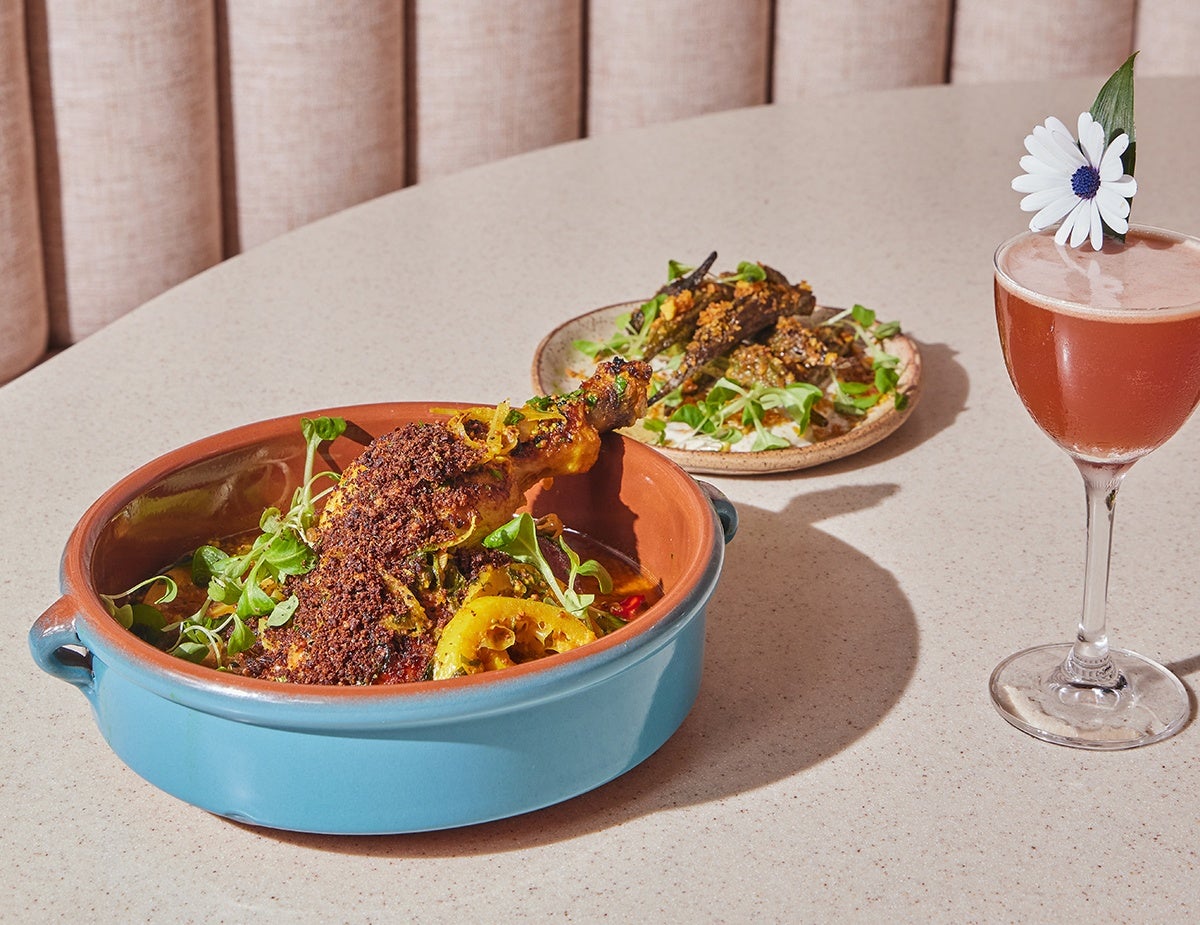
A shallow blue pot of seared okra and yassa chicken, accompanied by a brown rum-based cocktail with a white and blue daisy-like flower dipped into the drink.

Comfort Kitchen’s seared okra and yassa chicken, accompanied by the rum-based One in a Million cocktail. / Photograph by Brian Samuels

It’s seafood-focused, it’s elegant, and it’s exciting. In other words, Mooncusser is the perfect place to show your out-of-town friend what Boston dining does best. Chef Carl Dooley’s four-course menu changes with the seasons to highlight the freshest local flavors and ingredients, drawing inspiration from around the globe to let them shine. You might try, for instance, halászlé, a paprika-spiked Hungarian fisherman’s soup used here as a showcase for catfish. Pasta options often show up on the menu, and you’d be wise to order one: We’re still dreaming about a corn-and-clam conchiglie from more than a year ago, but they’re all winners.

Back Bay | Seafood | Read more | Reservations

If you had told us a year ago that we’d be declaring a restaurant serving rustic Greek fare inspired by nomadic shepherds one of the best new additions to Greater Boston’s dining scene, we’d have acted politely surprised. But here we are, head over heels for the latest hit from the team behind Krasi, fighting for hard-to-get reservations to dig into simply grilled lamb chops, deeply satisfying beef cheeks with prunes, and crispy fried oyster mushrooms. It just goes to show that breaking bread—well, pita—with friends can be a celebration without white tablecloths and fancy plating.

Brookline | Greek | Read more | Reservations
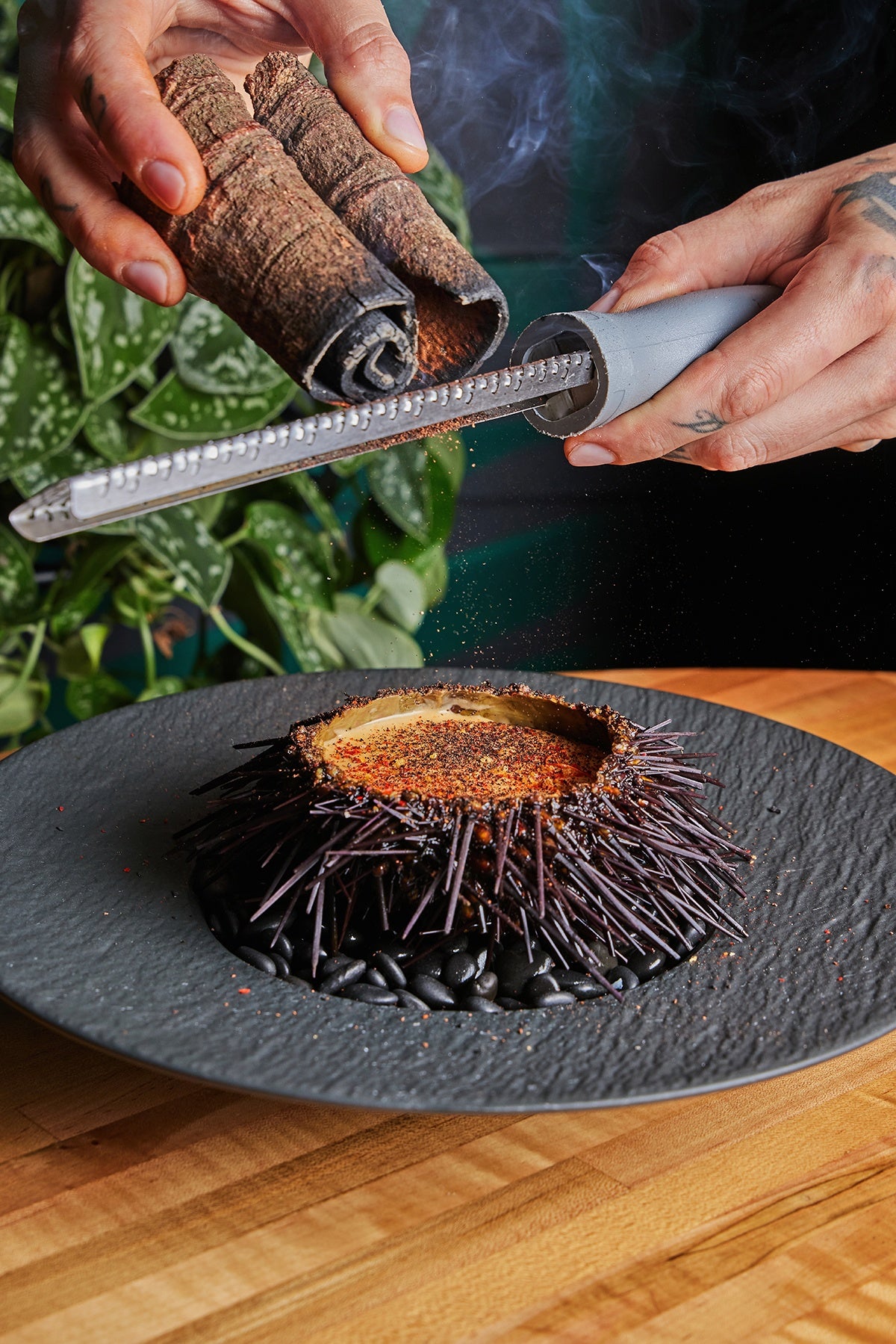
A hand grates cinnamon over sea urchin, split in half on a black plate.

Nightshade Noodle Bar’s live Santa Barbara sea urchin with red curry hollandaise and torched cinnamon. / Photograph by Brian Samuels

Taste is subjective, but there are universal truths that help define “comfort food”—namely, congenial cuisine that fills both belly and soul. And night after night, Comfort Kitchen—a hotly anticipated arrival to Dorchester after years of planning and pop-ups from chef Kwasi Kwaa and his team—churns out exactly that, highlighting fundamental global ingredients like rice, okra, and rum (shout-out to beverage director Kyisha Davenport’s illuminating cocktail program). We’re big fans of the jerk-roasted duck leg with pikliz, a Haitian-style pickled vegetable relish, and the meltingly tender yassa chicken, a Senegalese-style stew, but really, every dish on the menu makes us feel right at home.

Dorchester | Global comfort food | Read more | Reservations

Let’s get this out of the way first: If you want to take a journey through 14 courses of James Beard Award nominee Rachel Miller’s elaborate Vietnamese- and French-inspired tasting menu, surrounded by moody jungle vibes, you’re going to have to schlep to Lynn. But one taste of the bone-marrow bánh mì bites; hearty egg noodles tossed with a savory-meets-sweet caramelized garlic sauce; and lobster topped with a delicate smoked vanilla foam, and you’ll agree that this is food worth fighting traffic for.

Lynn | Vietnamese/French | Read more | Reservations
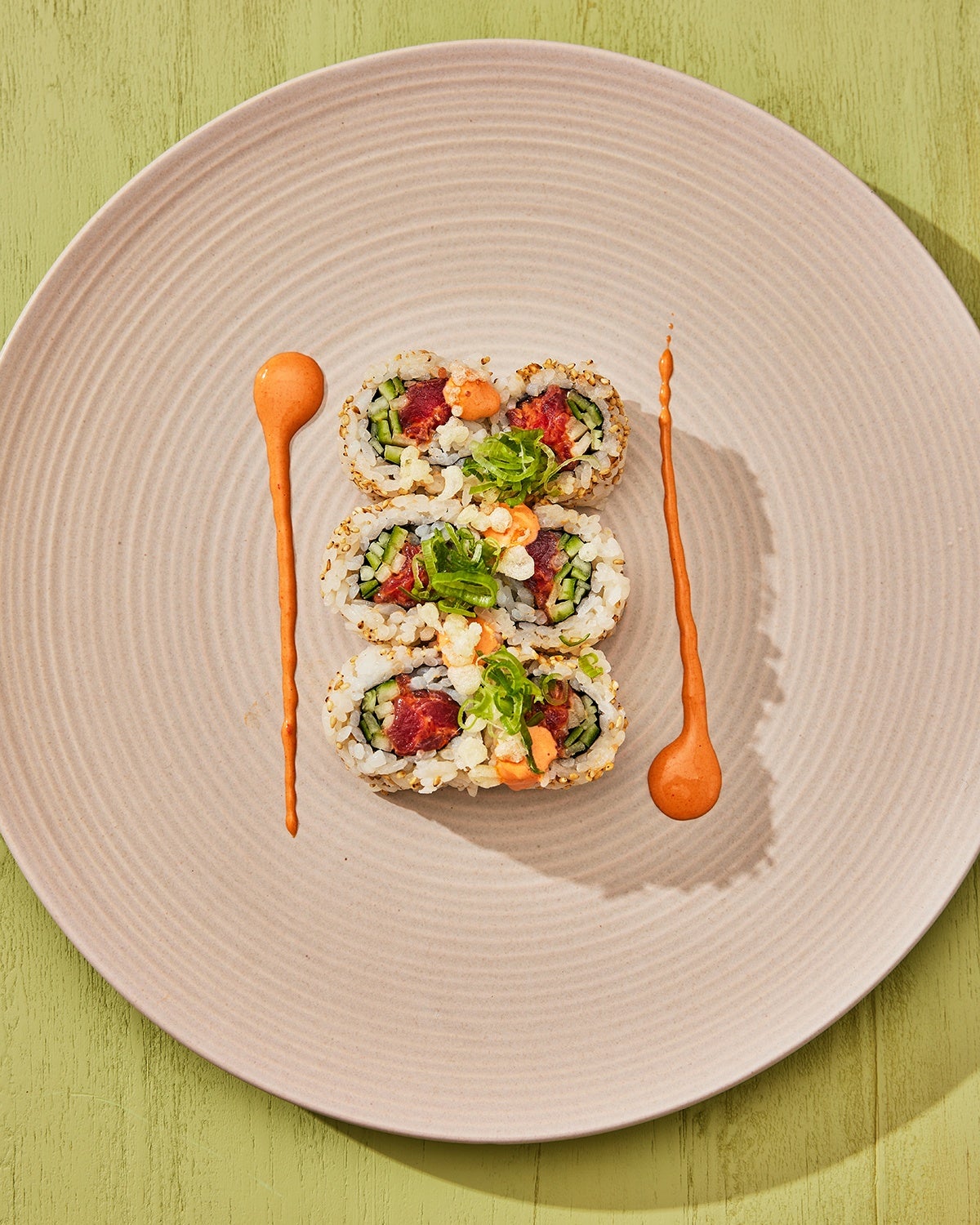
Uni’s spicy tuna makimono roll plated artfully, with two dollop streaks of thai bird chili mayo.

Uni’s spicy tuna makimono. / Photograph by Joe St. Pierre; styling by Madison Trapkin

Hot take: This deceptively modest-looking, pocket-size charmer in Southie’s Lower End is the stealth mindblower of Boston’s fine-dining scene. The restaurant delivers layered flavors and textures built on meticulous sourcing and exacting technique (think: a light-as-a-cloud cube of milk curd adorning a summer tomato salad, or the addition of long-fermented garlic in honey to subtly flavor a grilled mushroom dish). The resulting deliciousness comes in a very gently priced prix fixe package, with options for both vegetarians and omnivores, a value further enhanced by the opportunity to BYOB.

South Boston | New American | Read more | Reservations

These days, prized ingredients like deep-water fish and fresh sea urchin flown in from Japan aren’t as exclusive to Uni as they once were—yet there’s still nowhere else in Boston you can find Maine uni nigiri matched with earthy-sweet chestnut miso crafted and aged in-house. Executive chef David Bazirgan, whose star rose at a stylish bar in San Francisco, has also made the Back Bay sushi bar more of an after-work hang recently, thanks to drink-friendly snacks like juicy fried-chicken bao buns slicked with lip-smacking sambal.

Back Bay | Japanese | Read more | Reservations
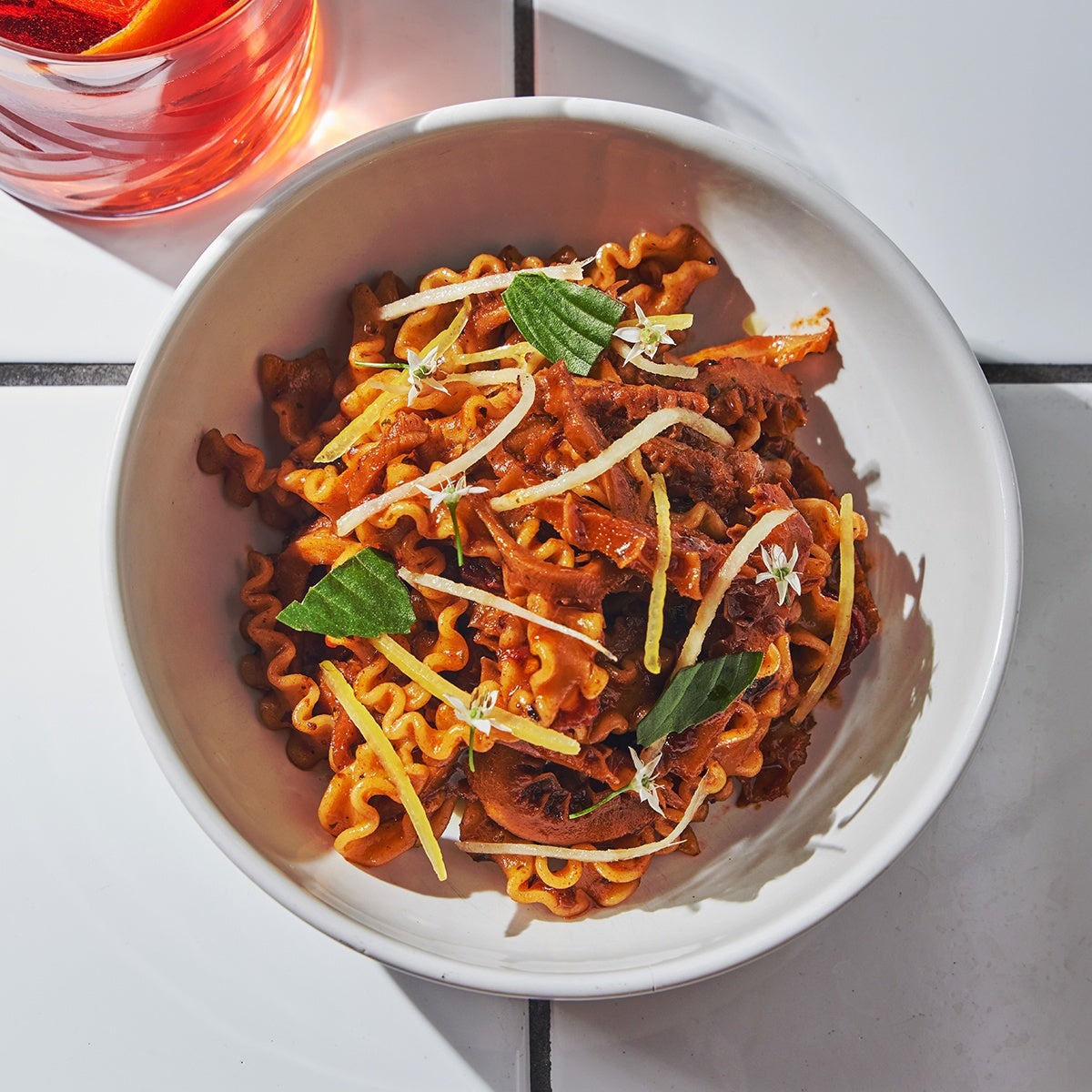
Overhead view of a pasta dish featuring thick noodles with a ruffled edge in a white bowl on a white tiled surface.

Pammy’s mafaldine with tripe, garlic-chili oil, and labneh. / Photograph by Brian Samuels

Six years in, chef Chris Willis continues to merge Italian craft and technique with flavors from near and far, paired with an attention to seasonality. Take the chewy mafaldine: The noodles tango with tenderly cooked honeycomb tripe, which acts as a sponge to soak up the Asian-inflected garlic-chili oil. The texture of the tripe offers a contrast to the al dente pasta, which is enriched by creamy Middle Eastern–inspired labneh. With well-executed plates like this, not to mention warmly attentive service, it’s no wonder the restaurant keeps winning the hearts and minds of locals and out-of-towners alike.

Cambridge | New American | Read more | Reservations

If you were to list out the ingredients of Umami’s 18-course omakase on paper, the ever-changing dishes might sound minimalist at first glance: torched Spanish mackerel with soy garlic, Hawaiian kanpachi (amberjack) with mango salsa. But there’s meticulous technique underlying these delicate bites, yielding countless textures and tastes to explore. Take the madai—Japanese red sea bream—that gets its crispy skin thanks to dunks in hot water and an ice bath, topped with shaved, salted egg yolk for a punch of, well, umami. Once you reach the final course—a delightful yuzu panna cotta on one visit—you’ll be already planning to make your next reservation.

Cambridge | Japanese | Read more | Reservations
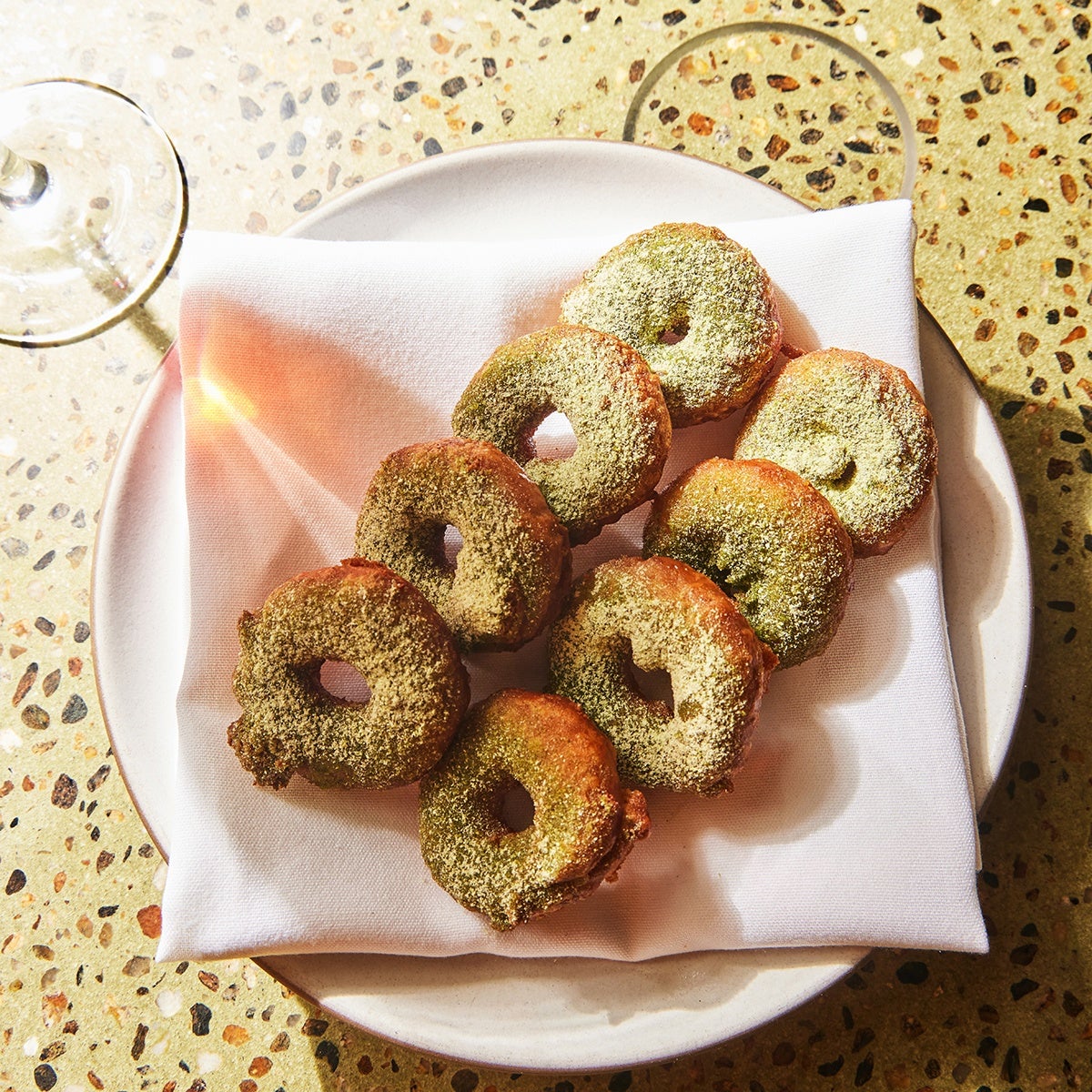
Eight sunchoke doughnuts with XO Gouda and powdered leeks, laid evenly on a white-cloth napkin that's on a plate.

Spoke’s sunchoke doughnuts with XO Gouda and powdered leeks. / Photograph by Brian Samuels

There’s little not to love about this elegant yet laidback Davis Square spot, from the thoughtfully curated wine list to the creative, boundary-breaking menu that comes from the tiniest of kitchens. But the most impressive thing of all about Spoke is how the team works seamlessly together: Cochefs Kelcey Rusch and Paul Butler collaborate tirelessly to highlight the most in-season ingredients, while bar manager Katie Weismann puts out new cocktails as the food menu changes, resulting in meals that might pair, say, savory sunchoke doughnuts with a brandy-based drink made with black trumpet mushrooms and cinnamon.

Somerville | Wine bar | Read more | Reservations

Indie prix-fixe pioneer Asta continues its 10-year run of wowing patrons nightly with a gently paced procession of six to 10 courses. And no wonder: Chef-owner Alex Crabb’s culinary sensibility is characterized by globetrotting influences (tempura maitake here, foie gras on huacatay purée there); delicate but insistent flavors; a penchant for unusual accents
(have you tasted mouse melons yet?); and painterly platings. Meanwhile, his front-of-house partner, Shish Parsigian, serves as a genial docent to often natural-focused wine pairings. The dining room has a minimalist vibe, all the better to focus on Asta’s fantastic ratio of supernal quality to low pretension.

Back Bay | New American | Read more | Reservations
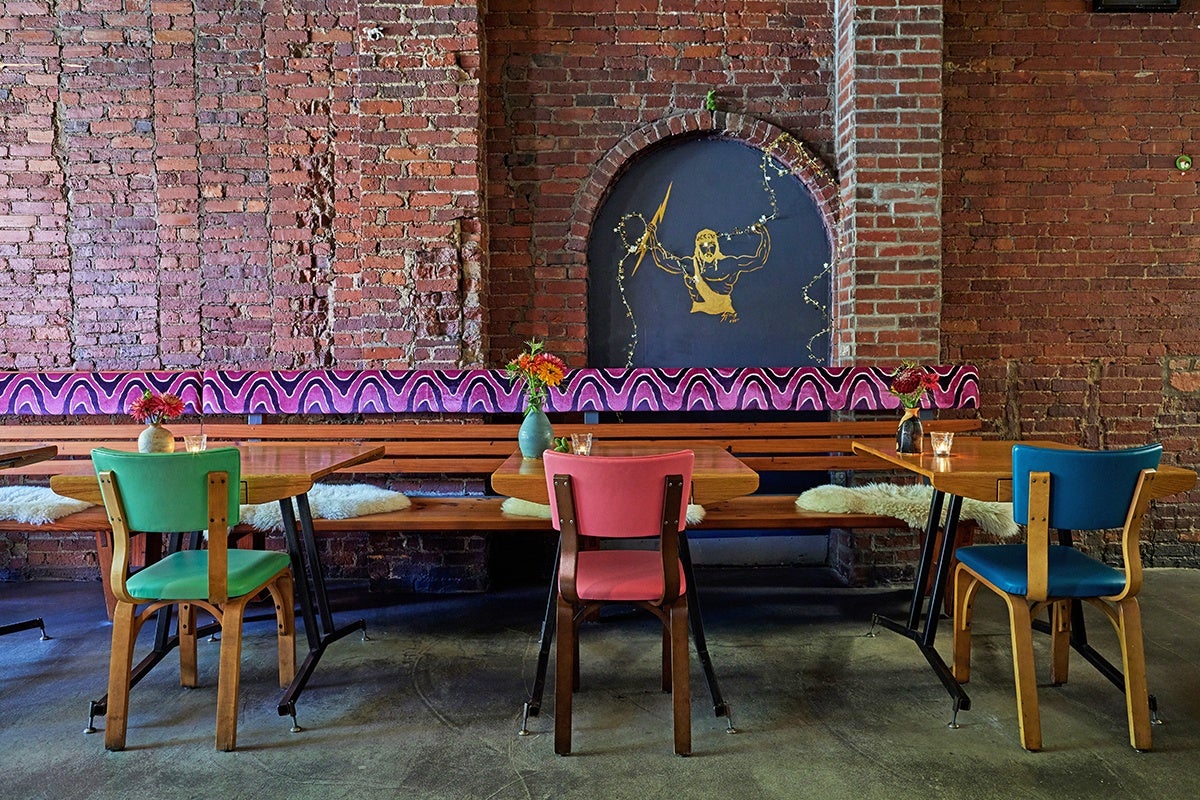
Photo of the interior of Asta restaurant, which shows a brick wall with a painting of Zeus, three two-top tables with flowers, and three colorful chairs.

Asta’s dining room, including a painted outline of Zeus, a holdover from an earlier restaurant that occupied this space. / Photograph by Brian Samuels

This Brookline Village spot represents Thai hospitality at its finest—homey and pleasant, with a menu of vibrantly flavored regional specialties that pair well with a crisp Thai lager or a cocktail. The slightly sweet pork cheek is seasoned with funky notes of Thai fish sauce, while the chicken skin is satisfyingly crunchy. But the absolute showstopper is the kang pu, in which warm, southern-style curry and tender crab meet chewy, thin rice noodles. Bring friends or family and order a round or two of drinks and a spread for the table: You’ll want to sample a little bit of everything.

Brookline | Thai | Read more | Reservations

Under chef Ana Sortun’s steadfast guidance, this cozy eatery has earned its spot as a Cambridge mainstay over the past two-plus decades, courtesy of flavorful dishes inspired by Turkey and the broader Middle East. One of our favorites is the Sultan’s Delight, which diverges from its Turkish roots by using beef in lieu of lamb and adding tamarind for a fruity boost. The best way to enjoy it? With a creative Mediterranean-inspired cocktail in hand, sitting on the romantic patio (in warmer months), an ideal spot for date nights and celebrations. But don’t forget to top it all off with the restaurant’s cult-favorite baked Alaska with coconut ice cream and passion-fruit caramel.

Cambridge | Mediterranean | Read more | Reservations
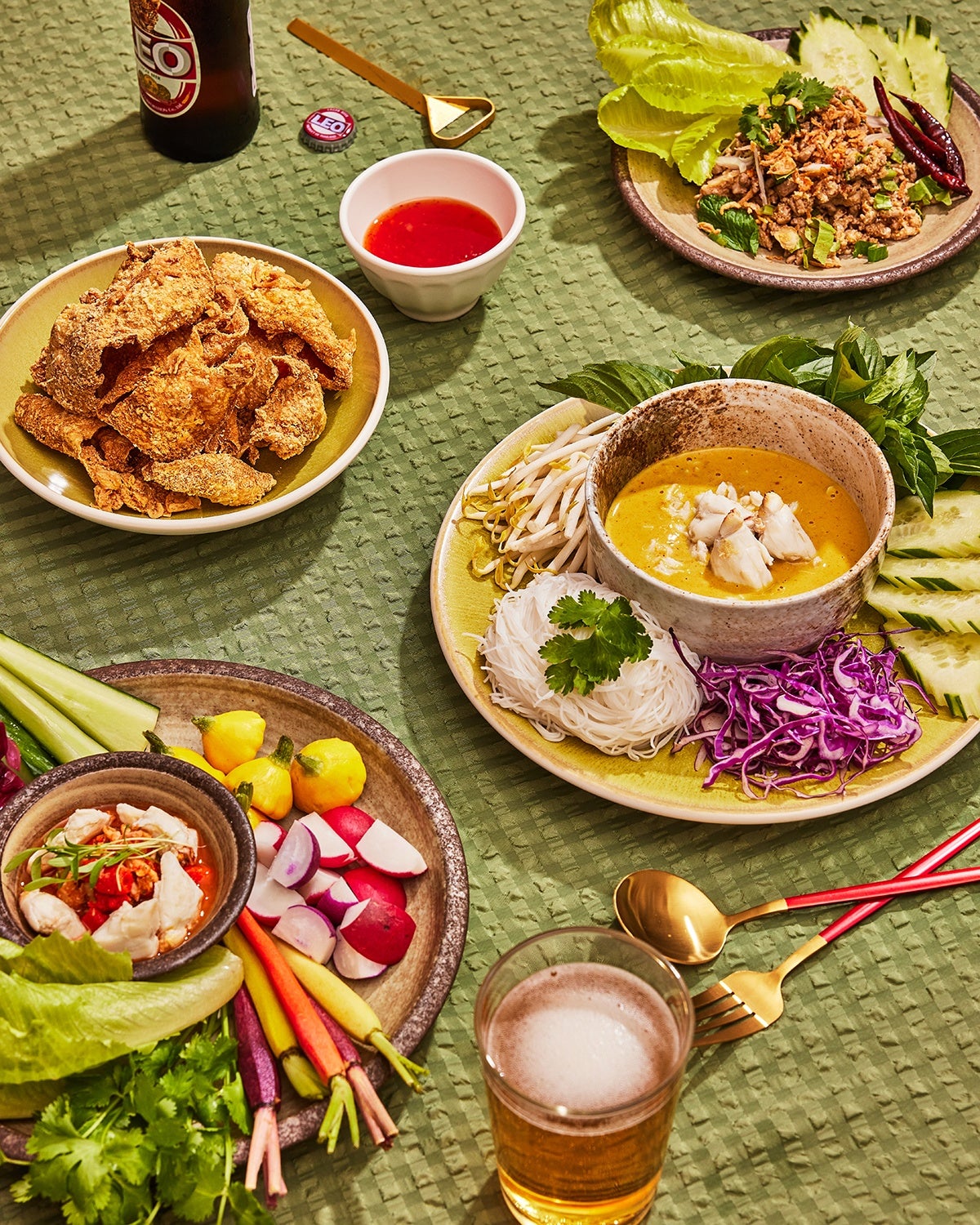
A spread of Thai dishes sit on a green tablecloth, including crab curry, crispy chicken skin, duck larb, and more.

A spread of dishes at Mahaniyom, including the fan-favorite crab curry. / Photograph by Joe St. Pierre; styling by Madison Trapkin

“French Shrimp Toast,” as a recent menu read, is a combination of words not typically joined in that order. Featuring triangles of shrimp-paste-and-maple-syrup-slathered bread, the snack reinvents both a dim sum staple and pain perdu on the same plate—and as an idea, it’s classic Brassica. With fun inventions like this brought to life by a team of imaginative pros, the Jamaica Plain stalwart has endeared itself to the neighborhood as well as to food lovers from further afield. As the restaurant plans to expand into a larger space next door, we simply can’t wait to see what they come up with next.

Jamaica Plain | New American | Read more | Reservations

Would you ever expect fireworks from a dish of grilled cabbage? At Field & Vine, ’nduja butter, a mild blue cheese, and gremolata crumbs turn the cruciferous vegetable into gold. In fact, much of the magic behind this six-year-old Union Square gem is in the condiments: Luscious toasted-pecan butter, grilled-strawberry Buffalo sauce, and caraway labneh are among the accoutrements bringing beautiful, veg-forward dishes to the next level. It also doesn’t hurt that Field & Vine is one of the most attractive restaurants in town—a forest fairy tale full of light wood, vines, and plenty of greenery.

Somerville | Farm-to-table | Read more | Reservations
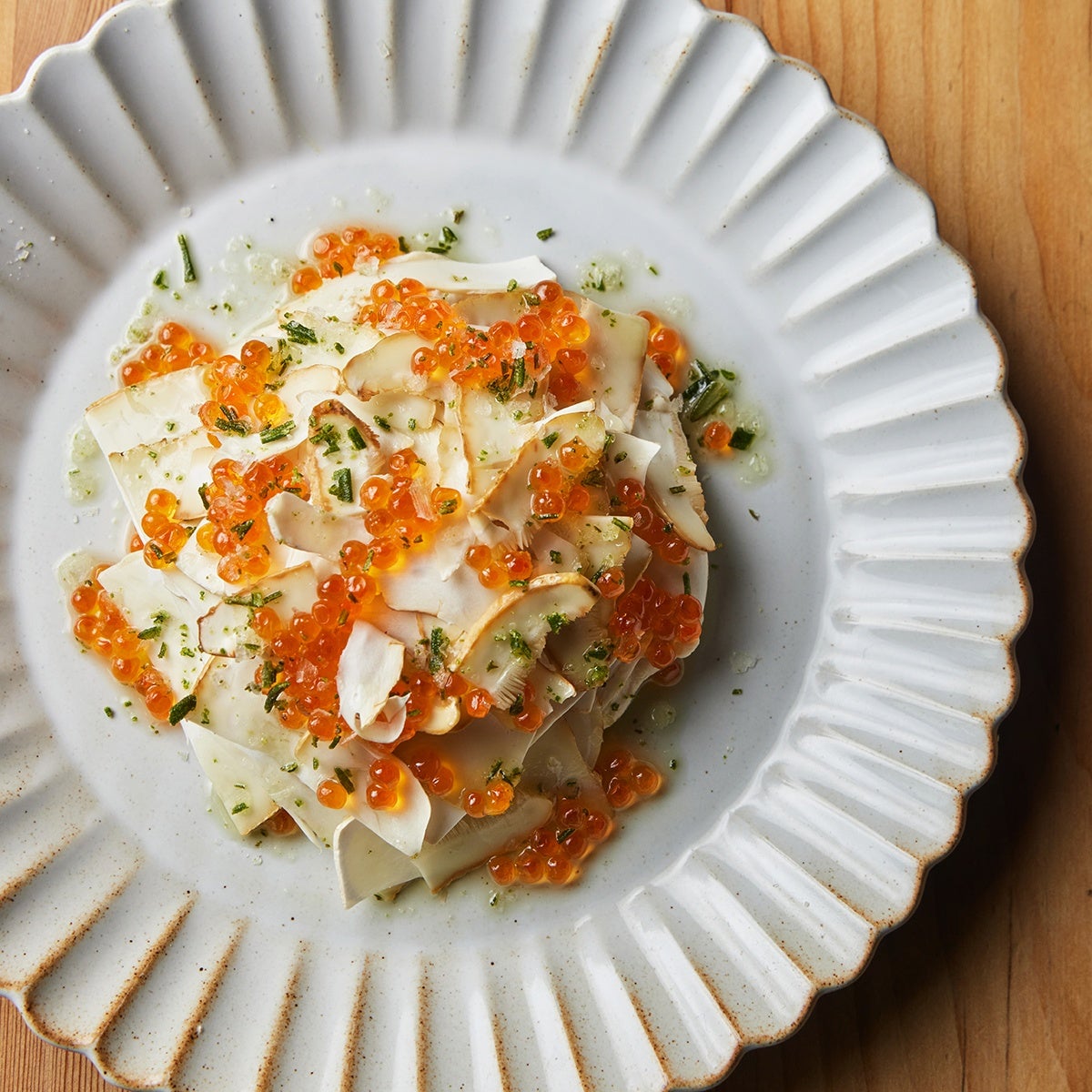
A white plate of orange trout roe and green rosemary flakes sprinkled over black butter–celery root purée, lightly colored mushrooms.

Field & Vine’s shaved matsutake mushrooms with soft-poached egg, black butter–celery root purée, smoked trout roe, and rosemary. / Photograph by Brian Samuels

Bring a bunch of friends and plan to leisurely work your way through the Greek menu at this Back Bay mezze and wine bar, from fresh-baked breads to the souvla of the day, via the group-friendly “Feast of the Gods.” You’ll accompany it with plenty of vino; Krasi means “wine” in Greek, after all. The Grecian influences continue with modern yet elevated design touches in the dining room: We love the elegant Hellenic tumblers behind the bar in shades of periwinkle and seafoam green, not to mention the playful reimagined portraits of Greek greats like Aphrodite and Poseidon adorning the walls above the cozy booths.

Back Bay | Greek | Read more | Reservations

The allure and conviviality of a chic 1940s supper club has arrived in the oh-so-modern Seaport, courtesy of restaurateur Nia Grace (Darryl’s, the Underground Café) and Big Night (Empire, Scorpion Bar). The supper: updated southern and soul food ranging from a modernist fried-green-tomato salad to a soul-satisfying rendition of oxtail and grits. The club: performances by an ever-changing lineup of talented jazz and soul combos, not to mention luxurious cocktails (hello, 24-karat-gold-dusted espresso martini).

Seaport | Soul food | Read more | Reservations
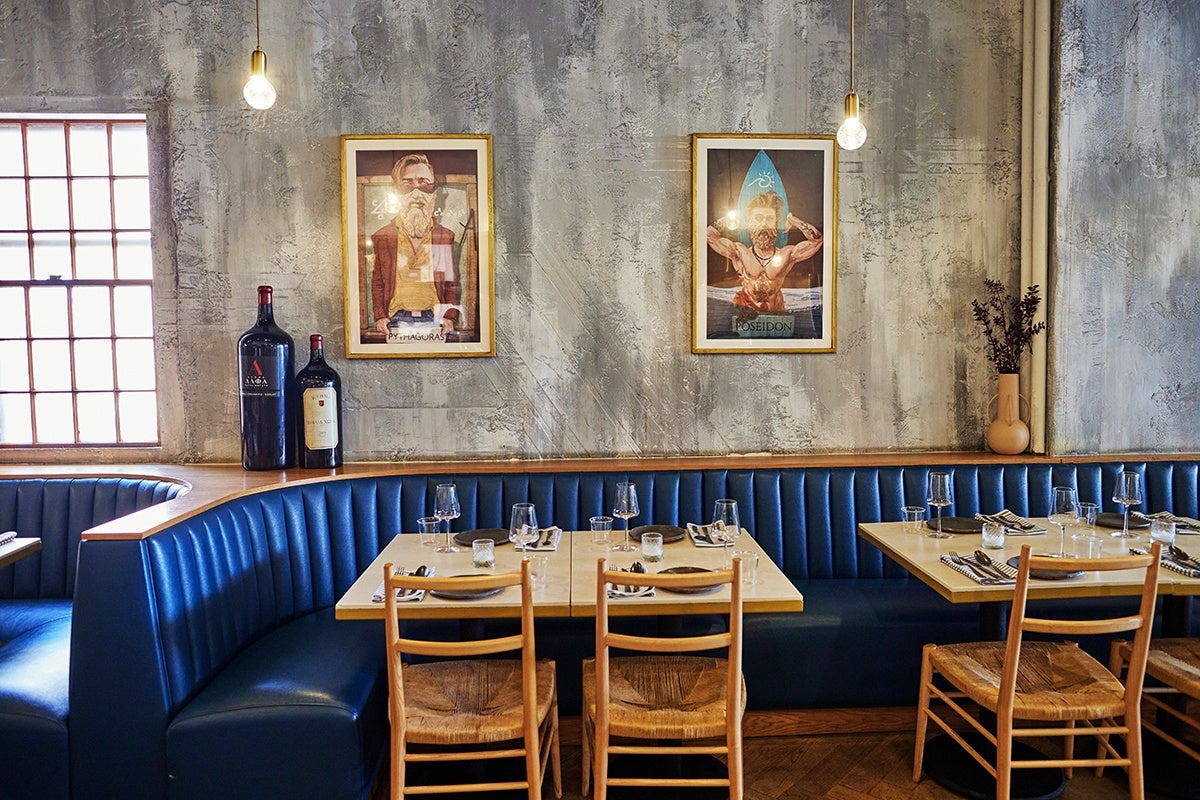
An interior shot of Krasi. There are gray and white plastered walls, two tables with four individual place settings, a royal blue seating banquette, a framed contemporary illustrations of Poseidon and Pythagoras.

Krasi’s dining room. / Photograph by Brian Samuels

At La Royal, JuanMa Calderón and Maria Rondeau bring diners on a gustatory trip through the regional cuisines of Peru (including chifa, the Chinese-Peruvian cuisine that is a pillar of contemporary foodways of the country). Among the best dishes on the menu is the patarashca—whole branzino grilled in plantain leaves and dressed with chopped peppers, onions, and other condiments—which sheds light on the Amazon region. Meanwhile, the drink list celebrates Peru’s dynamic cocktail scene: Opt for Peruvian classics such as the pisco sour, or venture out to tonic spiked with the Andean elixir matacuy.

Cambridge | Peruvian | Read more | Reservations

The Dian cuisine of southwest China is marked by spiciness, ample use of mushrooms, and flavors and ingredients more often seen in Southeast Asian cuisines—and we can’t get enough of it at this 2022 South End debut. Seems like the rest of the country is intrigued, too: The restaurant has already gained attention on a national scale thanks to a 2023 James Beard Award nom for chef and founder Yisha Siu. Elevate dinner to date-night status with one of the restaurant’s cheekily described wine-based cocktails, like the Kiss Kiss—sauvignon blanc, mojito mix, and mint, “topped with intimacy.”

South End | Chinese | Read more | Reservations

A tall glass of ceviche with shrimp sitting on top is displayed on a green surface in front of a velvety orange drape, with accoutrements surrounding it, including an ear of purple corn.

La Royal’s leche de tigre (tiger’s milk), which the restaurant describes as “essence of ceviche.” / Photograph by Joe St. Pierre; styling by Madison Trapkin

In a city known for its top-notch seafood restaurants, how does one stand out from the crowd? The team behind Cambridge Italian favorite Giulia has an answer in Moëca, where a vivid and wildly creative seafood-centric menu draws inspiration from all over the world (see: a smoked scallop taramasalata that nods to Greece, and a raw fluke aguachile that points to Mexico). It doesn’t hurt that the team inherited Giulia’s talent with fresh pasta and nabbed one of Boston’s best pastry chefs (Renae Connolly) to craft the gorgeous desserts, such as a fluffy aerated cheesecake with a bold blackberry sorbet and jasmine lime curd.

Cambridge | Seafood | Read more | Reservations

When this cozy hangout debuted in February 2020, owners Paola Ibarra and Yhadira Guzmán had little clue a global pandemic was about to unfold. Three years and an expanded dining room later, Barra has forged a unique identity, bringing Mexico City pride to Somerville in the form of cumbia sonidera parties and artisanal mezcal tastings. Food is the centerpiece of the story, made from scratch and served with care. The slow-cooked cochinita pibil—a marinated pork dish—is a perfect example, served with handpressed tortillas made from heirloom masa. Add a tangy prickly pear margarita to be transported straight to CDMX.

Somerville | Mexican | Read more | Reservations
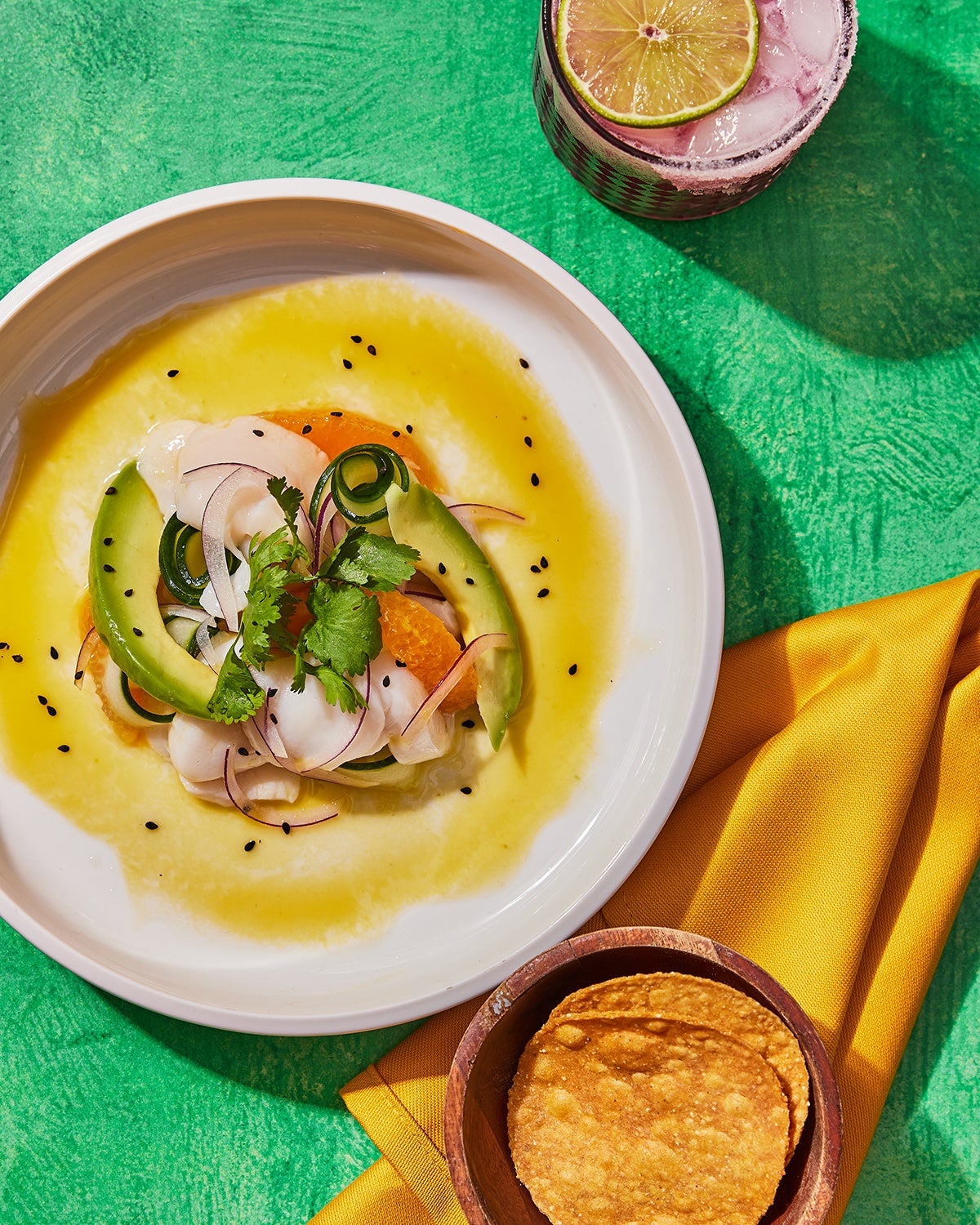
Overhead view of a bright aguachile with avocado and a yellow sauce. A pink cocktail sits nearby.

Barra’s aguachile amarillo with a prickly pear margarita. / Photograph by Joe St. Pierre; styling by Madison Trapkin

From a weekday power lunch to a Saturday date night, this intimate Back Bay hot spot is the place to splurge on an enormous seafood tower dripping with caviar, crudo, and plenty of shellfish, with a baller bottle of bubbly on the side. Or keep it just a little simpler with, say, an herby whole-roasted sea bream or a hearty bowl of bouillabaisse. Both are great examples of how chef and restaurateur Michael Serpa uses Mediterranean-tinged cooking to show off a beautiful bounty of local seafood.

Back Bay | Seafood | Read more | Reservations

After launching its daily aperitivo hour this summer (a longtime favorite at sister restaurant Fox & the Knife), Bar Volpe added a bevy of new southern Italian stuzzichini (a.k.a. snacks) to the menu—and lucky for us, they’re here to stay. Grilled lamb skewers with mint and olive tapenade; crostini topped with gooey stracciatella, slow-roasted tomatoes, and basil; and fried olives stuffed with ’nduja and mortadella are just a few of chef Karen Akunowicz’s fresh bite-size offerings. Of course, with small plates like these, you’ll likely have room for a smattering of classic dishes, too, like the pillowy, potato-and-goat-cheese-filled culurgiones and an amaro-topped affogato for dessert.

South Boston| Italian | Read more | Reservations
A white bowl of Bar Volpe’s crudo di tonno with acqua pazza (Italian poached fish), sungold tomato slices, and chives on a brown table.

Bar Volpe’s crudo di tonno with acqua pazza, sungold tomato, and chives. / Photograph by Brian Samuels

Sometimes, the occasion calls for a classic steakhouse full of old-school glamour: white tablecloths, cordial hospitality, and, of course, fancy cuts of beef. Enter Grill 23. Celebrating its 40th anniversary this year, the stately restaurant can certainly show a thing or two to those countless chain steakhouses that have recently invaded Boston. We love the lively vibe downstairs best (with a bit of a kitchen view, depending on where you’re seated)—and might we recommend saving room for the signature coconut cake for dessert?

Back Bay | Steakhouse | Read more | Reservations

Toro continues to dazzle diners after nearly two decades in the South End. Maybe it’s the familiarity of tapas like crispy patatas bravas, grilled octopus with pimentón aioli, and garlicky pan con tomate that keeps us coming back. Or perhaps it’s the delicate twinkle of string lights on the COVID-era patio that turns even the most mundane night out into a special affair. We don’t know what to expect from the future of the former JK Food Group now that the J (Jamie Bissonnette) has left to pursue new adventures, but Bissonnette and Ken Oringer certainly hit on something special with their first project together so many years ago, and we’re happy to keep returning for birthdays and anniversaries aplenty.

South End | Spanish | Read more | Reservations
A close-up of a hand pouring champagne into a glass, over a white tablecloth setting of a caviar tin on ice and a bowl of lightly fried tater tots.

Grill 23 & Bar’s caviar service with a side of tots. / Photograph by Brian Samuels

This South End powerhouse of coastal Italian cuisine consistently excels in all areas, thanks to chef Colin Lynch’s triple threat of a menu (elegant crudos, ravishing pasta dishes, gorgeous cooked-seafood entrées). Sweetening the deal are a first-rate bar program anchored by beverage director Ryan Lotz and superstar-with-a-shaker Josey Packard; a warmly polished and hospitable front-of-house staff led by GM Heather Lynch; and a sleekly modern, elegant atmosphere that makes this one of the best restaurants in one of Boston’s best dining neighborhoods.

South End | Italian | Read more | Reservations

It may have moved to a larger location down the street in 2022, but Juliet’s core ethos as a mission-driven, neighborhood-y eatery has remained the same. The thoughtfully decorated new space, however, does lend itself more to special evenings out: Diners can snack on scrumptious honey-drizzled Parmigiano-Reggiano, slurp tagliatelle au pistou with a Provençal pesto-like sauce, or get cozy in the wine room for a frequently changing themed tasting menu. And that old space? The team has turned it into a wine bar and occasional venue for pop-up vendors to serve Filipino breakfast sandwiches, Venezuelan arepas, Guatemalan dobladas, and more.

Somerville | French | Read more | Reservations
Juliet. / Photograph by Brian Samuels

In a city where you can’t throw a meatball without hitting an Italian restaurant, Giulia has maintained its status as one of the most popular spots for discerning locals, as evidenced by its constantly packed dining room. Born out of chef Michael Pagliarini’s affinity for Umbrian cuisine, Giulia churns out plate after plate of homey yet well-balanced flavors, from the eggplant caponata to the handcrafted pastas. The menu shifts often, depending on the bounty of the season, but some pasta standouts include pappardelle with wild boar cooked in a velvety sauce; casarecce with hen-of-the-wood mushrooms; and saffron cavatelli with calamari.

Cambridge | Italian | Read more | Reservations

In a world where brash, loud, and unbuttoned is the new restaurant standard, Old World elegance is hard to come by. That makes Deuxave’s dove-toned dining room, formally attentive service, and elegant take on fine French cuisine a treasured combination. Forget your generic neighborhood bistro’s moules frites or Le Hamburger; here you’ll find caviar service, trophy sirloins seared in cast iron and dressed in fine French accoutrements, and the city’s most resplendently plated roast duck.

Back Bay | French | Read more | Reservations
Giulia pasta. / Photograph by Brian Samuels

Why do we love this South End bacaro? Let us count the reasons. For one, each visit introduces us to novel flavor combinations and fresh takes on the classics—e.g., twisted strozzapreti noodles with sausage brightened up by a gorgeous salsa verde. But it’s also the restaurant’s consistently warm hospitality, led by general manager and partner Ted Hawkins, that makes it an easy choice for any occasion—or even none at all.

South End | Italian | Read more | Reservations

There’s no question that Rare, the glitzy steakhouse at Encore Boston Harbor, has the meaty goods. There’s Japanese Wagyu for the true high rollers, but we also enjoy the middle-of-the-road splurge: the domestic Wagyu, a beautifully marbled, melt-in-your-mouth cut in its own right. Add a classic steakhouse side or two—creamed spinach, roasted mushrooms with sherry herb butter, lobster mac ’n’ cheese—and you have yourself quite a night out. You can end with a fiery table-side preparation of citrus-soaked rum cake, much preferable to metaphorically setting your money on fire at the betting table.

Everett | Steakhouse | Read more | Reservations
A colorful plate of seared duck breast from French restaurant Deuxave against a green-yellow background.

Accompaniments change seasonally, but you’ll typically find a seared duck breast on Deuxave’s menu. / Photograph by Joe St. Pierre; styling by Madison Trapkin

You’ve gotta have some nerve to take a hallowed Brahmin dining institution like the old Locke-Ober, favored by the Kennedys, and reinvent it as the wildest, sexiest restaurant downtown. That’s exactly what the Yvonne’s team did eight years ago, and it’s still swinging with uniquely gorgeous and sassy décor; shareable plates large and small, including a massive long-bone rib-eye with steak fries and black-garlic butter; superb cocktails, both classic and creative; and dressed-up crowds out for a rip-roaring evening. Perhaps no other restaurant in the city so adroitly combines the hip and the staid, the sacred and the profane, Old Boston and New, into such a cheeky, fun, hard-partying package.

Downtown Crossing | New American | Read more | Reservations

It’s a Boston tradition to complain about non-local restaurant groups coming to town, but we can let the occasional one slide, especially when it’s as good as Major Food Group’s swanky Contessa. The gorgeous venue atop the Newbury Boston pairs its stunning views and impeccable interior design with a glammed-up Italian menu that makes the in-demand reservation worth the effort. Here’s hoping the prettily plated squash carpaccio—dotted with pumpkin seeds, arugula, and agrodolce—never leaves the menu. Same to you, spicy lobster capellini.

Back Bay | Italian | Read more | Reservations

See also: The Most Beautiful Restaurants in Boston

The trouble with a restaurant becoming famous for one particular dish—here, the lobster roll—means that many diners never branch out and realize that it’s serving a lot of other excellent things, too. Your assignment for 2024: Go to North End icon Neptune (get there a little before opening to avoid the long line), and don’t get the lobster roll. Get whatever crudo of the day is scrawled on the mirror—we enjoyed a beautifully fresh Casco Bay halibut with Cara Cara orange and pistachio back in May. Try the razor-clam casino. Order a salad topped with whole Azorean sardines. Go old-school with some fried clams. You won’t be sorry.

North End | Seafood | Read more | No reservations
Overhead view of five different pastas on a white marble table.

A spread from Jamaica Plain’s Tonino. / Photograph by Brian Samuels

Pizza and pasta are crowd-pleasers in pretty much any form, but it’s not just the gourmet renditions by chef Luke Fetbroth that, in just one year, have rocketed this Jamaica Plain spot to instant-classic status. Along with business partner and beverage connoisseur Claire Makley, Fetbroth has tapped into the kind of cozy neighborhood vibes that make a meal memorable, from the truly unique aperitivo selection (see: the House Spritz, combining bubbly and bitter Cappelletti with juicy yuzu sake) to the flaky-salt-finished tiramisu.

Jamaica Plain | Italian | Read more | Reservations

The best meals start with the freshest ingredients, and that’s exactly what this quintessential seafood spot serves up day after day. Of course, we’re talking about the briny Duxbury oysters and ruddy lobsters hauled in from Maine, as well as meaty fillets of monkfish and expertly cleaned, sustainably sourced branzino grilled whole. But these pristine specimens achieve their ultimate form when accompanied by just-picked—or pickled-at-peak-season—produce, a food group taken just as seriously by chef Jeremy Sewall and his team of kitchen pros. And as the restaurant marks its 10th anniversary this month, it’s celebrating by doubling down on its devotion to top-notch sourcing at its newest Cambridge location.

Multiple locations | Seafood | Read more | Reservations
A three-tier shellfish tower from Row 34 with Jonah crab claws, Maine half lobsters, shrimp cocktail, and Island Creek caviar.

The shellfish tower from Row 34 includes Jonah crab claws, Maine half lobsters, shrimp cocktail, and Island Creek caviar. We’ll drink to that. / Photograph by Joe St. Pierre. Styling by Madison Trapkin

Come for the snacks—cutely dubbed “smackerals”—like the luscious buttermilk biscuit slathered with smoked maple-miso butter; stay for the larger farm-to-table entrées such as koji-marinated duck breast with wild-blackberry-barbecue sauce and duck-fat carrots. Or better yet, spring for the adventurous five-course tasting at the chef’s counter and get a front-row seat as chef-owner Erin Miller works her sorcery with the freshest local ingredients. The ambiance is warm, cozy, and not too fancy, but the plates are the epitome of five-star dining. The perfect pairing, as far as we’re concerned.

Cambridge | Farm-to-table | Read more | Reservations

Imagine our surprise when we found one of Greater Boston’s best versions of steak tips at a tiny Eastern Mediterranean nook in Inman Square (it’s all about the date molasses!). And that’s just one of nearly two dozen irresistible small plates on the menu at this gorgeously appointed hideaway. Share feta fritters drizzled with sweet orange-blossom honey; crispy coconut shrimp with mango-ginger chutney; and scallops with harissa barbecue duck for a romantic date. The cocktail menu, which also relies on Mediterranean flavors, pairs brilliantly. Olive-brine-infused mule, anyone?

Cambridge | Mediterranean | Read more | Reservations

After a century of being confined mostly to modest diners and pizzerias, Greek cuisine in Boston is finally getting the respect it deserves. No restaurant better represents that elevation than this lively South End spot, which channels every fabulously sun-splashed trip you’ve ever taken (or envied on social media) to Santorini or Mykonos. It’s all here: the small plates of piquant nibbles; the brilliant dips; the easy-drinking wines; the fire-grilled kebabs, chops, and whole fish. And it’s a fitting spiritual recharge, especially in the middle of a cold, dark Boston winter.

South End | Greek | Read more | Reservations
A bright restaurant interior photographed during the day, with white walls, a large potted tree, and the edge of a large mirror with an intricate brass frame.

Pammy’s. / Photograph by Brian Samuels

In 2023, chef Douglass Williams took his Mida magic to the scenic waterfront of East Boston with a brand-new location. You’ll find all the hits—focaccia piled high with Parmesan, handmade bucatini swathed in Mida’s signature guanciale-filled amatriciana, and a tender eggplant parm sandwich—plus an exciting offering not available at the South End original: ultra-thin-crust pizza made to order. And if clam pie and dreamy sunsets weren’t enough to reel you in, the restaurant’s impressive, design-forward interior is guaranteed to make any dinner feel like an artful evening.

East Boston and other locations | Italian | Read more | Reservations

Chef Jody Adams’s lovely downtown space is many things to many people, equally adept at hosting business lunches and happy-hour gatherings as it is nights out with friends and romantic occasions. At the top of our wish list, though, is a solo winter dinner at the bar, tucking into the hearty rosemary-braised lamb phyllo pie with a glass of Greek red. Plates of watermelon fattoush and lamb meatballs are also perfect to snack on while we eagerly await chef Adams’s return to Italian cuisine with the opening of La Padrona at Raffles Boston later this year.

Downtown | Mediterranean | Read more | Reservations

Few new arrivals have thrilled us as much as the Eaves, a transportive sequel from the Cicada coffee bar crew that melds Vietnamese dishes with New England ingredients. An ode to the owners’ lives in both regions, the tiny bar and restaurant—a creative use of former storage space at Somerville’s Bow Market—is brimming with life, from the energetic soundtrack (plenty of disco on one recent visit) to an ever-changing array of flavor-packed dishes (plump duck gyoza were an early winner.) Bonus: Mini cocktail sizing lets you sample more.

Somerville | Vietnamese | Read more | Reservations
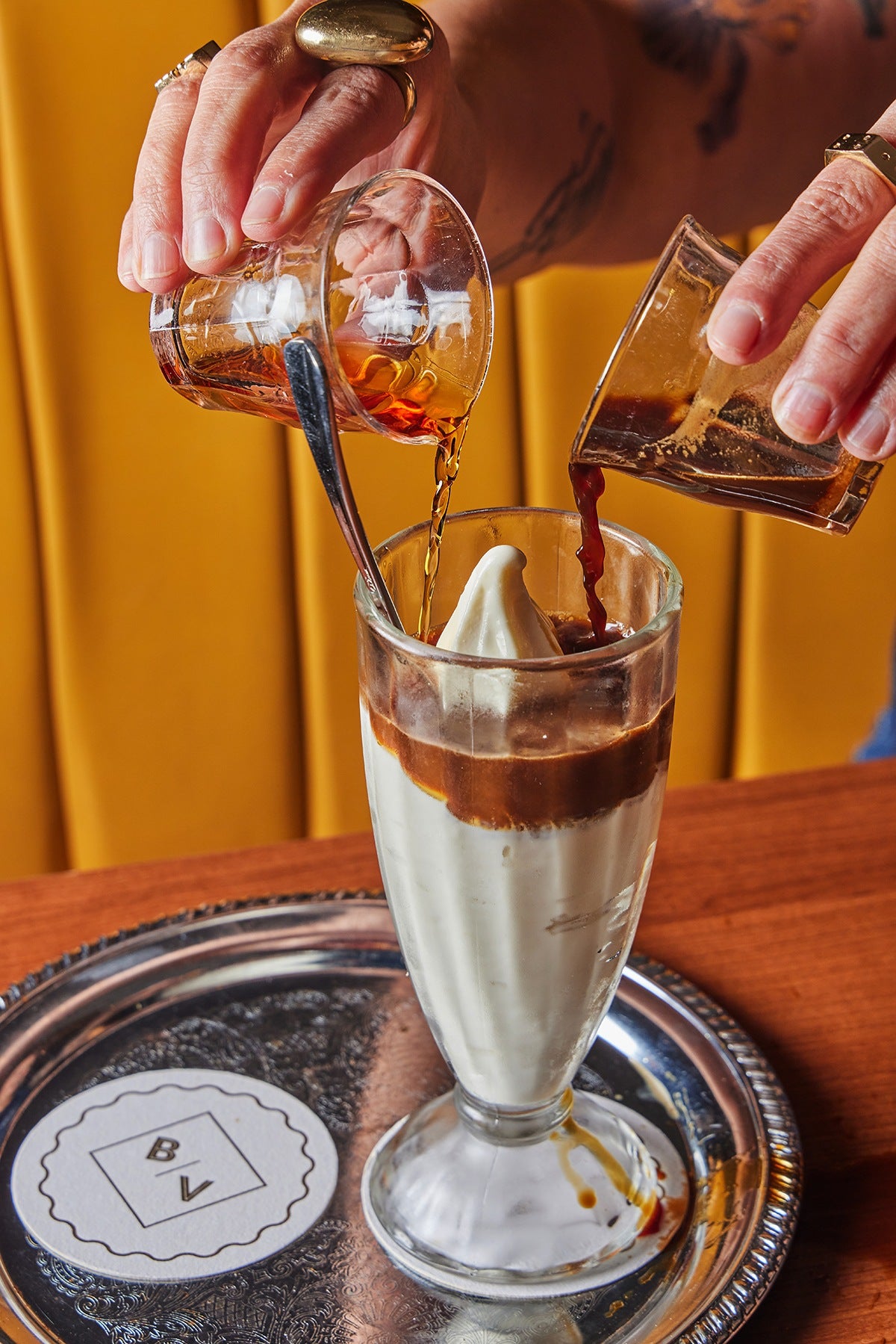
Two hands pour two different liquids—one a red booze, and one coffee—over an elegant glass of soft-serve vanilla ice cream.

Bar Volpe’s affogato. / Photograph by Brian Samuels

Hearty, homey Yemeni cuisine is new to Boston, but Kenmore Square’s sleek Bab Al-Yemen, which opened last year, is keen to show you the ropes. There, you’ll find everything from winter-friendly stews to slow-roasted lamb, all delicately spiced. The fresh-baked bread—a huge, flat round—is a must, as is ending the meal with a pot of Adani tea, aromatic with cloves and cardamom, and date or banana fattah, a sweet dessert featuring shredded bread and honey.

Fenway/Kenmore | Yemeni | Read more | Reservations

The Bay State’s official bird, for which this Seaport spot is named, is known to be friendly and curious. In a neighborhood restaurant, these qualities take the form of polished yet casual service and inspired interpretations of Mediterranean-meets-New England cuisine (see: lobster fra diavolo enhanced with smoky Calabrian chiles and ruffled twists of campanelle pasta; crispy fried chicken with labneh ranch and snap-pea salad; and an apricot-spiked bourbon Old Fashioned). In other words, this spot, helmed by homegrown hospitality experts Ted Kilpatrick and John daSilva, is perfectly in tune with how Bostonians want to dine and drink today.

Seaport | New England/Mediterranean | Read more | Reservations

It may be hard to fathom now, but there was once a time when pork-belly bao buns and sriracha-spiked aioli were unfamiliar to many bar-hopping Bostonians. Then Shōjō came along and remixed the dining scene with the city’s first modern Asian cocktail bar. Still dishing out those staples and more nightly to throngs at its boisterous Chinatown bistro, Shōjō also recently added a larger Cambridge outpost with more Southeast Asian–inspired fare, including a Vietnamese beef carpaccio sprinkled in super-savory fish-sauce vinaigrette, earthy herbs, and rice-cracker crispies.

Chinatown and Cambridge | Asian | Read more | Reservations
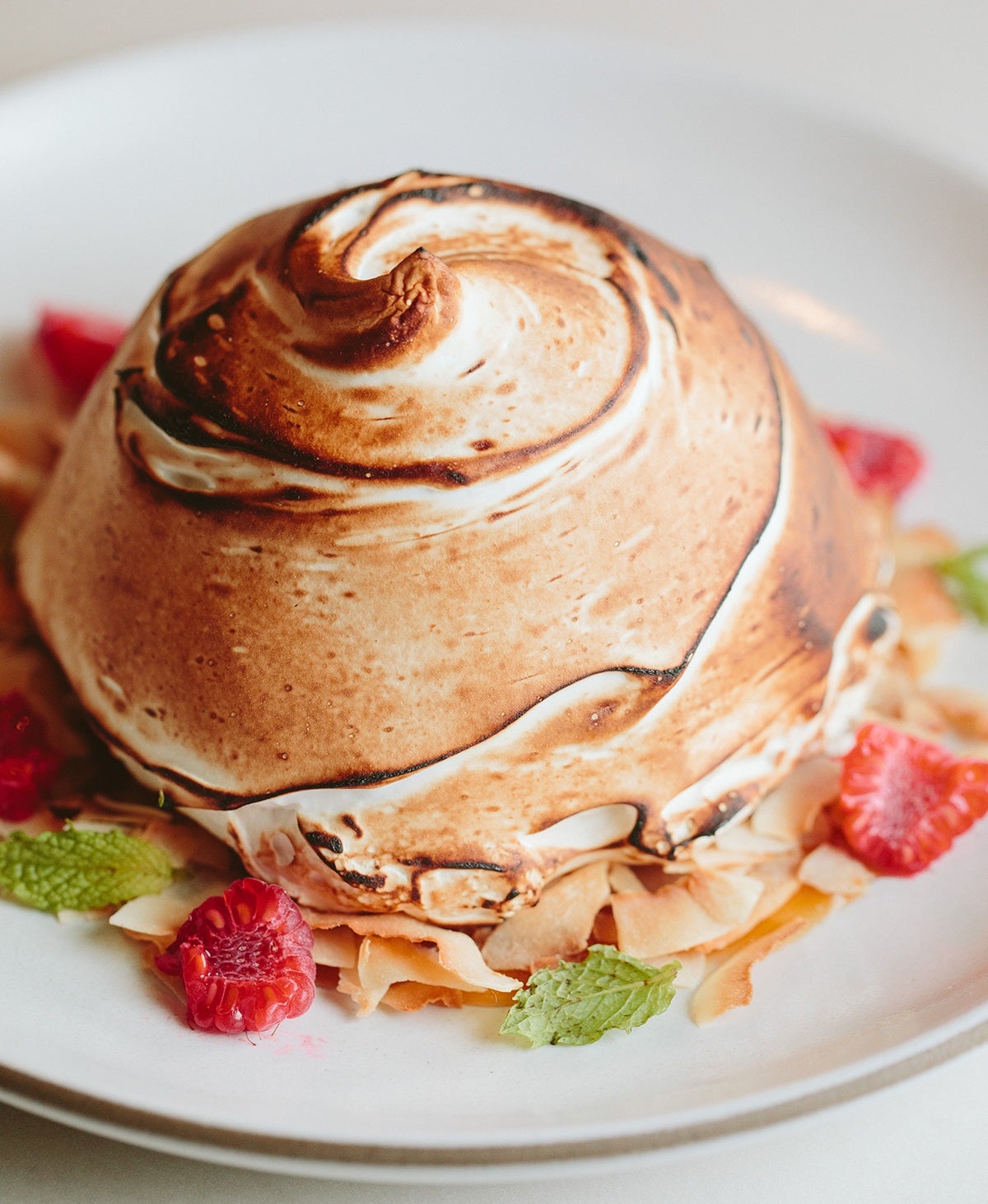
A small meringue dessert garnished with cut up raspberries and leaves.

Chickadee’s baked Alaska. / Photograph of Brian Samuels

A colorful wall of arthouse film posters, a soundtrack of Cuban music, and a mojito—perhaps pineapple or mango—set the scene for a festive dive into Cuban cuisine at this four-year-old Cambridge sequel to the Waltham original. Entrées like ropa vieja and puerco asado offer faithful takes on Cuban classics, while small plates like guava-glazed baby-back ribs and corn fritters with goat-cheese mousse deviate from tradition a bit—in-the-know diners try a little of each. And churros, of course: Don’t forget the churros.

Cambridge | Cuban | Read more | Reservations

We’re not sure who Aunt Wang is—all we know is that her steamed snapper dumplings with chili-and-black-vinegar sauce, on the menu since Chalawan opened in 2019, are among the best balls of dough in town. They’re just one of many delightful bites you’ll enjoy on this whirlwind tour of Southeast Asian fare, from a peanut-y Balinese gado-gado salad to a hearty pork-belly curry from northern Thailand. Lesser restaurants would struggle to do justice to so many cuisines on one menu, but Chalawan pulls it off marvelously.

Cambridge | Southeast Asian | Read more | Reservations

After growing up in his parents’ Sichuan Garden restaurants, Ran Duan (Baldwin Bar, Blossom Bar) decided to join the family business as an adult, adding imaginative beverages to the menu that quickly earned national attention. Duan’s first endeavor outside of his parents’ restaurants, a self-described “seafood emporium,” matches fruits de mer with effervescent drinks in ways that will be refreshing to even those who are weary of the champagne and caviar-on-everything trend (something Ivory Pearl proudly ascribes to). Specializing in stunning seafood towers, lavish plates like local-tuna steak frites, and wine-inspired cocktails such as a crystalline piña colada riff called Coco Chanel, the restaurant is as elaborately, endearingly extra as anything we’ve seen from this Brookline son.

Brookline | Seafood | Read more | Reservations

Restaurateur Will Gilson has gone on to open several more restaurants since Puritan & Co.’s 2012 debut—all wonderful!—but something keeps bringing us back to the original. It’s a celebration of local farms by way of modern American cuisine: think dishes like phyllo-wrapped cod with lobster stew; pan-roasted pork porterhouse with peaches and roasted peppers; and seared scallops with succotash. Whatever you order, definitely start your meal with the pillowy Parker House rolls with cultured butter, a New England classic.

Cambridge | New American | Read more | Reservations

All photographs by Joe St. Pierre or Brian Samuels, as indicated; food styling by Madison Trapkin; props courtesy of Didriks and Weston Table.

First published in the November 2023 print issue.
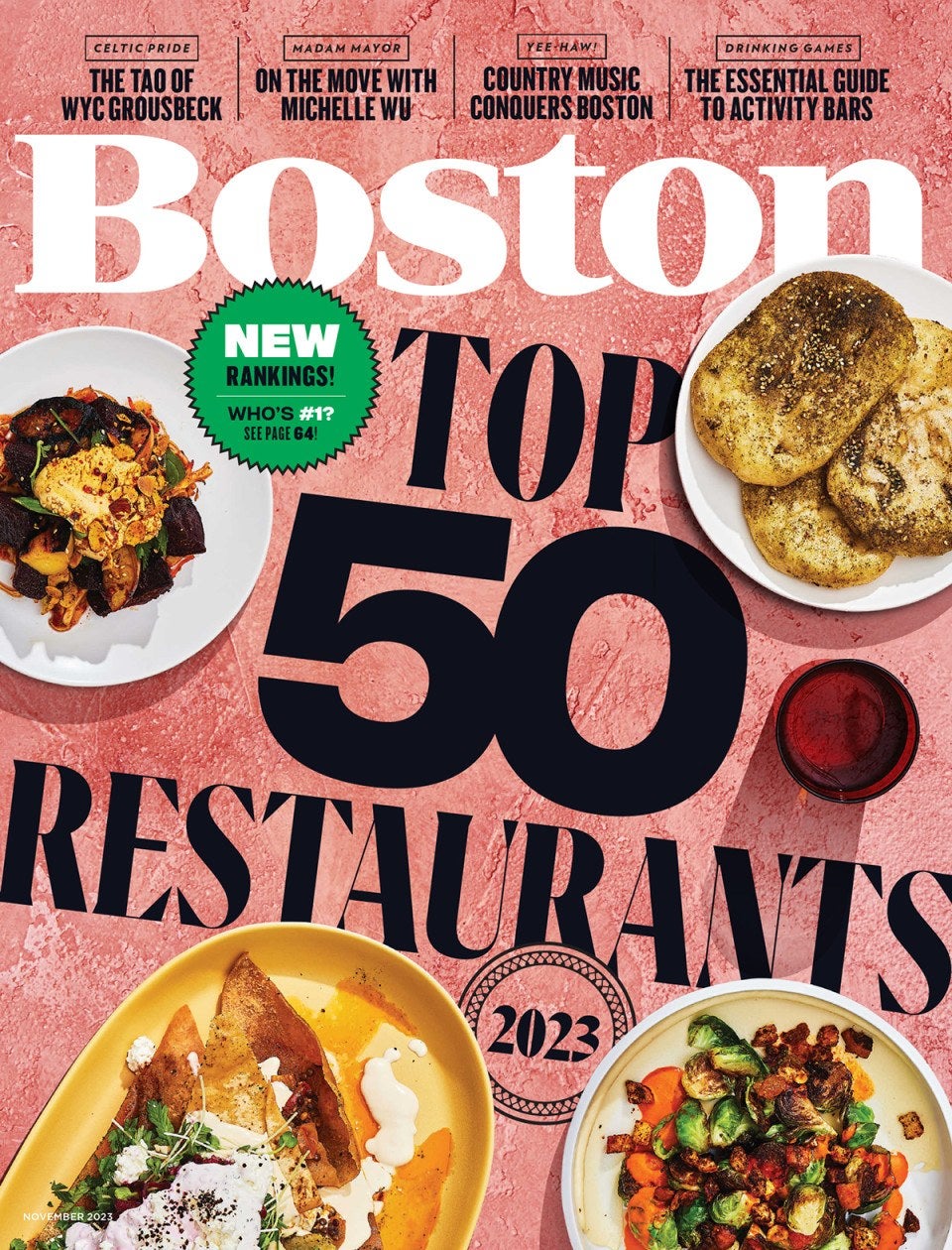
Photograph by Joe St. Pierre; styling by Madison Trapkin
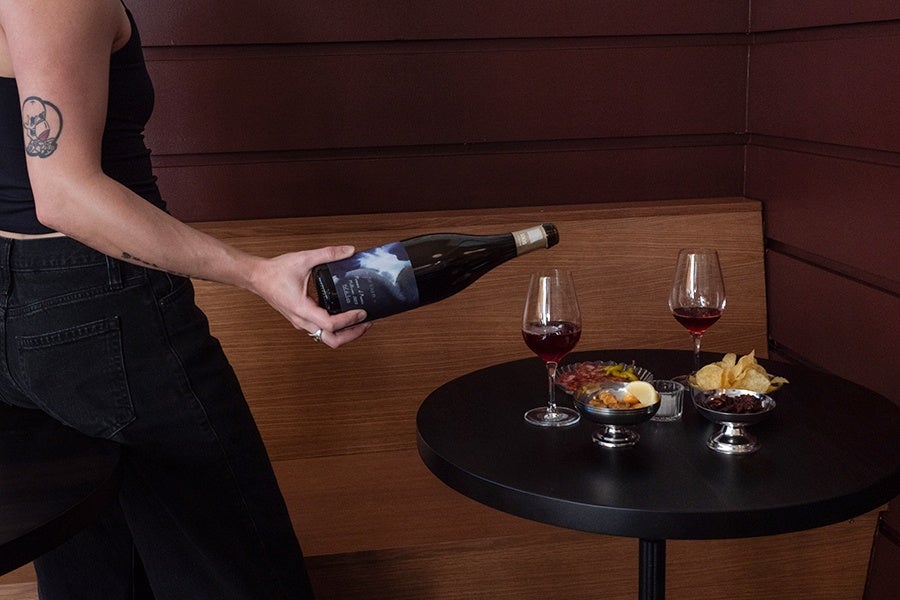
New Restaurants to Try in Boston, October 2026

0

New and exciting restaurants to check out, plus good reasons to visit older spots.

Hawksmoor’s dry-aged, charcoal-grilled porterhouse with bone marrow, creamed spinach, macaroni and cheese, and beef fat fries. / Photo by Rachel Leah Blumenthal

Fall is in full swing, despite today’s 85-degree forecast, and we’re thinking cozy and casual for upcoming meals: French-Canadian comfort in Fort Point (yes, there’s poutine); on-the-go Lebanese wraps, Korean kimbap, and Yemeni coffee; cocktails, charcuterie, and reading in a romantic bookstore. With that, we’re back with our monthly where-to-eat guide, featuring new restaurant openings, expansions and revamps of existing businesses, and loads of caffeine. (Check out last month’s guide here.)

New Restaurants to Try This Month

Recent (or imminent) openings to check out.

About Thyme (Harvard Square)

Fast-casual Lebanese-inspired wraps—on fresh-baked manousheh—are already drawing crowds; try sumac honey chicken or spicy kafta. Iced drinks like cardamom-and-honey lattes and pistachio rose matcha are keeping those crowds coming.

1 Brattle Sq., Harvard Square, Cambridge, aboutthyme.co.

Bap Street (Packard’s Corner)

Korean comfort food stars at this family-owned newcomer on the Boston/Brookline line, with an emphasis on bibimbap and kimbap. The latter—rice-and-seaweed rolls with various fillings—aren’t very prevalent in Boston, despite the city’s broad Korean dining scene, so try them here in varieties such as spicy Buldak chicken or beef bulgogi.

1026A Commonwealth Ave., Boston, bapstreet.com.

A person wearing a black long-sleeve shirt is pouring gravy from a silver gravy boat onto a plate of roasted chicken and French fries garnished with herbs. A glass of beer is placed on the table next to the plate.

Celine. / Photo by Emily Kan

Celine (Fort Point)

The diva of Fort Point has arrived, bringing steak tartare, moules marinières, and poutine. The cozy Montréal-inspired endeavor comes from the team behind several Italian favorites (SRV, Gufo, Salty Pig) and a Portuguese stunner (Baleia).

324 A St., Fort Point, Boston, codarestaurantgroup.com.

A wooden table set with various dishes including a bowl of risotto, a plate of scallops with corn and sauce, a salad with cherry tomatoes and cucumbers, a plate of roasted vegetables, a bowl of Brussels sprouts with cheese, a dish with a piece of cooked fish in broth, and a plate with three rectangular pastries topped with red garnish. There are also blue water glasses, wine glasses with red and white wine, white plates with folded napkins, and silverware arranged around the table.

Puritan Tavern. / Photo by Brian Samuels

Puritan Tavern (Groton)

Suburbanites, this one’s for you: Chef Will Gilson, owner of Cambridge’s Puritan & Company, skews a little more casual at this New England tavern in his hometown. Watch for the resurrection of the farm-to-table tasting-menu dinners he used to host at sibling spot the Herb Lyceum.

20 Station Ave., Groton, puritantavern.com.

Zhu (Back Bay)

This glam multi-level spot features Chinese seafood, dim sum, and dumplings galore in upscale digs. Currently in soft-opening mode; stay tuned for a full opening soon. (No relation to Arlington’s pan-Asian vegan restaurant Zhu.)

903 Boylston St., Back Bay, instagram.com/zhuboston.

New Drink-Focused Spots to Try This Month

Cafés aplenty—plus bars and a distillery.

A glass of frothy tea with a rich amber color sits on a wooden tray next to a small, clear, flower-shaped glass bowl holding a single ripe strawberry with green leaves. The scene is softly lit with natural light.

Bloom’s strawberry Calpico fizz (strawberry white tea and Calpico foam). / Photo by Christian Doan

Bloom (Seaport)

Christian Doan, a.k.a. the influencer @chopstickmurphys, has rounded up some big names in Boston beverages for his tea-bar-by-day, cocktail-bar-by-night: Michelin-recognized cocktail expert Chompon “Boong” Boonnak, who co-owns Mahaniyom, and Markus Yao, who managed the bar at Shōjō, are the beverage directors; Backbar alum Iruma Shibuya is heading the operations. Snack on Japanese sandos and other small bites; sip intriguing matcha drinks, tea-based cocktails, and more.

60 Seaport Blvd., Seaport, Boston, instagram.com/bloom.boston.

A plastic cup with a logo for the brand byChae is full of a layered matcha drink, with orange puree at the bottom, green matcha, and thick white foam. In the background, shelves hold green ceramic bowls.

ByChae’s mango sticky rice matcha latte. / Photo by Rachel Leah Blumenthal

byChae (Back Bay)

Boston’s having a matcha moment, and nowhere is that more apparent than at ByChae, a pop-up-turned café now open on Newbury Street. One sip of the dreamy coconut-cream-topped “mango sticky rice” matcha, and you’ll never order anything else.

222 Newbury St., Back Bay, Boston, instagram.com/bychaeofficial.

Cafè+ by Pagu (Central Square)

Taiwanese doughnuts, empanadas, bentos, matcha, coffee, and more—Pagu now has a café offshoot in an MIT building nearby. “It’s like a mini Pagu down the street,” says chef-owner Tracy Chang: a chance to reinvent the daytime service that Pagu once offered, as well as an opportunity to showcase Chang and Pagu’s community work by featuring chefs from the Refugee Supper Club organization.

134 Massachusetts Ave., Central Square, Cambridge.

A large, dome-shaped pizza oven with a mosaic tile exterior and a black metal front and legs. The front panel has a metal sign that reads

The C’Yool oven. / Courtesy photo

C’Yool (South End)

A few big Yemeni café chains have appeared in Greater Boston over the past year, but this Yemeni café and bakery is homegrown, from the team behind Fenway’s Bab Al-Yemen. The name (pronounced see-yool) is symbolic of abundance, referring to the swelling of Yemeni rivers after heavy rain (and the start of the coffee harvest). The menu is abundant, too, with savory and sweet breads, pastries, and rich Yemeni coffee.

600 Harrison Ave., South End, Boston, 857-305-3147, cyoolcoffee.com.

A person with curly hair and multiple earrings is holding a glass of iced lemon drink in one hand and an open book with an intricate black and white illustration of a tree in the other hand. They are seated at a white table with a bookshelf filled with colorful books in the background.

The bar and cafe at Lovestruck Books. / Photo by Sierra O’Mara Moraes

Lovestruck Bar & Cafe (Harvard Square)

Not new, but a revamp: The bar and café in Cambridge’s Best of Boston bookstore Lovestruck Books has been renovated and is being run in-house now instead of by George Howell Coffee (although the breakup was amicable, with the coffee still on the menu and future event partnerships reportedly in the works). The new bar and café operates all day, from breakfast sandwiches and coffee to charcuterie and cocktails. And fans of Somerville’s now-closed 7ate9 Bakery should be sure to stop by as 7ate9 owner Sarah Amaral is now Lovestruck’s COO and has brought some recipes along, including salted Nutella syrup (try it in the salted Nutella latte) and lavender mocha.

44 Brattle St., Harvard Square, Cambridge, 617-286-2346, lovestruckbooks.com.

A wooden table holds three dishes and a cup. The main dish on a white square plate contains stir-fried rice cakes with sliced carrots and green onions in a reddish sauce. Behind it, a metal plate has green olives topped with thin red strands, and another metal plate holds a shrimp dish garnished with chopped green onions. A small ceramic cup filled with a light-colored liquid is also on the table. The background features green leafy plants and wooden surfaces.

Namu Distilling Co. features an ever-changing menu of anju, Korean drinking snacks, like the tteokbokki, cucumber salad, and olives pictured here. Namu’s soju cups were made by local ceramic artist Sang Jeong Lee. / Photo by Rachel Leah Blumenthal

Namu Distilling Co. (Mission Hill)

New England’s first soju distillery is here—and founders Will Blessing and Josh Moss are using the fermented-rice base to distill a unique gin, too. Head to the spacious, plant-filled distillery and cocktail bar for Korean drinking snacks and very fun cocktails that highlight Namu’s spirits.

89 Heath St., Mission Hill, Boston, namudistilling.com.

A clear glass bowl with black leaf patterns and a gold rim is placed on a cork coaster featuring a bamboo design. The bowl and coaster are on a white marble surface with gray veining. Red leather chairs are partially visible in the background.

Overproof Cocktail Lounge. / Courtesy photo

Overproof Cocktail Lounge (South Boston)

Rum’s the focus when Overproof Cocktail Lounge opens later this month, courtesy of drink and hospitality experts Jen LaForge and Will Isaza. A place of their own has been a long time coming for the industry vets, who most recently managed Ama at the Atlas and Foxglove Terrace respectively and used to be fixtures at Blossom Bar, Birds of Paradise, and other local cocktail destinations. Isaza teases a drink from opening menu called the Spanglish Remix (Ron Zacapa 23, mango milk, sesame, lime, amontillado sherry), which “perfectly encompasses our bartending journey throughout the years,” he says, combining “a Latin American rum with tropical mango flavors, balanced by savory sesame components and a nutty, rich Spanish aromatized wine.” Watch for an intriguing cobbler featuring cold brew and bell pepper, too. In partnership with Common Craft’s South Boston location (and built into the space that was originally planned as Common Craft’s Stillroom cocktail bar), Overproof will feature bar bites by chef Tony Messina, Common Craft’s executive chef and partner.

85 Damrell St., South Boston, overproofcocktaillounge.com.

Overhead view of restaurant dishes on a white marble table with dusk-like lighting. There's a salad, a flatbread, a plate of lemon wedges, a pink cocktail, and more.

Pomona Café & Wine Bar in East Boston. / Courtesy photo

Pomona Café & Wine Bar (East Boston)

Sunlight-drenched mornings over a cup of Colombian coffee; evenings full of wine and global small plates. All-day cafés are hot right now, and Eastie’s latest is a hit thanks to its warm hospitality.

18 Meridian St., Maverick Square, East Boston, 617-418-0261, pomonaeastie.com.

Older Restaurants Doing New Things

Expansions and other changes—time for a (re)visit.

A stack of three golden-brown pancakes on a white plate, topped with chopped nuts, a lemon slice, and green crumbled garnish, placed on a wooden table with a yellow wall and wooden bench in the background.

Brookline Lunch’s baklava pancakes. / Photo by Rachel Leah Blumenthal

Brookline Lunch (South Boston)

Any morning with baklava pancakes is a good one. Southie got a lucky break with the expansion of this bustling, nearly 40-year-old Cambridge brunch favorite.

108 L St., South Boston, instagram.com/blinesouthie.

Comfort Kitchen (Dorchester)

The café is back! The acclaimed Upham’s Corner destination has restarted its casual, neighborhood-y café service on Thursdays and Fridays, offering a petite menu of egg sandwiches, mo:mo (Nepali dumplings), and a few other snacks, plus coffee and tea. (Try the chiya, Nepali milk tea.)

611 Columbia Rd., Dorchester, Boston, comfortkichenbos.com.

Two sandwich halves with breaded chicken cutlets, shredded cabbage, and a creamy sauce, placed in a clear plastic container on a wooden surface.

A katsu sando during the soft opening of Ebisuya in its new Medford space. / Photo by Rachel Leah Blumenthal

Ebisuya (Medford)

A gone-but-not-forgotten Japanese market has been reborn as a restaurant in a new space, and it’ll soon offer one of Greater Boston’s first tastes of Tokyo-style pizza. (More carb-y good news: Kevin’s popular house-made breads live on.) The menu and hours are limited during the soft-opening phase; watch social media for updates. There are plans for live music, too (small acoustic groups), and Ebisuya is running a Kickstarter campaign to raise funds for music-related expenses.

24 High St., Medford, ebisuyaboston.com.

A fried fish sandwich with melted cheddar cheese, shredded lettuce, and a creamy herb sauce, served on a toasted bun on a white plate. A green leafy plant in a gold pot is in the background.

Hawksmoor’s beer-battered fish butty. / Photo by Rachel Leah Blumenthal

Hawksmoor (Fort Point)

We’re chuffed to welcome this U.K. steakhouse chain to the city’s meaty fray. Its British bona fides include a tempting Sunday roast, but the waterfront patio and ice-cold martinis are undeniably New Boston.

15 Necco St., Fort Point, Boston, 781-208-8300, thehawksmoor.com/us.

A black cast iron dish containing six cooked escargots topped with green herb butter, placed on a white plate. To the upper right, there is a glass of rosé wine casting a shadow on the white tablecloth. Part of another white plate with food is visible on the right edge.

LPM Restaurant & Bar’s escargot. / Courtesy photo

LPM Restaurant & Bar (Back Bay)

Daydreaming of a Mediterranean vacation? Travel to the French Riviera by way of this new spot at the Four Seasons Hotel One Dalton Street, aided by a tomato cocktail and salt-baked sea bass.

1 Dalton St. (Four Seasons Hotel One Dalton Street), Back Bay, Boston, lpmrestaurants.com.boston.

Má Minh by Việt Citron at Eastern Edge Food Hall (Kendall Square)

Inside Best of Boston food hall Eastern Edge, the popular Vietnamese restaurant Việt Citron has added an offshoot. While you can get hearty dishes like bánh mì, bánh hỏi, and more at the original, head to the Má Minh counter for a snackier menu, featuring summer rolls and sugarcane juice.

290 Main St., Kendall Square, Cambridge, easternedgefoodhall.com.

A spread of Lao food, including a crispy fried fish, sausage, fried pork and mushroom rolls, herbs, and sauces.

Pun mieng—Lao-inspired drinking food—at Phaeng & Phiu’s inaugural pop-up series at Rubato, February 2025. / Photo by Rachel Leah Blumenthal

Phaeng & Phiu at Shore Leave (South End)

Chef Veo Robert’s Best of Boston Lao-meets-local pop-up has taken up residence at tropical bar Shore Leave for the bar’s final few months. (Shore Leave, along with siblings No Relation and Bar Mezzana, will close at the end of the year.) Robert is serving plenty of classic Lao dishes while emphasizing local sourcing, such as in pad kee mao talay, a rice noodle dish with New England seafood.

11 William E. Mullins Way, South End, Boston, 617-530-1775, shoreleaveboston.com.

Two white bowls sit on a pale green tray, one featuring thick noodle rolls with fish balls and a swoosh of sriracha, the other with chopped cucumbers.

Rubato’s ji cheung fun (steamed rice rolls) with curry fish balls and a spicy cucumber salad. / Photo by Rachel Leah Blumenthal

Rubato (Quincy)

This tiny Hong Kong-inspired café in Quincy has been bustling since its 2022 debut—but it’s even buzzier these days thanks to chef-owner Laurence Louie’s finalist finish on the 23rd season of Top Chef. While it’s traditionally kept breakfast and lunch hours with the very occasional evening pop-up, Rubato is finally adding regular dinner hours as of October 9. Look for new dishes such as a fried fish sandwich on a steamed chili crisp bao, molten custard black sesame French toast, and a whole clay-pot rice menu section.

412 Hancock St., Quincy, 617-481-2049, rubato-food.com.

Ye Olde Pepper Candy Pantry Pop-Up (North End)

Ye Olde Pepper Candy Companie really is “olde”—it’s the oldest continuously operating candy company in America. Taste history as the Salem shop pops up at Boston’s Old North Church Historic Site through the end of October with old-timey artifacts and, of course, sweets.

193 Salem St., North End, Boston, oldepeppercandy.com.

A version of this guide first appeared in the print edition of the October 2026 issue with the headline “The Hot List.”

Best Real Estate Articles August 2026

0

August is when the summer market starts to show its cracks. Buyers who launched their search back in spring are either under contract, burned out, or still quietly stinging from the home that got away. Sellers who priced based on last year’s optimism are looking at a listing that hasn’t moved and trying to figure out who to blame.

Agents are somewhere in the middle, managing expectations from both directions and doing the kind of careful, patient work that doesn’t look impressive from the outside but is what actually gets deals done.

That tension is exactly what this month’s roundup addresses. Every article I’m highlighting in August gets into the specific details that tend to separate people who close from people who don’t.

Two conventional loan programs that look nearly identical on paper but split decisively based on a single three-digit number. The mortgage mistakes that cost borrowers real money long after the damage is done. How experienced agents actually read comparable sales, and why most buyers and sellers are drawing the wrong conclusions from the same data.

What to do when a listing has already expired and you have to restart from scratch. And a fresh look at what builders are doing with windows in new construction, because what buyers notice first has changed more than most sellers realize.

None of these are flashy topics. They are the ones that come up in real conversations, in lender offices, at listing appointments, and across negotiating tables in every price bracket. Every article in this month’s lineup earned its spot because it answers something people genuinely get wrong and gets specific about what to do instead. Let’s get into it.

Real Estate August 2026

Real Estate August 2026

Two Programs, 3% Down, and One Number That Decides Everything

I’ll lead with my own contribution this month, because this is a question that comes up in almost every first-time buyer conversation we have, and the honest answer is more nuanced than most people expect.

My HomeReady vs Home Possible comparison guide breaks down the two most widely used 3% down conventional loan programs in the market: Fannie Mae’s HomeReady and Freddie Mac’s Home Possible. On the surface, they look like the same loan with two different brand names.

Both let qualified buyers put just 3% down. It caps income at 80% of the area median income. Both offer reduced private mortgage insurance compared to a standard conventional loan, and that mortgage insurance cancels once you reach 20% equity. The overlap is real, and it’s why so many buyers, and even some loan officers, treat these programs as interchangeable.

They are not. Once you get past the shared headline features, five specific differences decide which program actually fits a given borrower’s situation, and those differences involve credit score minimums, who is allowed to be on the loan, eligible property types, how far each program will stretch on debt-to-income ratios, and how each one handles non-traditional income sources like boarder rent or income from an accessory dwelling unit.

Factors That Matter

The credit score split is the biggest one, and it comes up early in every comparison. HomeReady works with scores as low as 620 through automated underwriting, and it even offers a path for borrowers with thin credit files to use rent, utility, and insurance payment history instead of a traditional score.

Home Possible typically requires at least 660, and some lenders push that floor higher for certain loan types. That 40-point gap is decisive for a significant share of buyers. If your score sits anywhere in the 620 to 659 range, Home Possible simply isn’t in play yet, regardless of how strong everything else on your application looks.

The co-borrower rules are the other place where the programs genuinely split in a way that changes outcomes. Home Possible allows a non-occupant co-borrower, meaning a parent or family member can sign onto the loan to help with income qualification without being required to live in the home.

HomeReady generally expects all borrowers to occupy the property. If a buyer is relying on a family member’s income to clear the qualification threshold, that distinction is the whole ballgame.

The guide also covers what changed in 2026 specifically for Home Possible, including an update to eligible fund sources that caught some borrowers off guard mid-transaction, and how the updated area median income limits affect buyers who were told a few months ago that they earned too much to qualify.

For anyone trying to figure out which program they actually belong in, the full breakdown is worth reading before you sit down with a lender and commit to a direction.

What Agents Are Really Looking at When They Pull Comps

Michelle Gibson has spent her entire career working in Wellington and the surrounding South Florida communities, and the depth of that local experience shows in her guide to how real estate agents evaluate comparable sales. It’s the clearest explanation I’ve come across this year of what a professional comp analysis actually involves, and how dramatically different it is from averaging nearby sale prices and calling it a market value.

The framing she leads with is exactly right. The question a well-built CMA is answering isn’t “what have similar homes sold for recently?”

It’s “would the same buyer who toured this home have realistically considered that one?” That buyer overlap test is the foundation of the entire analysis, and most buyers and sellers thinking about comps have never approached it that way.

Two homes that share the same zip code, bedroom count, and square footage might not be competing for the same buyer at all, and using one to price the other produces a number that has nothing to do with what demand will actually support.

From there, Michelle works through the layers that experienced agents add before they ever get to a number. Location factors within a community matter far more than most people realize.

Two homes on the same street can carry meaningfully different values if one backs to a preserve and the other faces a neighbor’s fence, and automated valuation tools have no way to account for that. They can measure proximity. They cannot measure buyer reaction.

Contract Dates Become Crucial

The section on contract dates is one every seller should read carefully before agreeing to a list price. A closing date tells you when the paperwork recorded. The contract date tells you when the buyer actually made their decision, under the market conditions that existed at that moment.

If a home closed in April but went under contract in February, the price reflects February inventory, February buyer urgency, and February negotiating patterns. Pricing off that sale without understanding the timing can put a seller months behind where the market actually sits today.

Michelle also takes a close look at seller concessions and what they do to the apparent sale price in a comp analysis. A home that closed at $525,000 with $12,000 in seller-paid closing costs is a very different data point than a clean $525,000 sale.

The buyer in the first scenario effectively paid $513,000 in net terms, and that gap matters when you’re using that transaction to anchor a new list price.

There’s more in the article on layout livability versus raw square footage, what price reduction history reveals about a comp, and why certain sales get excluded from the analysis entirely.

If you’ve ever heard an agent say a CMA isn’t the same as an automated estimate and wondered what the actual difference is, this article explains it in concrete terms.

Remember there is nothing more crucial than pricing a home accurately.

The Mortgage Mistakes That Have Been Costing Borrowers for Years

Paul Sian is a residential mortgage lender, and his article on the most expensive mortgage mistakes borrowers still make doesn’t waste time on vague warnings. Each mistake gets a specific explanation of what goes wrong, why it happens, and what the real cost is.

He opens with the pre-approval problem, which is the right place to start because this mistake kills deals before a buyer ever writes an offer. The assumption that pre-approval is fast and simple underestimates how much documentation lenders are legally required to collect today, and how long it can take to work through even a minor issue with credit history, employment verification, or conflicting financial records.

Buyers who skip this step and fall in love with a home first are setting themselves up to lose it. The right sequence runs in the other direction.

Paul’s section on credit scores goes further than the standard advice to check your report before applying. He explains that errors on credit reports take time to resolve because the agencies and creditors involved have their own mandated response timelines, and any unresolved dispute in a credit file has to be cleared before a lender can close.

Buyers who discover a problem in month one of their search have options. Buyers who discover it in month four are in a much harder position.

Outstanding Financial Advice

Two other sections stand out. Paul is direct about the gap between borrowing capacity and actual budget, making the point that a lender’s pre-approval amount reflects documented financials, not your real-world financial picture. It doesn’t capture your actual job stability, your normal monthly expenses, or what happens to your cash flow when the water heater goes out.

Buying at the absolute ceiling of what a lender will approve is how buyers end up house-poor within a year.

The section on rate comparison is similarly practical. Paul explains why comparing headline interest rates across lenders misses the real cost of the loan.

Points and fees that get a borrower to a particular rate vary from lender to lender and can change the total cost of the mortgage significantly over its life. The annual percentage rate gives a more complete picture, and shopping on APR rather than rate is the smarter comparison.

If you’re early in the buying process and haven’t sat down with a lender yet, this article is the kind of preparation that pays for itself.

Your Listing Expired. Now What?

Sellers who watch a listing agreement expire without a sale tend to blame one of two things: the market or the agent. Paul Sian’s article on what to do after a home listing expires makes the case, with patience and specifics, that neither response is useful without an honest diagnosis of what actually went wrong. And most of the time, the honest diagnosis points to something the seller controlled.

Price is where he starts, and that’s the right call. An overpriced home in a softer market doesn’t generate showings. Without showings, there’s no feedback, no offers, and no path forward. It is one of the most common house selling mistakes.

Paul points out that the online tools sellers use to check their home’s value are built around ideal conditions, and that a home with dated finishes, deferred maintenance, or cosmetic issues that need attention sits in a different pricing bracket than those tools reflect.

Sellers who anchor to what they paid a few years ago, or to a number generated by an algorithm that has never seen the inside of the house, are pricing for a buyer who doesn’t exist at that number.

Buyer Feedback Matters

The section on buyer feedback is practical in a way I appreciated. Most agents should be collecting feedback automatically after showings, and Paul explains how to decode what buyers actually mean when they use phrases like “needs TLC” or “lacks curb appeal.”

These aren’t vague impressions. They’re signals that translate directly into a decision: fix the problem before relisting, or adjust the price to reflect that whoever buys the home will have to.

Paul also gets into staging, showing schedule flexibility, and marketing quality, and he doesn’t soften any of it. Poor listing photos mean fewer buyers request showings, because the search process today starts online and most buyers have already filtered your home in or out before they’ve spoken to anyone.

A rigid showing schedule means buyers who could have made an offer didn’t get inside on their timeline and found something else. These are controllable variables, and ignoring them the second time around produces the same result as the first.

If your home didn’t sell in the first listing period, this article is the honest conversation you need before you sign anything new.

Why Buyers Keep Stopping to Stare at the Windows

This one is a different kind of article from the rest of the roundup, and I think that’s exactly why it belongs here. Walk through enough new construction homes and something starts to feel different before you can name it. The rooms feel larger than the square footage suggests.

The spaces feel connected to the outside in a way that doesn’t feel accidental. Buyers describe it as bright, open, airy, and they’re right, but most of them can’t explain what’s creating the feeling.

Tami Weiler’s piece on what window styles are dominating new construction right now gives that feeling a name, and explains the intentional design thinking driving it. Builders have shifted from treating windows as a functional feature to treating them as a design system, and the five styles Tami covers are showing up everywhere for specific reasons.

Floor-to-ceiling glass brings the outside into the room in a way that changes how the space feels at every hour of the day. Black frames create crisp visual contrast that works against almost any exterior material, from white siding to natural wood to brick, and they frame the interior view almost like a piece of artwork. Large picture windows stay popular because buyers respond viscerally to unobstructed sightlines and rooms filled with daylight. These aren’t trends that are going away. They’re meeting a need that buyers are increasingly willing to pay for.

Types of Windows

The two that Tami covers which I found most interesting are corner windows and clerestory windows. Corner windows wrap glass around the junction of two walls, giving a room views from two directions at once and creating an openness buyers notice the moment they step into the space.

Clerestory windows sit high on the wall, well above furniture height, pulling in natural light without sacrificing any usable wall space or privacy. They’re a smart solution for hallways, bathrooms, and great rooms where buyers want light without compromising the function of the room.

Tami also includes a perspective from Bridget Gelderman, a real estate agent who works with buyers in the Poconos region, who makes a point that I think is worth sitting with: builders today are thinking about windows as a composition, not as individual units.

The way multiple windows work together, the balance, the grouping, the mix of operable and fixed glass, is what creates the custom quality feel that buyers can’t quite explain but clearly respond to. The overall design matters as much as any single choice.

If you’re shopping new construction or thinking about a renovation, this article gives you the language to understand what you’re reacting to when a home feels right, and what to ask for when it doesn’t.

Final Thoughts

August is not the month to make assumptions. The market rewards preparation more than optimism right now, and every article in this roundup is a version of that same message applied to a different part of the transaction.

Buyers who understand the difference between HomeReady and Home Possible walk into a lender conversation knowing which program fits their situation before anyone else has to tell them.

Many buyers who’ve worked through Paul Sian’s breakdown of mortgage mistakes start the pre-approval process earlier than feels necessary, look at their credit before anyone else does, and compare total loan costs rather than just the rate at the top of the quote. Buyers touring new construction understand why certain homes feel brighter and more connected to the outside in ways that are harder to explain than to feel.

Sellers who understand how Michelle Gibson reads comps know why the closing date on a nearby sale doesn’t tell the whole story, and why the list price their agent recommends might be lower than they expected but grounded in something real. Sellers working through Paul Sian’s expired listing checklist know that relisting without an honest post-mortem is how the same result shows up twice.

The details in each of these articles are the kind that change outcomes quietly. Nobody announces that they read the right thing at the right time. They just make better decisions, avoid the avoidable mistakes, and close when others are still trying to figure out what went wrong.

That’s the thread running through August. Small shifts, done correctly, add up to something you notice at the closing table.

PREVIOUS REAL ESTATE ROUNDUPS

Luke SkarLuke SkarAbout the author: Luke Skar leads the digital strategy behind MadisonMortgageGuys.com, the Delafield, Wisconsin branch of Union Home Mortgage Corp., serving homebuyers across 16 states. With more than two decades in mortgage and digital marketing, he handles both the technical SEO and the content strategy behind the site, translating complex loan programs into guides that everyday buyers can actually use. Connect with Luke on LinkedIn or follow MadisonMortgageGuys on social media for more.

25 Top Restaurants South of Boston

0

Boon Choo Thai Kitchen. / Photo by Heidi Finn

For the Great Suburban Restaurant Hunt, the cover story of our August 2026 issue, we headed south of Boston, exploring the countless excellent restaurants of the South Shore and nearby areas. We ate New England seafood in its many fried, baked, and steamed forms; we devoured bar pies; we cozied up in pubs. (We stayed within I-495 for the purpose of this particular exploration, but check out our Cape & Islands restaurant guides and a look at five iconic South Coast dishes for more south-of-Boston picks.)

See also:

Overhead view of Indian dishes, including grilled shrimp topped with rings of raw red onion, white rice, and naan.

Tandoori grilled shrimp and more at 1947 Norwood. / Photo by Rachel Leah Blumenthal

1947 Norwood

With the tagline “Truly Indian,” 1947 Norwood showcases a wide range of modern Indian fare—from street food like vada pav (fried potato dumplings on a soft roll) to dosa (including a hilariously long paper masala version) to Indo-Chinese dishes (Sichuan street noodles). The menu is huge, the flavors are big: You can’t go wrong. Do try the natu bombs, though—vegetable dumplings with a kick.

997 Boston Providence Hwy., Norwood, 781-269-5466, 1947.boston.

Alma Nove. / Courtesy photo

Alma Nove

Chef Paul Wahlberg (yes, that one) named it after his mother and her nine children. He cooks with wood—for the flavor, absolutely, but also the aroma. The cod cakes come with romesco and hot-and-sour eggplant sauce. The sweet potato gnocchi has broccoli rabe, roasted tomatoes, and pistachio-arugula pesto. Waterfront Hingham Shipyard, fire pit, and walls of glass: Bring someone you really like.

22 Shipyard Dr., Hingham, 781-749-3353, almanovehingham.com.

Khao soi at Boon Choo Thai Kitchen. / Photo by Rachel Leah Blumenthal

Boon Choo Thai Kitchen

Renu Bissanti started cooking Thai food out of her Sharon home during the pandemic, graduated to a beloved food truck, ran a restaurant in Norton, and eventually opened this bright, welcoming dining room back in her own town. Don’t miss the kana moo grob (a crispy pork-belly stir-fry) and the deeply flavored massaman curry with beef.

366 South Main St., Sharon, 781-806-5230, boonchoothaikitchen.com.

Byblos Restaurant

Belly dancers and beef kebabs are the name of the game at this 30-year-old Lebanese favorite. Come with a group, order a family-style platter—packed with dips, salads, meats, kibbe, grape leaves, and more—and get ready for a good time.

678 Washington St., Norwood, 781-762-8998, byblosrestaurant.com.

Cork + Table Kitchen and Bar

Seek out the Southern-inspired dishes on Cork + Table’s wide-ranging American menu: Carolina pimento dip with andouille, for example, or fried green tomatoes with bacon-onion jam, or Lowcountry shrimp and grits. A large wine list (hence the “cork”) adds to the hospitable experience.

23 Court St., Plymouth, 774-454-3683, corkandtableplymouth.com.

The Farmer’s Daughter

Brunch is everything at this farm-to-table favorite, which opened in North Easton in 2013 and later expanded to Sudbury. The signature French toast is a towering hunk of brioche bread pudding with cinnamon honey butter. Chicken and waffles fuse with a Benedict. Mimosas come in flights; a DIY bloody mary can be topped with slab bacon, lobster, and more. Good morning.

122 Main St., North Easton, 508-297-0286, thefarmersdaughtereaston.com.

Few & Far

Cambridge’s Forage is known for its elegant, locally sourced fare. That locavore ethos—and a love of natural wines—carries over to its more casual, more neighborhood-y Dedham Square sequel. You’ll come back again and again for crowd-pleasers like the burger, chicken Milanese, or Thursday fried chicken, but be sure to delve into beautifully seasonal small plates like an herby snap pea and strawberry salad with feta and cornbread croutons or seared halloumi with summer squashes and romesco.

566 High St., Dedham, 781-747-7142, fewandfardedham.com.

Gourmet Kitchen

Some dishes hew to the Haitian playbook (like griot—fried pork—and Haitian spaghetti); others are fun bits of fusion (jerk-chicken wontons, Caribbean chopped cheese). Either way, this Caribbean-American comfort spot from the folks behind Medford’s Neighborhood Kitchen delivers on flavor.

1179 N. Main St., Randolph, 617-588-6584.

Jake’s Seafood Restaurant and Fish Market

This seasonal Nantasket Beach stalwart is a classic for a reason: decades of showcasing the best of New England seafood. Come here for steamed mussels, haddock chowder, and fried seafood platters (which are gluten-free!)—not to mention water views. Or, buy your own provisions at the market to cook at home.

50 George Washington Blvd., Hull, 781-925-1024, jakesseafoods.com.

A green and white bowl holds noodles, crawfish, and salmon roe.

Lê Madeline’s Việt Cajun crawfish noodles: garlic noodles, basil-buttered crawfish, parmesan, salmon roe. / Photo by Rachel Leah Blumenthal

Lê Madeline

This modern Vietnamese restaurant—a revamp of phở mainstay Pho Linh—has been one of the most buzzed-about south-of-Boston spots since its late 2023 debut. It’s inflected with bits of New England and beyond, inspired by the Vietnamese American upbringings of the team, so be sure to try dishes like the lobster roll (currently served with ginger-scallion aioli, fried ginger, and tobiko) or the Việt Cajun crawfish noodles. There are flawless renditions of more classic dishes, too, such as shaking beef.

409 Hancock St., Quincy, 617-328-9600, lemadeline.com.

Levitate Backyard

If your ideal summer involves sipping margaritas and eating “surf fusion”—think: tacos, wood-fired pizzas, and dulce de leche churros—while catching live music at a laidback outdoor venue, this seasonal spot from surf-shop-turned-lifestyle-brand Levitate is the place for you. (The brand is also behind giant annual music festivals in the summer and fall, surf and skate camps, and more.)

1871 Ocean St., Marshfield, levitatebackyard.com.

Mae’s Sandwich Shop. / Courtesy photo

Mae’s Sandwich Shop

There are sandwich shops, and then there’s Mae’s—a tiny Ocean Bluff counter directly across from the Atlantic, where co-owners Eileen Price and Sam Kauff make everything in-house and treat sandwiches like an art form. The house-roasted beef with black-pepper mayo, cheddar, and slow-roasted shallots on sourdough focaccia is the one to get. Then fill the cooler and head to the beach.

563 Ocean St., Marshfield, 781-319-2726, maesmarshfield.com.

Mallebar Brasserie. / Courtesy photo

Mallebar Brasserie

The South Shore may be chock-full of seafood spots, but Mallebar makes the case for meals with a slightly French accent. Chef and co-owner Jim Casey once cooked alongside the grande dame Julia Child, and his Gallic-inspired menu feels like an homage. Case in point: crispy duck leg cassoulet and steak frites with a rich mushroom bordelaise that would make her proud.

15 Main St. Extension, Plymouth, 508-747-0471, mallebarbrasserie.com.

A duck dish at Northern Spy. / Courtesy photo

Northern Spy

Northern Spy sits inside Paul Revere’s 225-year-old copper mill, though its wood-fired menu feels far from old-fashioned. For six years, the bustling spot has brought elevated New England fare to Canton, from fried eggs in spicy lobster marinara for brunch to baked stuffed scrod for supper. Talk about style and substance.

4 Rolling Mill Way, Canton, 781-989-1850, northernspycanton.com.

Island Creek Raw Bar in Duxbury. / Photo by Emily Hagen

The Raw Bar and the Winsor House at Island Creek Oyster Farm

It can’t possibly get fresher than this: hyperlocal shellfish served right next to an iconic oyster farm. Check out the no-reservations raw bar for oysters, conservas, and light bites (indoors or, weather permitting, outdoors); and the cozy, nautical Winsor House for a proper sit-down dinner—how’s that for New England seafood?

The Raw Bar, 403 Washington St., Duxbury, 781-934-2012; the Winsor House, 390 Washington St., Duxbury, 781-934-0991; islandcreekoysters.com.

Two white bowls sit on a pale green tray, one featuring thick noodle rolls with fish balls and a swoosh of sriracha, the other with chopped cucumbers.

Rubato’s ji cheung fun (steamed rice rolls) with curry fish balls and a spicy cucumber salad. / Photo by Rachel Leah Blumenthal

Rubato

This petite, four-year-old Hong Kong-style café has been in the news a lot lately, thanks to chef-owner Laurence Louie’s victory over Bobby Flay and finalist status on Top Chef, not to mention a Chopped win a couple years back. But beyond the food TV stardom, Louie simply makes great food (we’re angling for the Michelin inspectors to take note): savory bowls of congee, dessert-like Hong Kong-style French toast, and sandwiches built on irresistible bolo baos—fluffy, buttery buns with a sweet, crunchy topping.

412 Hancock St., Quincy, 617-481-2049, rubato-food.com.

Salo Bar & Grill

This summer, everyone else discovered Cape Verde, thanks to the World Cup. Brockton’s Cape Verdean community—the largest of any U.S. city—already knew. Chef-owner Salo Afonseca grew up on the islands and moved here at 12 with a dream: bring the real flavors of Cape Verde to Brockton, no Boston drive required. Well done.

810 N. Montello St., Brockton, 774-428-2041, instagram.com/salobarandgrill.

Salt Marsh Winery. / Photo by Zoe Stoner

Salt Marsh Winery

First things first: This is a restaurant, not a winery, named for a mystery novel written by chef-owner Doug Rodrigues’s grandfather. And an excellent restaurant it is, a place where Rodrigues combines his Boston fine-dining chops (Clio and more) with classic New England fare—not to mention the best, albeit a bit nontraditional, French onion soup ever.

17 New Driftway, Scituate, 781-378-3814, thesaltmarshwinery.com.

Steel & Rye. / Photo by Little Outdoor Giants

Steel & Rye

Dough’s the word at this daytime café and nighttime dinner spot. The on-site bakery churns out beautiful artisanal breads—local-flour sourdoughs and more—and pretty pastries; dinner features tasty wood-fired pizzas and a darn good burger, among other seasonal fare. Also check out Two Pence Market, the team’s neighborhood food and coffee hub that opened summer 2026 in a former bank down the street.

95 Eliot St., Milton, 617-690-2787, steelandrye.com.

Stoked Wood Fired Pizza Co.

With food truck roots (and Best of Boston pizza), Stoked has built quite a following at its long-running brick-and-mortar locations in Brookline and Cambridge, following up with a 2025 Cohasset expansion. The pepperoni (crumbled, not sliced), drizzled with hot honey, is a must; General Tso’s wings and a handful of other not-pizza options seal the deal. Plus: a vegan menu nearly as large as the non-vegan menu. And pinball!

380 Chief Justice Cushing Hwy., Cohasset, 781-250-0030, stokedpizzaco.com.

Khao soi and sausage at the Thai Sunday Market at Wat Nawamintararachutis. / Photo by Rachel Leah Blumenthal

Thai Sunday Market at Wat Nawamintararachutis

From May to October, Raynham’s Buddhist temple and meditation center invites the public to a weekly market where vendors sell a dizzying array of Thai food. Steaming bowls of khao soi with chicken, fried meatballs, ultra-crispy pork belly, fiery papaya salad, plump sai krok Isan (fermented pork-and-rice sausages), little cups of coconut custard—how to choose? You’ll just have to come back next Sunday, and the next. Prepare to pay in cash or via Zelle, and grab a spot at one of the picnic tables to enjoy your feast.

382 S St. E, Raynham, 508-823-1800, facebook.com/thaisundaymarket.

The Tinker’s Son

Cozy inside, cozy outside, and frequently featuring live music, trivia, or other fun entertainment, the Tinker’s Son is the epitome of a neighborhood Irish pub. There’s truly something for everyone: a substantial kids’ menu for the little ones; late-night snacks and plenty of whiskey for the grownups. And a dinner menu with the classics (ale-battered fish and chips, featuring Scituate haddock, and shepherd’s pie) and more (Cajun burger, steak tips with Guinness barbecue sauce).

707 Main St., Norwell, 781-561-7361, thetinkersson.com.

Tosca

Date-night vibes abound at this white-tablecloth Italian restaurant, which opened over 30 years ago. (Restaurateur Ken Oringer was chef here in the early days before going on to open Clio, Uni, Toro, and other acclaimed Boston spots.) Fresh pasta shines in dishes such as spaghetti frutti di mare and rigatoni with boar Bolognese, and steak options are plentiful, including a beauty of a cut of American wagyu.

14 North St., Hingham, 781-740-0080, toscahingham.com.

Pickle pizza from Town Spa. / Photo by Rachel Leah Blumenthal

Town Spa

Since 1955, Town Spa has helped set the bar for South Shore bar pizza. Order your pie extra crispy—topped with pickles, perhaps, or bacon—and don’t forget the side of honey-mustard sauce for dipping the crust. Cash only.

1119 Washington St., Stoughton, 781-344-2030, townspapizza.com.

Yaz’s Table

Owner Yasmine “Yaz” Zakhary, a Scampo and Abe & Louie’s alum, blends her Egyptian heritage and broader Middle Eastern influences with comfort-food brunch fare at this bustling spot. Nothing like starting the day with a hearty moussaka skillet, basturma Benedict, or Egyptian beef breakfast tacos on garlic naan. Add a pistachio latte—with a baklava-dust rim—for good measure. And sure, some fresh doughnut holes (in rotating flavors), too. (Don’t want to wait for a table? Grab snacks and drinks at the café and bakery instead.)

1209 Bedford St., Abington, 781-421-6118, yazstable.com.

With additional reporting by Brittany Jasnoff, Camille Dodero, Chris Vogel, and Makena Gera.

Why Boston’s Top Chefs Are Opening Restaurants in the Suburbs

0

The rents are lower, the diners are loyal, and the parking is free. So why did it take so long for city restaurateurs to consider the ‘burbs?

This is part of a series about suburban restaurants, a cover package featured in our August issue.

For most big-name, top-tier Boston chefs, the calculus has always been simple: stay in the city. The press is there. The diners willing to spend $200 a head on a tasting menu are there—or at least that’s the assumption. And the Michelin inspectors are there now, too. “I’m a city kid,” says chef Tony Susi of the North End’s Little Sage, the 2025 revamp of his beloved ’90s restaurant Sage. “I love the energy and the action of the city.” Chef Erin Miller of Urban Hearth never considered leaving Cambridge when searching for a new space, recently moving her restaurant to bigger digs in Inman Square. “The community that we built around the restaurant starts with the people who are local to it,” Miller says. “If we have this community that’s been so supportive, we want to support them back. We want to stay here.”

That loyalty is real. But so is the suburban math—lower rents, more space, a labor pool that can afford to live nearby. And for a growing number of chefs, the math is starting to win.

When Ian Calhoun opened 80 Thoreau in Concord in 2011, he was ahead of the curve. Almost no one was doing delicate tuna crudo and hearty steak frites this far west of the city. And there was a reason. “Prior to opening, I met with potential investors, and while the majority supported and welcomed the project, others cautioned that a restaurant like the one we were describing wouldn’t be supported by the locals,” he says. The skepticism wasn’t about whether suburban diners existed—it was about whether they’d pay city prices for city-caliber food without the city around it. The naysayers, it turns out, were wrong: Calhoun built a loyal following of serious diners who didn’t have to fight traffic to enjoy a serious restaurant.

Illustration by Dale Stephanos

Fast-forward a decade, and for chef Douglass Williams, owner of the local Italian group Mida, opening a location in Newton in 2021 was a no-brainer. “It really comes down to affordability and the market, both from a guest and customer base, but also from a labor base,” says Williams, who notes the lower cost of living for staff near suburban restaurants.

Indeed, Boston is getting less affordable by the year. In late July 2026, Traveler Street Hospitality chef and co-owner Colin Lynch announced that three of the group’s acclaimed South End restaurants—Bar Mezzana, Shore Leave, and No Relation—would close at the end of the year, citing an expected rental increase that would have made margins tight going forward. Another of the group’s restaurants, FiDO Pizza in Allston, closed abruptly in June after less than a year in business.

“The biggest challenge in Boston is the economy right now,” says Lynch, also noting high ingredient costs and slowing restaurant traffic as household budgets tighten. “In general across the restaurant industry, you’re seeing that the highs are still very high, but the lows are getting lower.”

Lynch says he has no plans for the next step yet and is focusing on finishing the three restaurants’ run strong. (The group’s South End brasserie and oyster bar Black Lamb will remain open.) The Globe reported that Lynch might look “outside the city for his next chapter,” but he tells Boston he’s not quite planning a move to the suburbs yet. Still, he understands the draw of a slower pace and more space after 25 years of city living in Boston.

“I think there’s a lot of opportunity in surrounding suburban areas,” says Lynch. “The restaurant industry is very difficult anywhere, but I see the appeal to it. If somebody wants to maybe not have to be open so late, to be able to really know your neighbors and know the people in the town, and to be a part of that community in a more impactful way,” the suburbs might make sense.

Kri Kri Grill’s chicken gyro. / Photo by Brendan Pelley

Others are making the move now. Just this month, Xenia Greek Hospitality culinary director Brendan Pelley launched a counter-service Greek spot, Kri Kri Grill, in his hometown of Chelmsford. And the rest of 2026 will see a handful of other notable debuts: Chef Jason Santos plans to bring an outpost of his Instagram-ready Mexican restaurant Citrus & Salt to Burlington; chef Will Gilson is opening Puritan Tavern, a more casual spin on Cambridge’s Puritan & Company, in his hometown of Groton; and O Ya’s Tim and Nancy Cushman will open the Charles Tavern in Tim’s hometown of Millis.

None of these are Michelin swings. They’re a different bet—that the diners are there, that the labor is more stable, that the rent won’t kill them in year two. It’s a different kind of ambition, and the city’s starting to notice. Because the suburbs aren’t going anywhere. And neither, it turns out, is the opportunity.

A Handy Guide to City Chefs’ Suburban Projects

By Rachel Leah Blumenthal

NOW OPEN

Big Al’s Pizza (Billerica)

Chef Tim Maslow, an alum of David Chang’s Momofuku Ssäm Bar in New York, first became known to Greater Boston audiences for his creative overhaul of his dad’s Watertown diner, Strip-T’s, before inching closer to the city with the renowned Ribelle in Brookline and finally the izakaya-ish Whaling in Oklahoma in Boston’s South End. Nowadays, though, he’s back outside the city with Big Al’s Pizza, which opened in mid 2025, serving exceptional pizza and subs in a no-frills, cash-only shop.

240 Nashua Rd., Billerica, 978-667-6674, bigalsbillerica.com.

Pizza with a wood-fired, lightly charred crust is topped with big pieces of balsamic-drizzled burrata, prosciutto, and arugula.

Bosse’s prosciutto and burrata pizza. / Photo by Andy Ryan

Bosse (Natick)

Pickleball is big business these days, so it wasn’t too surprising to see a massive complex pop up in the suburbs in late 2024. What was surprising, though, was that Boston chef and restaurateur Chris Coombs—known for Deuxave, Boston Chops, and Dbar—was a partner in the venue and filled it with dining options: a café, a sports lounge, and an enoteca serving pizzas, pastas, and more for your carbiest pre- and post-pickleball needs.

1245 Worcester St. (Natick Mall), Natick, bosse.net.

Few & Far (Dedham)

Siblings to farm-to-table Cambridge restaurant Forage, natural wine store Satellite Bottle Shop and adjacent restaurant Few & Far debuted in Dedham in 2023 and 2024, respectively. While Forage is known for its tasting menus, Few & Far takes a little more of a neighborhood-y, come-as-you-are approach. It’s still focused on local sourcing and natural wines, sure, but with burgers, poutine, and barbecue pork sandwiches rather than, say, one perfect local cheese plated beautifully with various accoutrements, or entrée-worthy roast cauliflower with blueberry gastrique.

Satellite Bottle Shop, 570 High St., Dedham, 781-686-9874, satellitebottleshop.com; Few & Far, 566 High St., Dedham, 781-747-7142, fewandfardedham.com.

Kri Kri Grill’s spanakopita. / Photo by Brendan Pelley

Kri Kri Grill (Chelmsford)

Best of Boston chef Brendan Pelley is culinary director for some of Boston’s buzziest Greek restaurants: Kaia, Krasi, and more, under the Xenia Greek Hospitality umbrella. Apart from that group, he opened his first solo brick-and-mortar restaurant in his hometown of Chelmsford in August 2026. He melds tradition (like his papou’s spanakopita recipe) with modernity (like a miso-based gyro marinade) at the fast-casual Kri Kri Grill. Of note: baklava ice cream.

18 Boston Rd., Ste. 200, Chelmsford, krikrigrill.com.

Zocca Cucina Italiana (Dedham)

The Zocca team already had one foot in Boston (Molinari’s in Dorchester) and one in the suburbs (Ravello Italian Kitchen in Watertown) before adding Zocca to the mix south of the city in 2025. Wood-fired pizzas and house-made pastas are the stars here, accompanied by cheesy garlic bread, mussels fra diavolo, fried clams, and more.

585 High St., Dedham, 781-232-0033, zoccadedham.com.

COMING SOON

A piece of white fish with torched edges is topped with a dollop of whole mustard seeds, a bright yellow puree, and microgreens, and it sits on a ball of rice on seaweed.

Matsunori Handroll Bar’s miso cod with pumpkin puree and mustard seed. / Photo by Rachel Leah Blumenthal

Matsunori Handroll Bar (Lynnfield)

OPENING SEPTEMBER 2026

The popular handroll-focused sushi restaurant in Audubon Circle—which has since expanded to New York’s Long Island City—heads north to the MarketStreet retail center later this year, a rare suburban outpost for restaurateur Kevin Liu. He’s also behind French-Japanese restaurant Mai in Boston’s Seaport, Mikiya Wagyu Shabu House in Chinatown, and more restaurants across the country. (One of his other local concepts, an izakaya called NoriNori, has locations a little bit outside the city in Brookline and Chestnut Hill.) At the forthcoming Matsunori, don’t miss the miso cod handroll.

678 Market St., Lynnfield, matsunori.com.

A rendering of a cozy tavern-like restaurant in historical colors with warm lamp lighting.

A rendering of Puritan Tavern. / Image by Joe the Architect

Puritan Tavern (Groton)

OPENING SEPTEMBER 2026

Nearly all of chef and restaurateur Will Gilson’s businesses are in Cambridge, from his 14-year-old Puritan & Co. to newer endeavors like the Italian Geppetto and fast-casual Mediterranean Amba. But he also runs the Herb Lyceum, an event venue, in his hometown of Groton with his father, David. Will used to host elaborate farm-to-table tasting dinners there, but a 2024 fire at the property limited the available space, and the Gilsons doubled down on events like weddings, bidding farewell to the tasting dinners. Now, Will is adding to his presence in the town his family has inhabited for over 300 years with a casual sibling to Puritan & Co., Puritan Tavern, serving classic New England cuisine—and Herb Lyceum-style tasting dinners.

20 Station Ave., Groton, puritantavern.com.

Photo of a pink and white dining room with a ceiling of lush pink flowers.

Citrus & Salt in Boston’s Seaport. / Photo by Mike Diskin

Citrus & Salt (Burlington)

OPENING NOVEMBER 2026

The pretty-in-pink Citrus & Salt, chef-restaurateur Jason Santos’ coastal Mexican spot in Boston’s Fort Point, expands to Burlington’s 3rd Ave shopping center this November. The new location will have a spacious patio and private dining space, and it’ll follow in its big sibling’s footsteps aesthetically. Fingers crossed that the Best of Boston brunch will make its way to Burlington, too, with fun stuff like horchata cheesecake taquitos and frozen margaritas.

19 Third Ave., Burlington, citrusandsaltboston.com.

Caffé Ducali (Winchester)

OPENING LATE 2026

On the border of Boston’s North and West ends, a little Italian espresso café sits next to its big sibling, Ducali Pizzeria & Bar, serving a streamlined menu of coffee, breakfast sandwiches, a Roman-style pizza of the day, and piadini (Italian flatbread sandwiches); the Winchester café will have a similar menu, plus event space for Italian cooking classes. The businesses are part of Filmark Hospitality Group, which also has a Winchester offshoot of its North End Italian restaurant Lucia, so this expansion isn’t uncharted territory for the Frattaroli family.

959 Main St., Winchester, caffeducali.com.

The Charles Tavern (Millis)

OPENING LATE 2026

Tim and Nancy Cushman—best known for their nearly 20-year-old omakase destination downtown, O Ya, and their fun Fenway izakaya Hojoko—have already expanded beyond city dining with Bianca in Chestnut Hill. (They also ran now-closed O Ya locations in other cities and have several Boston food-hall spots.) Next: a “modern New England tavern … rooted in place, memory, and everyday comfort” in Tim’s hometown of Millis, southwest of Boston. (The team also has nationwide expansion plans for Clucks Deluxe Asian Fried Chicken, an evolution of the fast-casual Time Out Market Boston stall Ms. Clucks Deluxe, and is exploring expansion opportunities for its other existing brands.)

Millis, umamiriot.com.

The Woods (Weston)

OPENING LATE 2026

Restaurateur and Weston resident Brian Piccini (behind Deuxave and more) has been working on opening the Woods in a historical building for over two years; the finish line is in sight for later this year. Located in the Josiah Smith Tavern, which dates back to 1757, this will be Weston’s first public business with a liquor license since Prohibition. The location includes a barn, herb garden, outdoor dining space, and more. Piccini has described the food as “sustainably sourced farm-and-sea-to-table cuisine.”

358 Post Rd., Weston, friendsofjst.org/the-woods-restaurant.

A version of this story first appeared in the print edition of the August 2026 issue, with the headline, “The Other Side of Route 128.”

New Restaurants to Try in Boston, August 2026

0

Guides

New and exciting restaurants to check out, plus good reasons to visit older spots.

Mr. H. / Photo by Josh Jamison

We’re clinging to the last weeks of summer, dreaming of the Cape & Islands: Check out our updated Provincetown guide and a Provincetown-centered preview of the soon-to-be-released Anthony Bourdain film Tony, plus a retrospective on Nantucket’s 35-year-old SeaGrille. Closer to home but outside the city, we’re also taking a deep dive into Greater Boston’s suburbs within I-495: See “The Great Suburban Restaurant Hunt,” and stay tuned for lots more where that came from. But closer to the city, we’re back with our monthly where-to-eat guide: new restaurant openings, expansions and revamps of existing businesses, and a few upcoming debuts we’re watching closely. This month’s list includes everything from tiki on the beach to sushi in the Seaport, from a tiny South End breakfast-and-lunch spot to a Dorchester bakery. Also, so many cafés. (Check out last month’s guide here.)
Jump to:  

Also, check out recently updated guides: All the Best of Boston 2026 food winners | Fort Point and Seaport restaurants, activity bars, cafés, and more | Must-try restaurants north of Boston| Where to eat in Provincetown

New Restaurants to Try This Month

Recent (or imminent) openings to check out.

A dark wooden table with five items: a yellow cocktail in a coupe glass garnished with a green leaf and a small white flower, a toasted meringue dessert in a beige bowl, a rectangular layered chocolate and red jelly dessert on a gray plate with a small dollop of cream and a yellow decoration, a dish with a pink layered dessert in a beige bowl, and a small white cup of espresso on a saucer.

Desserts and drinks at Monarch. / Photo by Rachel Leah Blumenthal

Alice & Monarch (Kendall Square)

Greater Boston is chock-full of speakeasy-like bars, but it didn’t have a hidden, subterranean dessert lounge—until now. Bonus: tasty Italian on the ground floor. We’ve got the team behind Harvard Square’s Source to thank for this dynamic duo.

238 Main St., Kendall Square, Cambridge, 857-856-5055, aliceandmonarch.com. 

Baba Shawarma. / Photo by Rachel Leah Blumenthal

Baba Shawarma (Downtown)

Steps from Haymarket and the Boston Public Market, a streamlined little shawarma shop beckons for lunch, dinner, and late-ish night snacking (it’s open until 11 p.m.). There’s one thing on the menu, and it’s done exceedingly well: Syrian-style chicken shawarma—long, thin, and wrapped in lightly crispy saj bread—embellished with an ultra-garlicky sauce and pomegranate molasses. Your only choices? Fries and/or extra sauce. (But coming soon: soft serve.)

100 Blackstone St., Downtown Boston, 617-857-2222, baba-shawarma.com.

Bey (South End)

Tabbouleh Negronis and olive coladas have entered the chat. This Lebanese newbie is made for glamorous date nights full of creative cocktails, elegant mezze, and grilled whole branzino.
280 Shawmut Ave., South End, beyboston.com.

FAI Canteen (South End)

Boston could use more breakfast-and-lunch spots like this Albany Street newcomer. Gourmet spins on egg-and-cheese sandwiches, meatball subs, and mint-pistachio-pesto-smeared mortadella and stracciatella on focaccia provide much-needed weekday fuel.

535 Albany St., South End, Boston, faicanteen.com.

Wonton Cafe (Leather District)

Greater Boston’s cha chaan teng (Hong Kong-style diner) scene has been growing lately, luckily for fans of the eclectic comfort-food-driven menus. The newest addition, near South Station, highlights wonton noodle soup among a few other offerings, including curry beef stew rice plates and spicy pork strip lo mein.

112 South St., Floor 1, Downtown Boston, wontoncafe.com.

New Cafés to Try This Month

A cheat sheet to some of the many new options for caffeine.

Nana’s Green Tea. / Courtesy photo

  • byChae (Back Bay): A Babson student’s matcha pop-up puts down roots on Newbury Street on August 8, while also continuing a residency at the Kendall Square Dig Inn through the end of the month (Wednesday through Friday afternoons).
  • Grey’s Coffee (Quincy): From South Shore pop-up coffee cart to Quincy Center brick-and-mortar café, Grey’s debuts August 22; you’ll find lattes in flavors like cookie butter, strawberry vanilla, and s’mores.
  • Life Alive (Seaport): The Lowell-born vegetarian chain now numbers over a dozen Greater Boston locations (and a handful around D.C.) and features smoothies, grain bowls, and such, using sustainable, organic ingredients.
  • Moments (West Newton): Matcha (including flavored lattes like mango and strawberry), pastries, and more. In “soft-opening” mode since late July with a grand opening on August 7.
  • Nana’s Green Tea (Back Bay): The Tokyo-born matcha café chain—featuring lattes, ice cream floats, mochi parfait, and more—opened on Newbury Street last month.
  • Ralph’s Coffee (Seaport): Caffeinate before perusing Ralph Lauren polo shirts at the adjacent retail shop.
  • Tradesman Greenway (Downtown): This small local café-by-day, bar-by-night chain continues its mostly-downtown takeover with a Greenway-adjacent outpost—perfect for your espresso and espresso martini needs.

Older Restaurants Doing New Things

Expansions and other changes—time for a (re)visit.

Leopard Lounge at Dalia. / Courtesy photo

Dalia’s new downstairs Leopard Lounge (South Boston)

Gorgeous Spanish-inspired, wood-fired restaurant Dalia has been the talk of the town since its April debut. The hard-to-get reservation might be a little easier now that a new downstairs lounge opens up 75 additional seats Thursday through Saturday night—albeit with a different menu (including highlights from upstairs), lounge-like seating, and intimate ambience. Like the main level, Leopard Lounge was designed by Best of Boston firm Assembly Design Studio. (Meanwhile, Dalia is now serving brunch Saturday and Sunday on the main level—hola, bocadillos.)

429 W. Broadway, South Boston, daliaboston.com.

The Grove at the Lawn on D (Seaport)

Boston’s beloved Lawn on D got a full botanical rebrand: the Grove. Jasmine-draped shipping containers, cabanas, live music, giant screens. It’s still outside. It’s just better.

420 D St., Seaport District, Boston, signatureboston.com/lawn-on-d.

Two pepperoni slices and two basil-topped slices with fresh tomato sit on a counter under a photograph of a pizzeria owner.

Slices (and a photo of founder Joe Pozzuoli) at Joe’s Pizza. / Photo by Rachel Leah Blumenthal

Joe’s Pizza (Fenway)

Want a true thin-crust New York slice? Look no further than Greater Boston’s second location of Greenwich Village-founded Joe’s Pizza. (Joe launched Pino’s Pizza in Cleveland Circle, so he gets local cred, too.)

1363 Boylston St., Fenway, Boston, joespizzanyc.com.

Kajiken (Chinatown)

This Japan-based chain is known for its abura soba, a brothless noodle dish. While the signature version here is topped with chashu (tender pork belly), diners can opt for other toppings—Old Bay shrimp, chicken curry, or a vegan combo of tofu and veggies, among others. (Craving broth? There’s ramen, too.)

83 Harrison Ave., Chinatown, Boston, kajiken-usa.com.

A trio of inari at Kokoro Don Café in Somerville. / Photo by Rachel Leah Blumenthal

Kokoro Everyday Japanese Café (Brighton)

Somerville’s cozy Japanese restaurant Kokoro Don Café isn’t even a year old yet but has already added a Brighton sibling. The new location, albeit with a slightly different name, follows in the Somerville spot’s footsteps with Japanese comfort food: donburi (rice bowls), Japanese-style sandwiches, and a particular focus on inari, tofu pockets stuffed with rice and various fillings.

6 Tremont St., Brighton, Boston, 978-737-9102, kokorobrightonma.com.

Kowloon Tiki on the Beach (Revere Beach)

You can take the Kowloon out of Saugus, but you can’t take the kitschy fun and scorpion bowls out of the Kowloon. The North Shore icon’s Revere Beach sibling thankfully opened in time for summer, with pupu platters and tiki drinks galore.

21 Revere Beach Blvd., Revere, kowloontiki.com.

Marzae Cellar + Provisions (Downtown)

An Acton-based natural winery has expanded to Boston with a new tasting room and restaurant inside Boston Public Market. In “soft opening” mode for the first half of August, Marzae is offering a variety of à la carte dishes highlighting seasonal, local fare, plus local beers, cocktails and nonalcoholic drinks, and, of course, wine (including flights). Once things ramp up, expect casual counter-service dining by day, full-service by night, and brunch starting in the fall.

100 Hanover St. (Boston Public Market), Downtown Boston, marzaewine.com, bostonpublicmarket.org.A hand holds a cone with a tall twist of beige and white soft-serve ice cream instead an old-timey grocery store.

Maple and vanilla soft-serve ice cream at Momma’s Grocery & Wine in Cambridge. / Photo by Rachel Leah Blumenthal

Momma’s Grocery (Brighton)

Cambridge’s favorite shop for local goodies and maple soft serve has expanded to Brighton’s Charles River Speedway. Yep, the soft serve is there, too, along with plenty of snack-y products ideal for relaxing on the Speedway patio, including popcorn, cheese, and more. (No wine at this location, though—but plenty to drink at Speedway neighbors Notch Brewing and the Koji Club.)

525 Western Ave. (Charles River Speedway), Brighton, Boston, mommasgrocery.com.

A rectangular green sushi plate of Mr. H's Jade Roll: bites of spicy salmon, avocado, cucumber, jalapeño ponzu, wasabi crema, and basil in rice and nori.

The jade roll at the revamped Mr. H. / Photo by Josh Jamison

Mr. H (Seaport)

COJE Management Group’s two-year-old Mr. H—previously a Chinese-inspired restaurant with a focus on dumplings—has pivoted to pan-Asian cuisine (inspired by the global tastes of 1940s Shanghai salons) and a more dedicated nightlife focus. Think: sushi and DJs.

225 Northern Ave., Seaport District, Boston, meetmrh.com.

Noodle Lab (Kendall Square)

A counter-service noodle restaurant at Boston Public Market now has a standalone location in Cambridge, too. Southeast Asian flavors star, thanks to dishes such as laksa, beef rendang, and papaya salad, while build-your-own ramen looks to Japan with various classic broths (tori paitan, shio, and more).

238 Main St., Kendall Square, Cambridge, noodlelabboston.com.

A fluffy pita is stuffed with pork, fries, tomato, and greens, presented on a wooden cutting board.

Saloniki’s braised pork pita. / Courtesy photo

Saloniki Greek (Allston and Cleveland Circle)

Lamb meatball pita alert: The decade-old fast-casual Greek chain added two locations in the past month (with a new Fenway outpost opening imminently, replacing the now-closed original in the neighborhood). It’s a good time to try the seasonal summer salad, packed with watermelon, feta, and mint, and Greek froyo in flavors such as sour cherry or Dubai chocolate.

180 Brighton Ave., Allston, Boston, 617-644-0081; 1936 Beacon St., Cleveland Circle, Brighton, Boston; other locations; salonikigreek.com.

A table set with various desserts and snacks on a red and white checkered tablecloth. There are bowls of ice cream, a plate with chocolate chip cookies and a waffle cone, a cup of hot chocolate with marshmallows, a bowl of popcorn, and a small bowl of crackers. A Scrabble board with tiles spelling

A holiday-season spread of Salt & Straw ice cream. / Courtesy photo

Salt & Straw (Seaport)

Creative ice cream flavors from Portland, Oregon: gruyère and tomato custard tart, for example, or wildflower honey and lemon chess pie. There’s also a collab with Taco Bell, the “Tacolate”—a spin on a classic Choco Taco with cinnamon-ancho ice cream, dark chocolate, puffed quinoa, and mango jalapeño and a sweet-spicy sauce.

200 Seaport Blvd., Suite 102, Seaport District, Boston, saltandstraw.com.

South End Buttery (South End)

Who says you can’t teach an old dog new tricks? The South End Buttery just added a tea room to its 20-year-old café-and-bakery operation—vintage vibes, floral cups, afternoon service. Some institutions only get better.

314 Shawmut Ave., South End, Boston, southendbuttery.com. 

Sweet Teez Bakery (Dorchester)

A decade in, Dorchester native Teresa Thompson Maynard’s nut-free (and flavor-filled) baked-goods company has its first storefront. Let’s rejoice over the signature “tipsy cake” (Jamaican rum cake) and cups of locally roasted Yego Coffee.

1211 Dorchester Ave., Suite 2, Dorchester, Boston, 718-473-4112, sweetteezbakery.com.

Looking Ahead

Intriguing spots coming soon (or not-so-soon).

Fried chicken, rice, and a couple pieces of sushi.

Chicken karaage and torched salmon belly at the now-closed Ebisuya Japanese Market, which will be resurrected at a different address as a sit-down restaurant. / Photo by Rachel Leah Blumenthal

Ebisuya

Bad news/good news for Medford Square. The bad: Real Italian Gusto, a High Street staple for Neapolitan-style pizza, pasta, and more, has closed (consolation: the owners are planning a gelato shop elsewhere). The good news: Ebisuya—a beloved Japanese market (with some tables for casual meals of sushi and more) that closed in Medford Square in 2025 due to planned redevelopment of its building—will be resurrected in restaurant form in the Gusto space later this summer. The Ebisuya team promises the return of onigiri, house-made bread, and other favorites from the past, plus Tokyo-style pizza (Gusto’s oven isn’t going to waste), pasta, and Edomae-style sushi “where Japan meets Italy.”

24 High St., Medford, instagram.com/ebisuyamarket.

Harry Hare’s rendering. / Courtesy image

Harry Hare’s

Beacon Hill’s getting a British-inspired pub this fall, serving fish and chips, chicken tikka masala, steak, and more—not to mention cozy vibes (see above). Watch for a convenient schedule that includes weekday lunch, weekend brunch, and dinner.

147 Charles St., Beacon Hill, Boston, harryhares.com.

A version of this guide first appeared in the print edition of the August 2026 issue with the headline “The Hot List.”

MY FAVORITES