Latest News

Best of Real Estate October 2026

0

If the fall slowdown feels like it showed up early this year, you are not imagining it. Buyers are hitting pause, sellers are trading price cuts for a shot at a contract, and plenty of homeowners are holding onto a great mortgage they cannot bring themselves to give up. Everybody seems to be waiting for somebody else to blink.

That is the backdrop for this month’s roundup. I picked articles that help when the market does not hand anyone an easy win, because the details inside them are what separate the people who close from the people who stall out.

You will find the numbers behind the surge in price cuts, and a look at the lock-in effect and why a low rate can quietly keep you in the wrong house.

There is an honest look at what you can really afford once taxes, insurance, and repairs enter the picture, plus a plain-English guide to the VA funding fee. Then it gets practical: what to look at before you buy, how agents can help an appraisal go smoothly under the new report format, and a year-end maintenance checklist from a landlord’s point of view.

None of these are flashy. They are the questions that come up at kitchen tables and in lender offices every week, and each one is worth a few minutes of your time. Let’s get into it.

Real Estate October 2026

Real Estate October 2026

Price Cuts Just Hit Their Highest September Level Since 2018

Realtor.com reporter Snejana Farberov digs into the latest numbers in her coverage of the September housing market trends report, and the headline is hard to miss. Nationally, 20.8% of listings carried a price cut last month, up 0.9 percentage points from a year ago. That is the highest September share since 2018 and the highest for any month since October 2022.

This is not one hot spot. All four regions and 36 of the 50 largest metros are running above last year’s price-cut share. The West is the softest, at 22.8%, led by Salt Lake City (about one-third of active listings), Denver (31.5%), and Portland (31.3%). The Northeast, where inventory is still tight, saw the fewest cuts at 15.2%, and the Midwest landed at 20.7%.

What I like about this piece is that the brokers she interviewed are honest about the limits of cutting price. Russell Faucette of Omada Real Estate in Salt Lake City says this market is driven more by mortgage rates than by home prices, and that a one-point jump in rates can trim a buyer’s purchasing power by roughly 10%.

Prices have not fallen enough to make up for that. Michelle Schwinghammer of West + Main Homes in Denver adds that insurance, energy, and grocery costs are squeezing household budgets too, so a lower asking price does not fix what is really holding buyers back.

Faucette expects concessions to matter even more, especially help that lowers a buyer’s monthly payment. Delistings held steady nationally at 5.6%, but the sellers pulling homes off the market tend to be the ones who do not have to sell, often planning to try again in spring.

Schwinghammer warns that waiting could backfire if inventory and rates both keep climbing, and Realtor.com senior economist Jake Krimmel says October’s pending sales and inventory numbers are the ones to watch.

If you are buying, this means more options and more room to negotiate, especially on concessions. If you are selling, price for the market you have today, not the one from a year ago.

Golden Handcuffs: When a Great Rate Keeps You in the Wrong Home

Since so many sellers are stuck on the sidelines, I’ll share my own Substack article on the mortgage lock-in effect. It explores why homeowners with a rate far below today’s market feel trapped, even when the house no longer fits their life. Redfin’s analysis of federal mortgage data found roughly one in five mortgaged homeowners in that spot, and a late-2025 Redfin and Ipsos survey found 16% were staying put specifically to keep their rate.

The core point is that the payment difference is easy to see, and that is exactly the problem. It is a vivid number, so it crowds out costs that are just as real: the space you have outgrown, the hours lost to a long commute, the job or school district you turned down, and the life changes a mortgage rate never adjusts for.

Loss aversion and the endowment effect make a rate feel like something you own, when it was really just the market on the day you borrowed.

I also walk through four questions worth asking before you decide. What is staying costing you in dollars, hours, and stress? How does the payment gap compare with what a move would gain you? Are you comparing the right loans, since your equity comes with you and can shrink the gap? And would you choose this rate if you were starting fresh?

The article covers options too. Buyers can often assume FHA and VA loans with lender approval; some owners keep the old home as a rental, and seller concessions or temporary buydowns can soften the first years of a new payment. I also make the case for staying when the numbers and your life both say stay, because sometimes the handcuffs really are a gift.

Your Pre-Approval Is a Ceiling, Not a Budget

Residential mortgage lender Paul Sian tackles affordability in his simple guide to how much house you can afford, and it is refreshingly grounded. He starts with the point that a pre-approval gives you a general idea based on your income, debts, and credit, but it only estimates taxes and insurance. Once you find a real house, those numbers can move a lot, because two homes at the same price can carry very different tax bills and insurance premiums.

His HOA fees example sticks with you. A $350 annual fee barely registers, while $350 a month adds up to $4,200 a year and can change the whole picture. His advice is to ask your lender for an updated monthly payment once you choose a home and the true tax and insurance figures are in, since the monthly payment is the number to hold up against your budget.

He also explains why stretching to the top of your range is risky. A household that loses an income can end up house poor, and then deferred maintenance becomes the quiet danger: a slow leak behind a wall or a roof that only drips in heavy rain can turn into rot, mold, and structural damage that homeowner’s insurance usually will not cover.

His fix is to build an emergency fund into your affordability math, smaller for new construction and larger for an older home with an aging furnace or roof.

He wraps up by reminding buyers that a good lender does more than quote a payment. They should walk you through the whole process, from the credit pull to underwriting to closing, and give you calculators and budgeting tools so you can see the full picture before you commit.

Keep all this in mind when putting together your preapproval mortgage documents.

The VA Funding Fee, Explained Without the Jargon

My second contribution this month is a guide to the VA funding fee that I published on MadisonMortgageGuys.com this week. The funding fee is the one-time charge that takes the place of monthly mortgage insurance on a VA loan, and it is the cost most worth planning around. The short version: it depends on whether this is your first time using the benefit, how much you put down, and what type of loan you are getting.

The biggest money-saver is the exemption. Veterans who receive VA disability compensation pay nothing, and the rating percentage does not matter.

Veterans entitled to compensation who receive retirement or active-duty pay instead, qualifying surviving spouses, and active-duty service members with a Purple Heart are exempt too. If a disability claim is still pending at closing, you pay the fee and can get a refund if the rating is approved retroactively to a date at or before closing.

A few other points tend to surprise people. Restored entitlement does not reset the fee, so a future VA loan still counts as subsequent use. Putting some money down lowers the fee and can erase the higher repeat-use charge, and the streamline refinance carries a much lower fee than a cash-out refinance.

On a joint loan with a non-veteran who is not your spouse, the fee is figured on the veteran’s share of the loan.

You can finance the fee into the loan instead of paying cash at closing, and a seller can cover it as part of the concessions VA allows, up to 4% of the home’s value. For buyers who plan to stay several years, the one-time fee usually costs less than the monthly mortgage insurance on FHA and conventional loans.

Fifteen Things to Look at Before You Buy

Wellington, Florida Realtor Michelle Gibson has worked that market since 2001, and her guide to 15 things to inspect when buying a home is a practical one to keep handy. She makes a point I fully agree with: even if you are paying cash, get the inspection. Hidden problems can cost more than the ones you notice at a showing, and the report can help you negotiate.

Before the inspector even arrives, she suggests keeping your own watch list during showings. Think water stains, musty smells, cracks, doors that stick, slow drains, odd HVAC noises, an older-looking electrical panel, standing water, and signs of pests. None of that replaces a professional, but pointing those things out gives your inspector somewhere specific to look.

Her main list covers the big-ticket items: the roof and attic, the HVAC system (central air commonly lasts roughly 10 to 15 years), plumbing and the water heater, the electrical panel and wiring, windows and doors, structure and foundation, and drainage and grading.

It also covers pools, septic or sewer, garages and outbuildings, and the appliances that stay. A few items are Florida-specific, like roof-to-wall connections and wind mitigation features that can affect insurance, but the logic travels well: the most expensive systems deserve the closest look.

The section I would flag for every buyer is what a standard inspection may not cover. Pools, septic systems, termite and wood-destroying organism checks, sewer lines, and wind mitigation can each call for a specialist, so ask your inspector what is included and budget for the extras before inspection day.

How Agents Can Make the New Appraisal Report Easier

Birmingham, Alabama appraiser Tom Horn follows up on the new UAD 3.6 appraisal report with a post on how agents can help the appraisal go smoothly. The new report asks appraisers to capture more detail about updates, renovations, and additions. Saying a home has been updated is no longer enough; they need to know what was done, when, and how extensive it was.

That is where agents come in. Gathering details from the seller before the appraisal can cut the back-and-forth when an appraiser has to chase missing information.

Tom suggests asking about four areas: kitchen and bathroom updates; major components like the roof, heating and cooling, and water heater; additions or finished and converted spaces; and any major repairs or unfinished projects. An approximate year works fine as long as it is labeled an estimate.

He also offers two free downloads: a one-page Property Updates & Improvements Information Sheet for sellers and an agent tip sheet. His advice is to hand the form to sellers while you are preparing the listing, not after the appraisal is scheduled, and homeowners who are refinancing can use it too.

My favorite idea is his Five-Question Rule, because it improves your MLS remarks as well. When you describe a major improvement, try to answer these:

  1. What was done?
  2. Where was the work completed?
  3. When was it completed?
  4. How much work was done?
  5. What is the source of the information?

That matters because today’s listing is tomorrow’s comparable sale. A vague line about a beautifully updated home does not tell the next appraiser much, while specifics give them a stronger starting point.

If you worry that sharing details looks like influencing the appraiser, Tom says passing along improvement information and the comps you used for pricing is generally fine as long as nobody discusses or expects a predetermined value. The appraiser still observes the property, verifies the facts, and forms an independent opinion of value.

A Year-End Maintenance Checklist for Rental Owners

Chris Highland, an associate broker with eXp Realty in Maryland, wrote an end-of-year maintenance and safety checklist for landlords that is worth a look if you own a rental, and a lot of it translates to your own home too. His idea is simple: review the property now instead of reacting to repair requests all year.

Start with winterizing and safety. Have a professional inspect the HVAC system, check the filters, clear debris from the outdoor unit, and take tenant complaints about odd noises or weak airflow seriously. Test every smoke and carbon monoxide detector, replace old batteries, and check the age of each unit, since alarms do not last forever even when they look fine.

Then turn to the paperwork. Find out which leases expire before the year ends, check the notice requirements before you change rent or terms, and review each lease for outdated language before a new term begins.

Finally, document the property’s condition with photos, keep invoices, receipts, and inspection reports in one organized system for tax and insurance purposes, and check with your insurer if you made significant changes during the year. With the loose ends tied up now, you head into the new year knowing exactly where your attention needs to go.

Final Thoughts

October is not the month to wait for the market to make up your mind for you. With buyers cautious and sellers cutting prices, the people who come out ahead are the ones who prepare.

Buyers who read Paul Sian’s affordability guide know a pre-approval is a ceiling, so they plan for taxes, insurance, and repairs before they fall for a house. Buyers who follow Michelle Gibson’s inspection list walk in knowing what to ask, and veterans who understand the funding fee know their exemption and financing options before they sit down with a lender.

Sellers who absorb Snejana Farberov’s price-cut report understand that pricing for yesterday’s market is how listings sit, and homeowners weighing a move can use the lock-in questions to decide whether their rate is serving their life.

Agents who borrow Tom Horn’s Five-Question Rule make appraisals smoother and leave better comps behind, and landlords who work through Chris Highland’s checklist start the new year with fewer loose ends.

These are small moves, and none of them make headlines. They are the ones that quietly change outcomes at the closing table.

PREVIOUS REAL ESTATE ROUNDUPS

Luke SkarLuke SkarAbout the author: Luke Skar leads the digital strategy behind MadisonMortgageGuys.com, the Delafield, Wisconsin branch of Union Home Mortgage Corp., serving homebuyers across 16 states. With more than two decades in mortgage and digital marketing, he handles both the technical SEO and the content strategy behind the site, translating complex loan programs into guides that everyday buyers can actually use. Connect with Luke on LinkedIn or follow MadisonMortgageGuys on social media for more.

DO NOT USE Top 50 Restaurants in Boston

0

A FULL YEAR. That’s how long it takes to eat at every important restaurant in the city (in some cases, more than once) to create our annual guide to Boston’s Top 50 restaurants. And after spending so many nights tasting and testing our way through countless courses of sushi, luxury cuts of beef, oodles of noodles, and artistic small plates for this year’s list, we can confidently say the restaurant industry is firing on all cylinders following a few years of pandemic-related challenges. Across the city, reservations are harder than ever to come by, and big-name restaurateurs and smaller indie groups alike have exciting openings on deck that we’ve already put on our must-try list for next year.

Is a ranking like this subjective? You bet it is. After all, judging a white-tablecloth steakhouse against a crowded, dimly lit neighborhood boîte is like comparing apples to orangutans. That’s why, as part of the process, we looked at not just food, service quality, and how the place made us feel but also how a restaurant fulfilled its core mission. (Two more things: Restaurants had to be open before September 1, 2023, and had to offer sit-down dinner service.) It took a lot of debate—and maybe one or two spirited arguments—to get here, but this is our list, and we’re standing by it. So here they are, the top 50 restaurants in Boston.

Clockwise from top left, four dishes from Sarma, our No. 1 Top Restaurant in 2023: gyro bread with Lebanese olive oil and za’atar; roasted beets with miso orange tarator, kimchi, pears, and hot honey; Brussels sprouts bravas with hazelnut migas; lentil nachos with queso, radish tzatziki, cabbage, and sprouts. / Photograph by Joe St. Pierre; styling by Madison Trapkin

A decade in, Sarma is still an unforgettable party—and the hottest reservation in town—thanks to the restaurant’s brightly hued décor, warm hospitality, and made-to-be-shared menu of Mediterranean- and Middle Eastern–inspired snacks and small plates. Bring a big group and taste your way through masterpieces like apricot dolma with walnuts; lamb kofte sliders; and a luxurious cornbread with feta, honey, and sesame that has thankfully become a menu mainstay. And try to save room in case chef Cassie Piuma’s famous sesame fried chicken makes its way across the dining room as a special.

Somerville | Mediterranean | Read more | Reservations

O Ya continues to offer a serene respite from the bustle of downtown in the form of an hours-long omakase marathon—i.e., 20 expertly prepared bites of wonder. Some favorites from the early days nearly two decades ago are still kicking around: A summer 2023 feast saw us start with the Kumamoto oysters with watermelon pearls and finish with the decadent foie gras with chocolate balsamic kabayaki that we fondly recalled from a 2011 outing. But the stalwart isn’t resting on its laurels; it’s adding plenty of surprises to the menu as well. Bluefin season is a particular treat—that’s when you might find bites like bluefin toro with wasabi oil and green onion on the menu.

Leather District | Japanese | Read more | Reservations
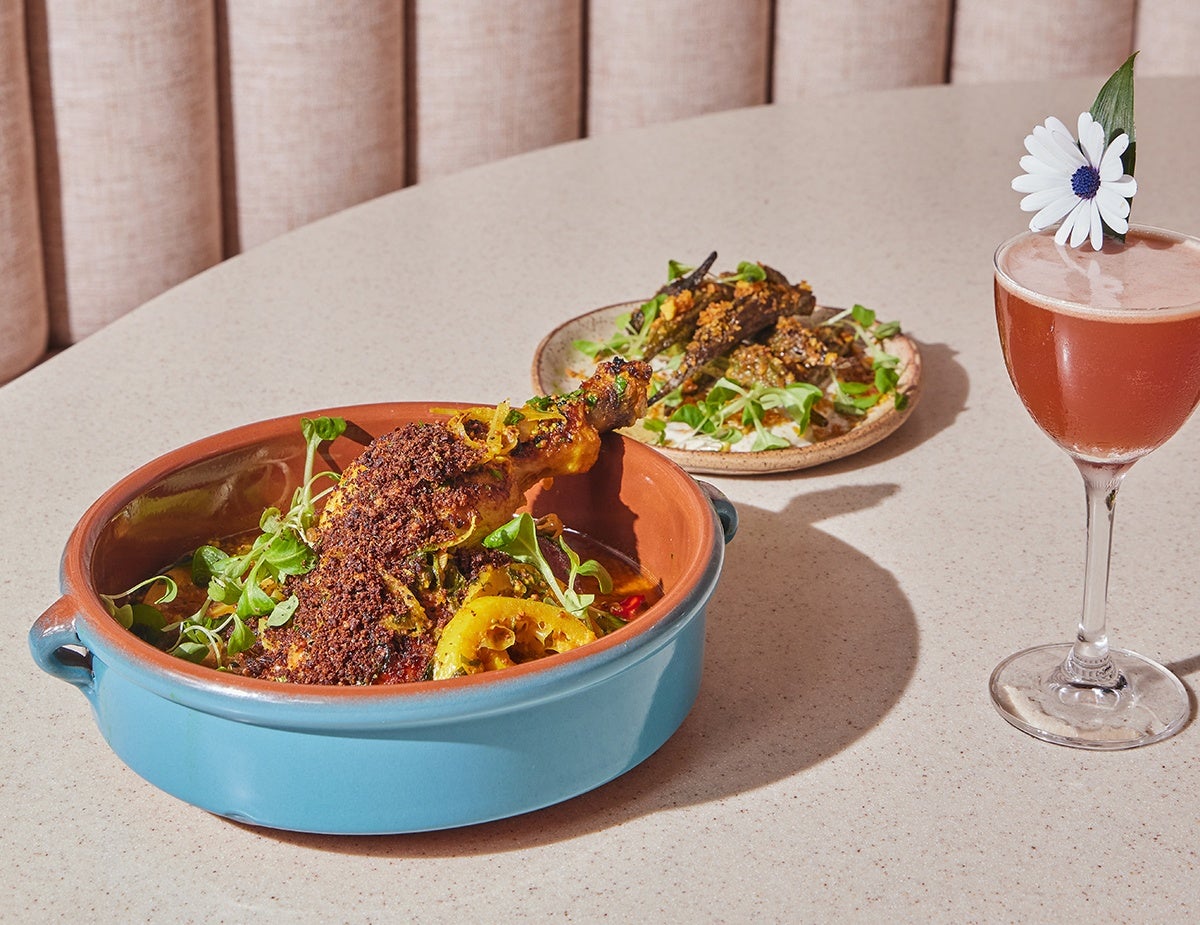
A shallow blue pot of seared okra and yassa chicken, accompanied by a brown rum-based cocktail with a white and blue daisy-like flower dipped into the drink.

Comfort Kitchen’s seared okra and yassa chicken, accompanied by the rum-based One in a Million cocktail. / Photograph by Brian Samuels

It’s seafood-focused, it’s elegant, and it’s exciting. In other words, Mooncusser is the perfect place to show your out-of-town friend what Boston dining does best. Chef Carl Dooley’s four-course menu changes with the seasons to highlight the freshest local flavors and ingredients, drawing inspiration from around the globe to let them shine. You might try, for instance, halászlé, a paprika-spiked Hungarian fisherman’s soup used here as a showcase for catfish. Pasta options often show up on the menu, and you’d be wise to order one: We’re still dreaming about a corn-and-clam conchiglie from more than a year ago, but they’re all winners.

Back Bay | Seafood | Read more | Reservations

If you had told us a year ago that we’d be declaring a restaurant serving rustic Greek fare inspired by nomadic shepherds one of the best new additions to Greater Boston’s dining scene, we’d have acted politely surprised. But here we are, head over heels for the latest hit from the team behind Krasi, fighting for hard-to-get reservations to dig into simply grilled lamb chops, deeply satisfying beef cheeks with prunes, and crispy fried oyster mushrooms. It just goes to show that breaking bread—well, pita—with friends can be a celebration without white tablecloths and fancy plating.

Brookline | Greek | Read more | Reservations
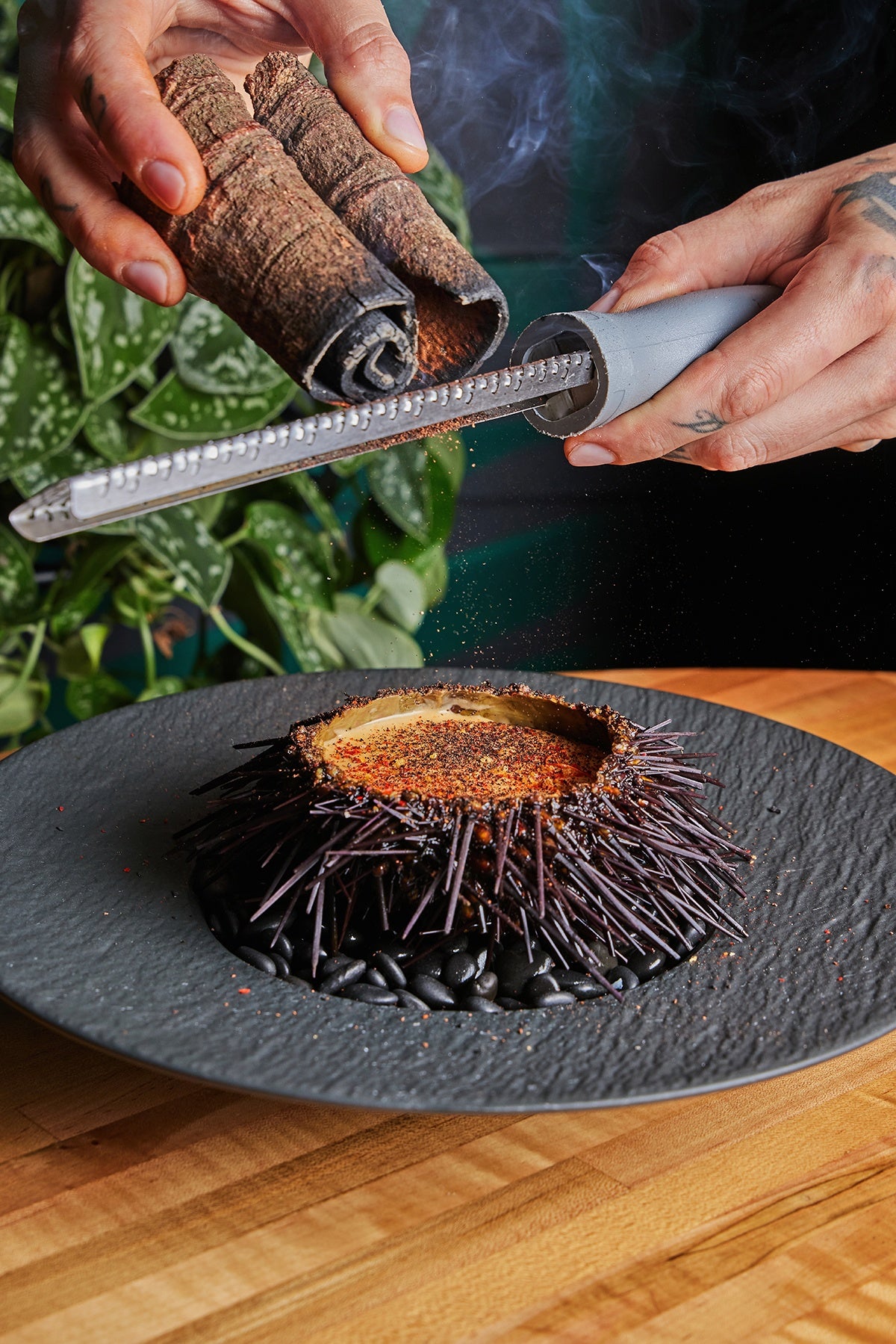
A hand grates cinnamon over sea urchin, split in half on a black plate.

Nightshade Noodle Bar’s live Santa Barbara sea urchin with red curry hollandaise and torched cinnamon. / Photograph by Brian Samuels

Taste is subjective, but there are universal truths that help define “comfort food”—namely, congenial cuisine that fills both belly and soul. And night after night, Comfort Kitchen—a hotly anticipated arrival to Dorchester after years of planning and pop-ups from chef Kwasi Kwaa and his team—churns out exactly that, highlighting fundamental global ingredients like rice, okra, and rum (shout-out to beverage director Kyisha Davenport’s illuminating cocktail program). We’re big fans of the jerk-roasted duck leg with pikliz, a Haitian-style pickled vegetable relish, and the meltingly tender yassa chicken, a Senegalese-style stew, but really, every dish on the menu makes us feel right at home.

Dorchester | Global comfort food | Read more | Reservations

Let’s get this out of the way first: If you want to take a journey through 14 courses of James Beard Award nominee Rachel Miller’s elaborate Vietnamese- and French-inspired tasting menu, surrounded by moody jungle vibes, you’re going to have to schlep to Lynn. But one taste of the bone-marrow bánh mì bites; hearty egg noodles tossed with a savory-meets-sweet caramelized garlic sauce; and lobster topped with a delicate smoked vanilla foam, and you’ll agree that this is food worth fighting traffic for.

Lynn | Vietnamese/French | Read more | Reservations
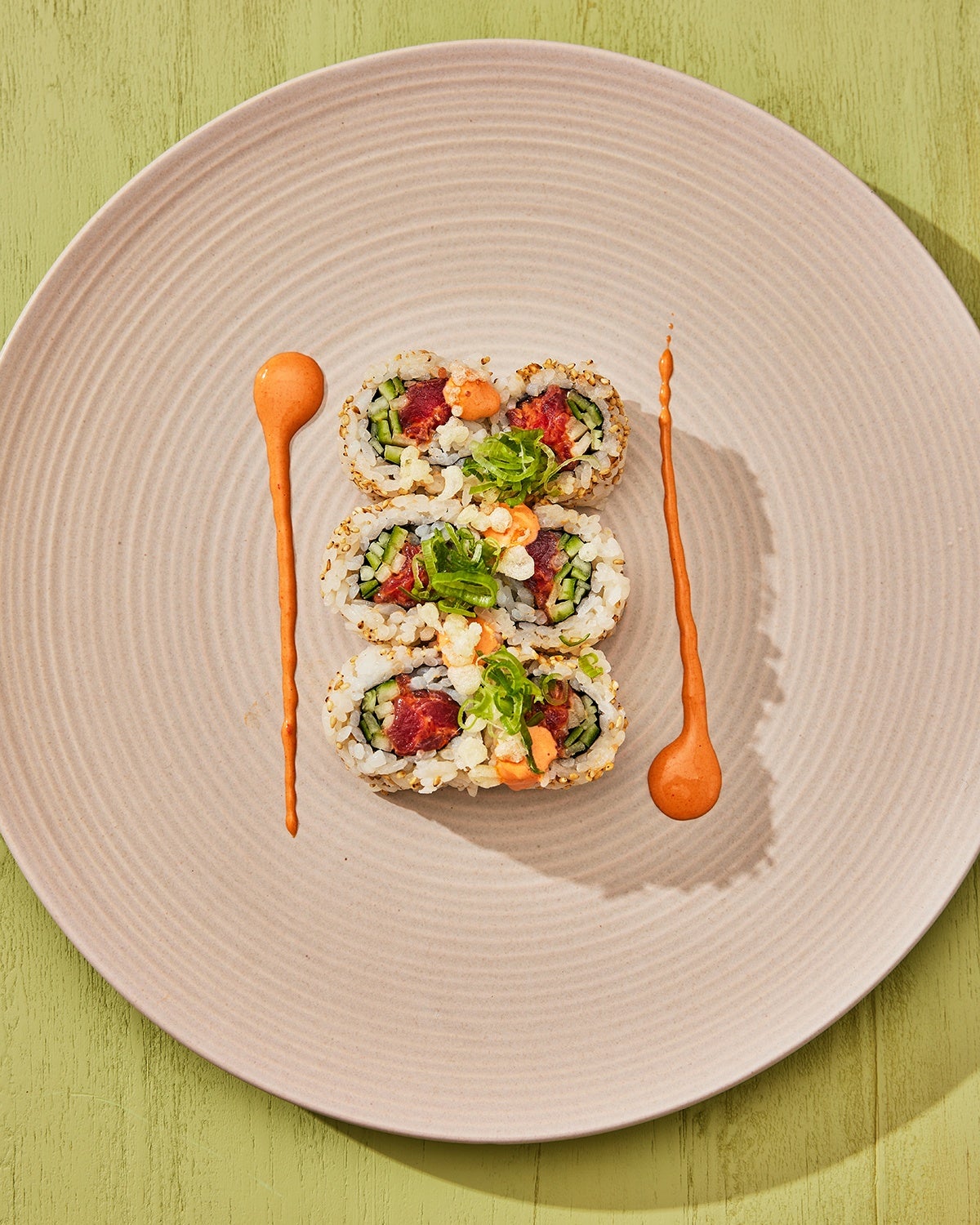
Uni’s spicy tuna makimono roll plated artfully, with two dollop streaks of thai bird chili mayo.

Uni’s spicy tuna makimono. / Photograph by Joe St. Pierre; styling by Madison Trapkin

Hot take: This deceptively modest-looking, pocket-size charmer in Southie’s Lower End is the stealth mindblower of Boston’s fine-dining scene. The restaurant delivers layered flavors and textures built on meticulous sourcing and exacting technique (think: a light-as-a-cloud cube of milk curd adorning a summer tomato salad, or the addition of long-fermented garlic in honey to subtly flavor a grilled mushroom dish). The resulting deliciousness comes in a very gently priced prix fixe package, with options for both vegetarians and omnivores, a value further enhanced by the opportunity to BYOB.

South Boston | New American | Read more | Reservations

These days, prized ingredients like deep-water fish and fresh sea urchin flown in from Japan aren’t as exclusive to Uni as they once were—yet there’s still nowhere else in Boston you can find Maine uni nigiri matched with earthy-sweet chestnut miso crafted and aged in-house. Executive chef David Bazirgan, whose star rose at a stylish bar in San Francisco, has also made the Back Bay sushi bar more of an after-work hang recently, thanks to drink-friendly snacks like juicy fried-chicken bao buns slicked with lip-smacking sambal.

Back Bay | Japanese | Read more | Reservations
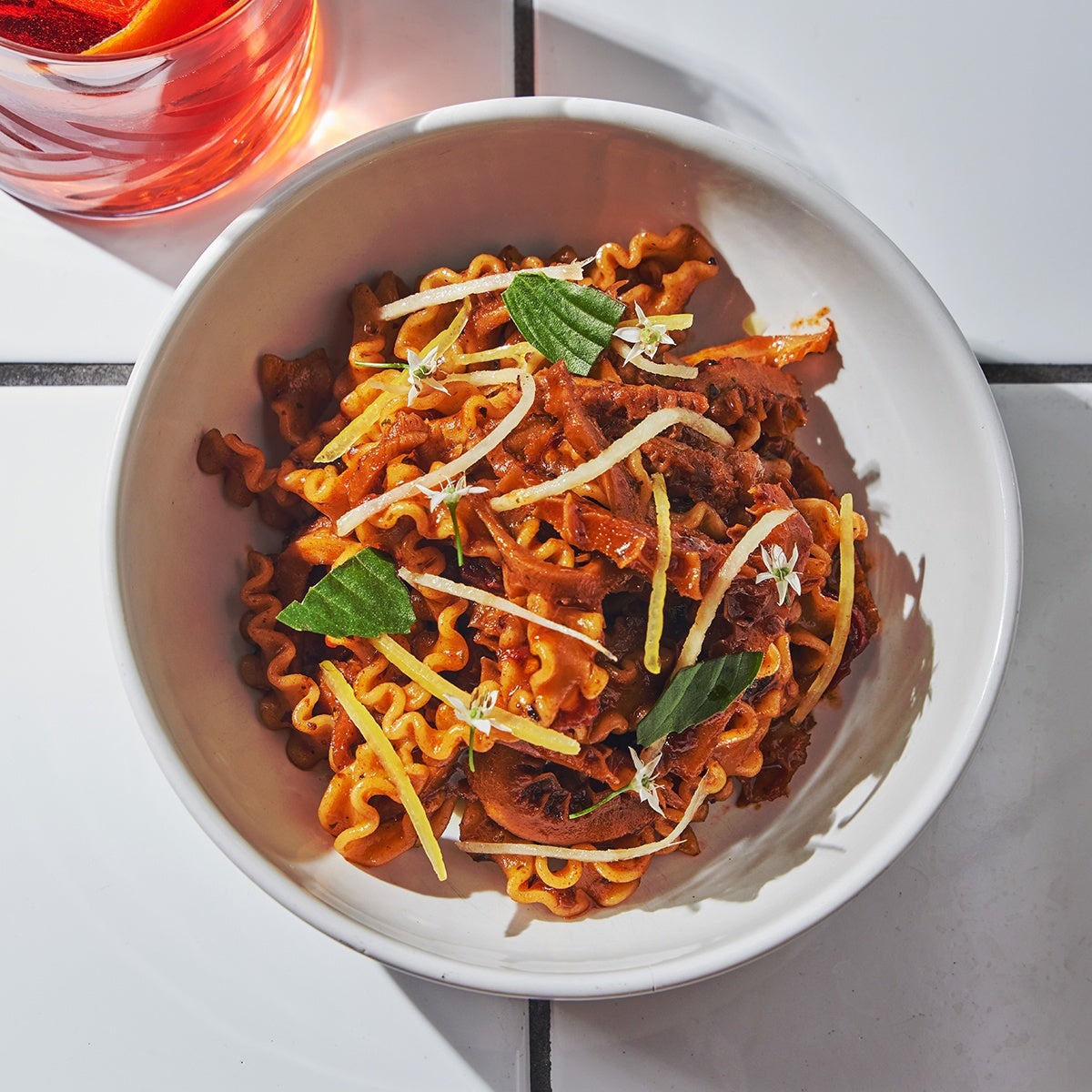
Overhead view of a pasta dish featuring thick noodles with a ruffled edge in a white bowl on a white tiled surface.

Pammy’s mafaldine with tripe, garlic-chili oil, and labneh. / Photograph by Brian Samuels

Six years in, chef Chris Willis continues to merge Italian craft and technique with flavors from near and far, paired with an attention to seasonality. Take the chewy mafaldine: The noodles tango with tenderly cooked honeycomb tripe, which acts as a sponge to soak up the Asian-inflected garlic-chili oil. The texture of the tripe offers a contrast to the al dente pasta, which is enriched by creamy Middle Eastern–inspired labneh. With well-executed plates like this, not to mention warmly attentive service, it’s no wonder the restaurant keeps winning the hearts and minds of locals and out-of-towners alike.

Cambridge | New American | Read more | Reservations

If you were to list out the ingredients of Umami’s 18-course omakase on paper, the ever-changing dishes might sound minimalist at first glance: torched Spanish mackerel with soy garlic, Hawaiian kanpachi (amberjack) with mango salsa. But there’s meticulous technique underlying these delicate bites, yielding countless textures and tastes to explore. Take the madai—Japanese red sea bream—that gets its crispy skin thanks to dunks in hot water and an ice bath, topped with shaved, salted egg yolk for a punch of, well, umami. Once you reach the final course—a delightful yuzu panna cotta on one visit—you’ll be already planning to make your next reservation.

Cambridge | Japanese | Read more | Reservations
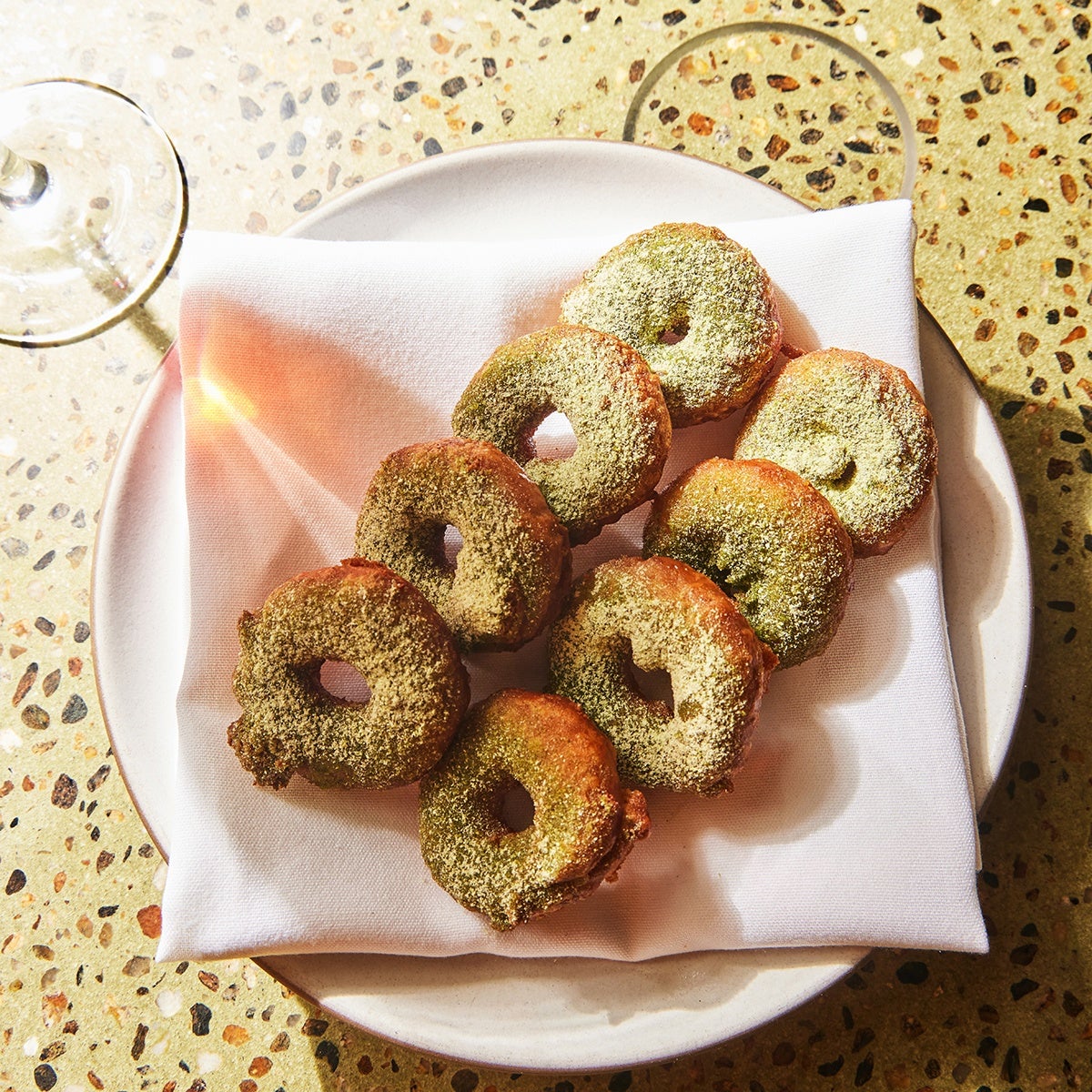
Eight sunchoke doughnuts with XO Gouda and powdered leeks, laid evenly on a white-cloth napkin that's on a plate.

Spoke’s sunchoke doughnuts with XO Gouda and powdered leeks. / Photograph by Brian Samuels

There’s little not to love about this elegant yet laidback Davis Square spot, from the thoughtfully curated wine list to the creative, boundary-breaking menu that comes from the tiniest of kitchens. But the most impressive thing of all about Spoke is how the team works seamlessly together: Cochefs Kelcey Rusch and Paul Butler collaborate tirelessly to highlight the most in-season ingredients, while bar manager Katie Weismann puts out new cocktails as the food menu changes, resulting in meals that might pair, say, savory sunchoke doughnuts with a brandy-based drink made with black trumpet mushrooms and cinnamon.

Somerville | Wine bar | Read more | Reservations

Indie prix-fixe pioneer Asta continues its 10-year run of wowing patrons nightly with a gently paced procession of six to 10 courses. And no wonder: Chef-owner Alex Crabb’s culinary sensibility is characterized by globetrotting influences (tempura maitake here, foie gras on huacatay purée there); delicate but insistent flavors; a penchant for unusual accents
(have you tasted mouse melons yet?); and painterly platings. Meanwhile, his front-of-house partner, Shish Parsigian, serves as a genial docent to often natural-focused wine pairings. The dining room has a minimalist vibe, all the better to focus on Asta’s fantastic ratio of supernal quality to low pretension.

Back Bay | New American | Read more | Reservations
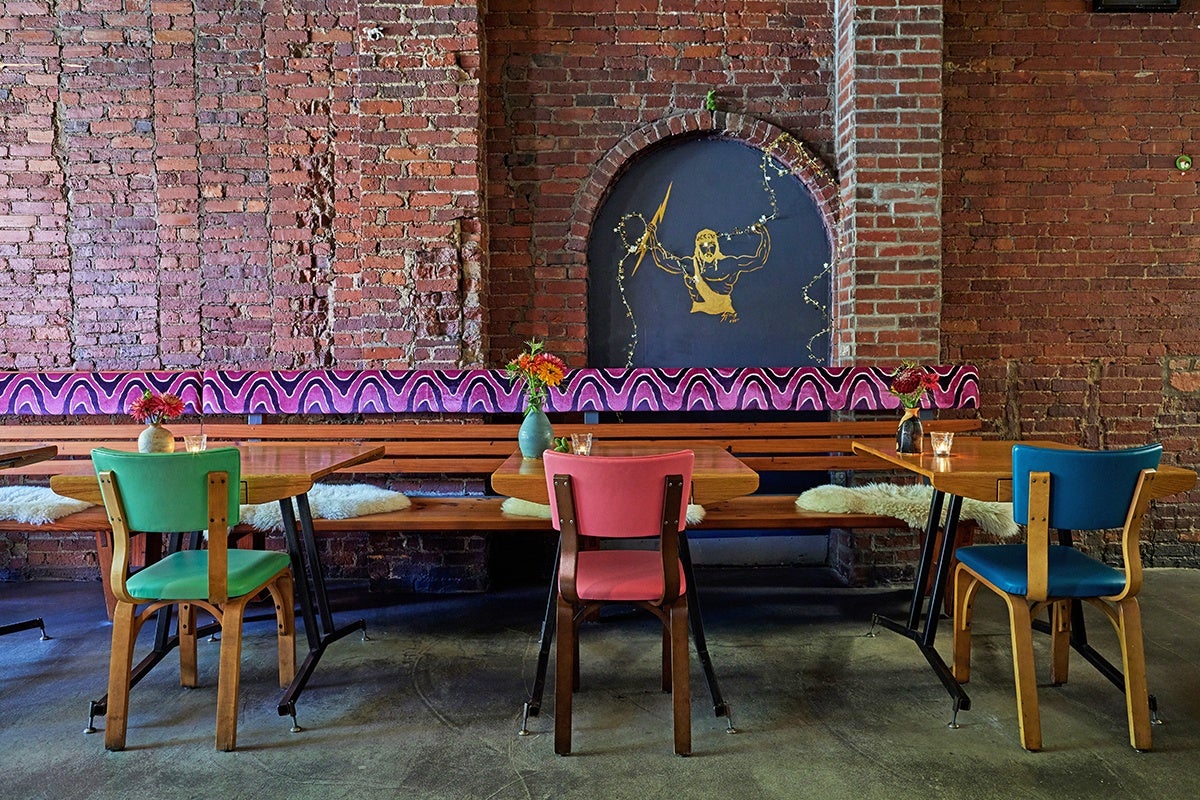
Photo of the interior of Asta restaurant, which shows a brick wall with a painting of Zeus, three two-top tables with flowers, and three colorful chairs.

Asta’s dining room, including a painted outline of Zeus, a holdover from an earlier restaurant that occupied this space. / Photograph by Brian Samuels

This Brookline Village spot represents Thai hospitality at its finest—homey and pleasant, with a menu of vibrantly flavored regional specialties that pair well with a crisp Thai lager or a cocktail. The slightly sweet pork cheek is seasoned with funky notes of Thai fish sauce, while the chicken skin is satisfyingly crunchy. But the absolute showstopper is the kang pu, in which warm, southern-style curry and tender crab meet chewy, thin rice noodles. Bring friends or family and order a round or two of drinks and a spread for the table: You’ll want to sample a little bit of everything.

Brookline | Thai | Read more | Reservations

Under chef Ana Sortun’s steadfast guidance, this cozy eatery has earned its spot as a Cambridge mainstay over the past two-plus decades, courtesy of flavorful dishes inspired by Turkey and the broader Middle East. One of our favorites is the Sultan’s Delight, which diverges from its Turkish roots by using beef in lieu of lamb and adding tamarind for a fruity boost. The best way to enjoy it? With a creative Mediterranean-inspired cocktail in hand, sitting on the romantic patio (in warmer months), an ideal spot for date nights and celebrations. But don’t forget to top it all off with the restaurant’s cult-favorite baked Alaska with coconut ice cream and passion-fruit caramel.

Cambridge | Mediterranean | Read more | Reservations
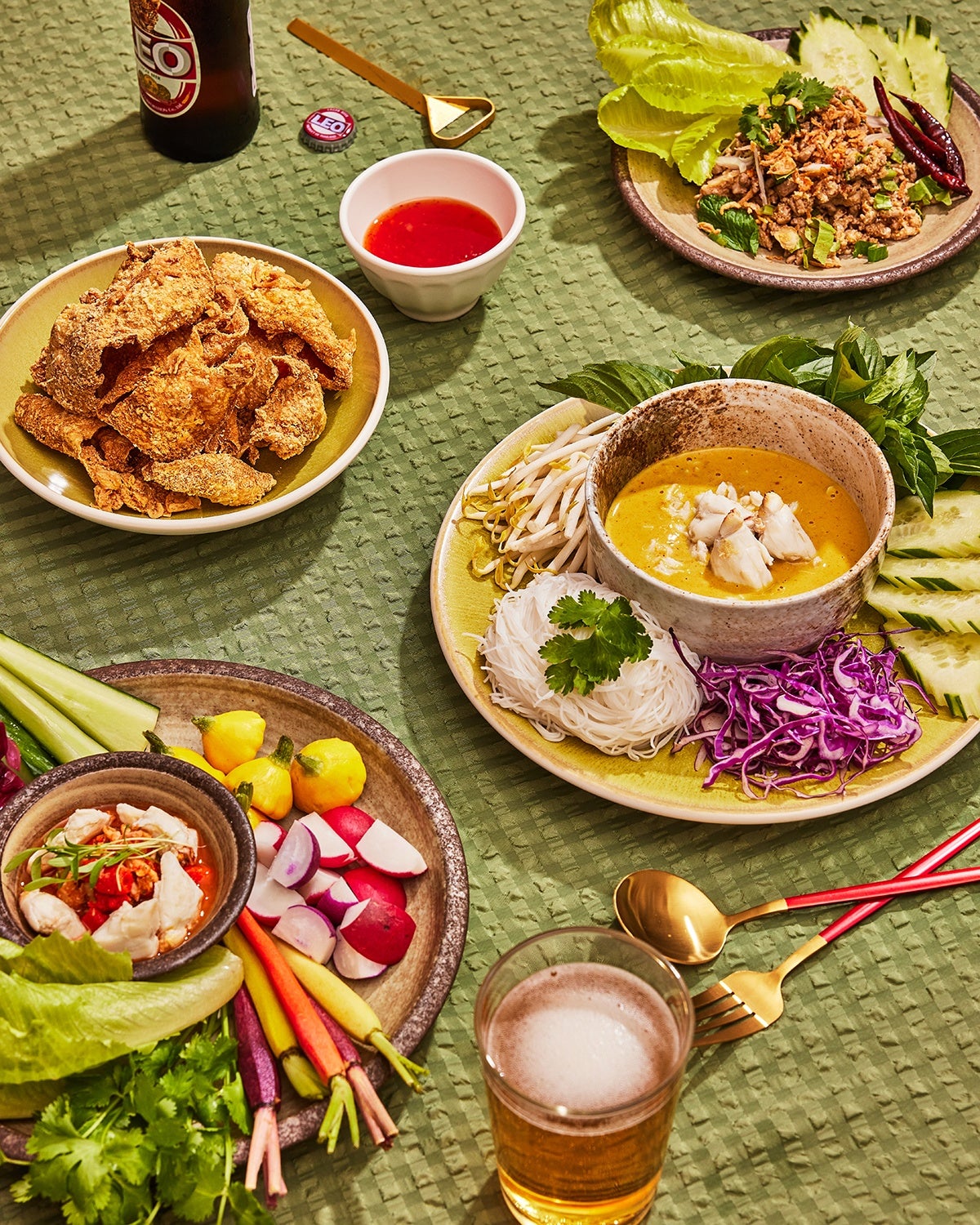
A spread of Thai dishes sit on a green tablecloth, including crab curry, crispy chicken skin, duck larb, and more.

A spread of dishes at Mahaniyom, including the fan-favorite crab curry. / Photograph by Joe St. Pierre; styling by Madison Trapkin

“French Shrimp Toast,” as a recent menu read, is a combination of words not typically joined in that order. Featuring triangles of shrimp-paste-and-maple-syrup-slathered bread, the snack reinvents both a dim sum staple and pain perdu on the same plate—and as an idea, it’s classic Brassica. With fun inventions like this brought to life by a team of imaginative pros, the Jamaica Plain stalwart has endeared itself to the neighborhood as well as to food lovers from further afield. As the restaurant plans to expand into a larger space next door, we simply can’t wait to see what they come up with next.

Jamaica Plain | New American | Read more | Reservations

Would you ever expect fireworks from a dish of grilled cabbage? At Field & Vine, ’nduja butter, a mild blue cheese, and gremolata crumbs turn the cruciferous vegetable into gold. In fact, much of the magic behind this six-year-old Union Square gem is in the condiments: Luscious toasted-pecan butter, grilled-strawberry Buffalo sauce, and caraway labneh are among the accoutrements bringing beautiful, veg-forward dishes to the next level. It also doesn’t hurt that Field & Vine is one of the most attractive restaurants in town—a forest fairy tale full of light wood, vines, and plenty of greenery.

Somerville | Farm-to-table | Read more | Reservations
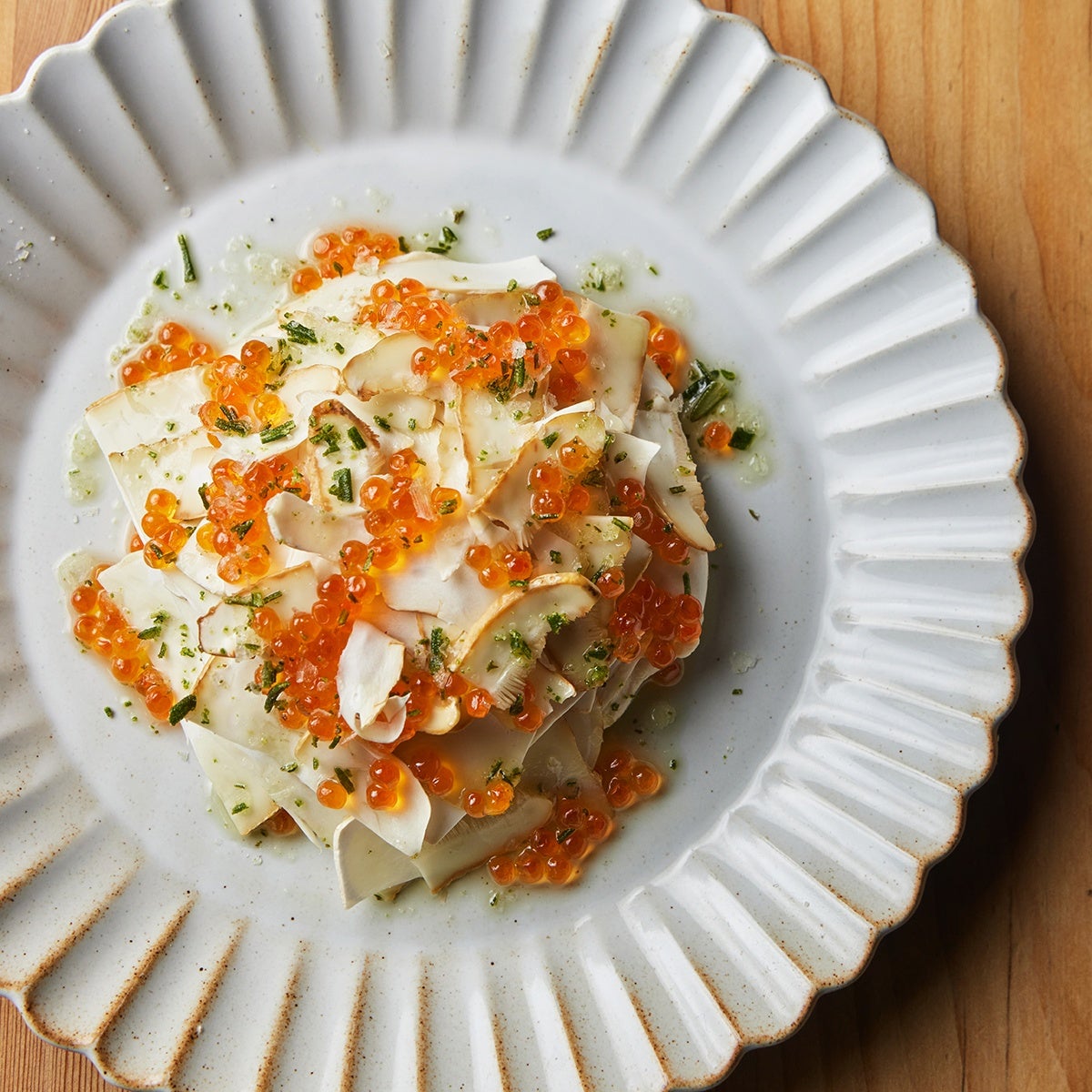
A white plate of orange trout roe and green rosemary flakes sprinkled over black butter–celery root purée, lightly colored mushrooms.

Field & Vine’s shaved matsutake mushrooms with soft-poached egg, black butter–celery root purée, smoked trout roe, and rosemary. / Photograph by Brian Samuels

Bring a bunch of friends and plan to leisurely work your way through the Greek menu at this Back Bay mezze and wine bar, from fresh-baked breads to the souvla of the day, via the group-friendly “Feast of the Gods.” You’ll accompany it with plenty of vino; Krasi means “wine” in Greek, after all. The Grecian influences continue with modern yet elevated design touches in the dining room: We love the elegant Hellenic tumblers behind the bar in shades of periwinkle and seafoam green, not to mention the playful reimagined portraits of Greek greats like Aphrodite and Poseidon adorning the walls above the cozy booths.

Back Bay | Greek | Read more | Reservations

The allure and conviviality of a chic 1940s supper club has arrived in the oh-so-modern Seaport, courtesy of restaurateur Nia Grace (Darryl’s, the Underground Café) and Big Night (Empire, Scorpion Bar). The supper: updated southern and soul food ranging from a modernist fried-green-tomato salad to a soul-satisfying rendition of oxtail and grits. The club: performances by an ever-changing lineup of talented jazz and soul combos, not to mention luxurious cocktails (hello, 24-karat-gold-dusted espresso martini).

Seaport | Soul food | Read more | Reservations
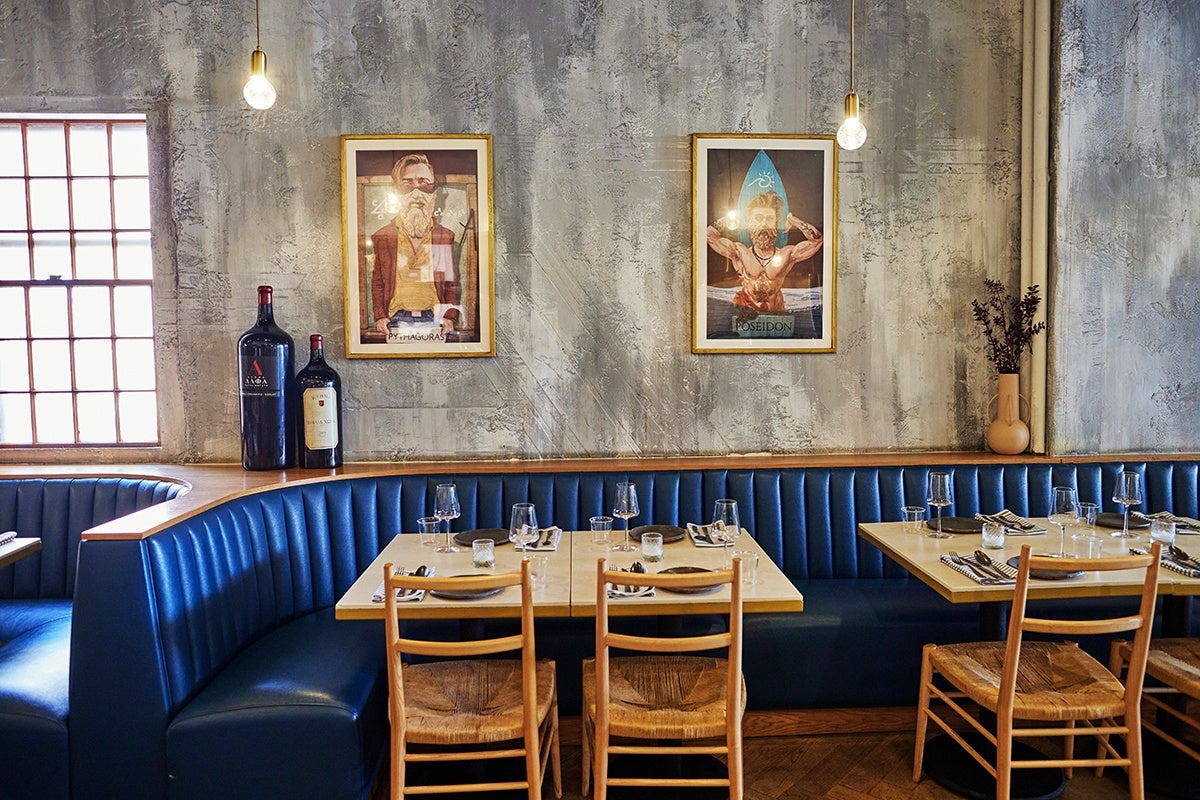
An interior shot of Krasi. There are gray and white plastered walls, two tables with four individual place settings, a royal blue seating banquette, a framed contemporary illustrations of Poseidon and Pythagoras.

Krasi’s dining room. / Photograph by Brian Samuels

At La Royal, JuanMa Calderón and Maria Rondeau bring diners on a gustatory trip through the regional cuisines of Peru (including chifa, the Chinese-Peruvian cuisine that is a pillar of contemporary foodways of the country). Among the best dishes on the menu is the patarashca—whole branzino grilled in plantain leaves and dressed with chopped peppers, onions, and other condiments—which sheds light on the Amazon region. Meanwhile, the drink list celebrates Peru’s dynamic cocktail scene: Opt for Peruvian classics such as the pisco sour, or venture out to tonic spiked with the Andean elixir matacuy.

Cambridge | Peruvian | Read more | Reservations

The Dian cuisine of southwest China is marked by spiciness, ample use of mushrooms, and flavors and ingredients more often seen in Southeast Asian cuisines—and we can’t get enough of it at this 2022 South End debut. Seems like the rest of the country is intrigued, too: The restaurant has already gained attention on a national scale thanks to a 2023 James Beard Award nom for chef and founder Yisha Siu. Elevate dinner to date-night status with one of the restaurant’s cheekily described wine-based cocktails, like the Kiss Kiss—sauvignon blanc, mojito mix, and mint, “topped with intimacy.”

South End | Chinese | Read more | Reservations
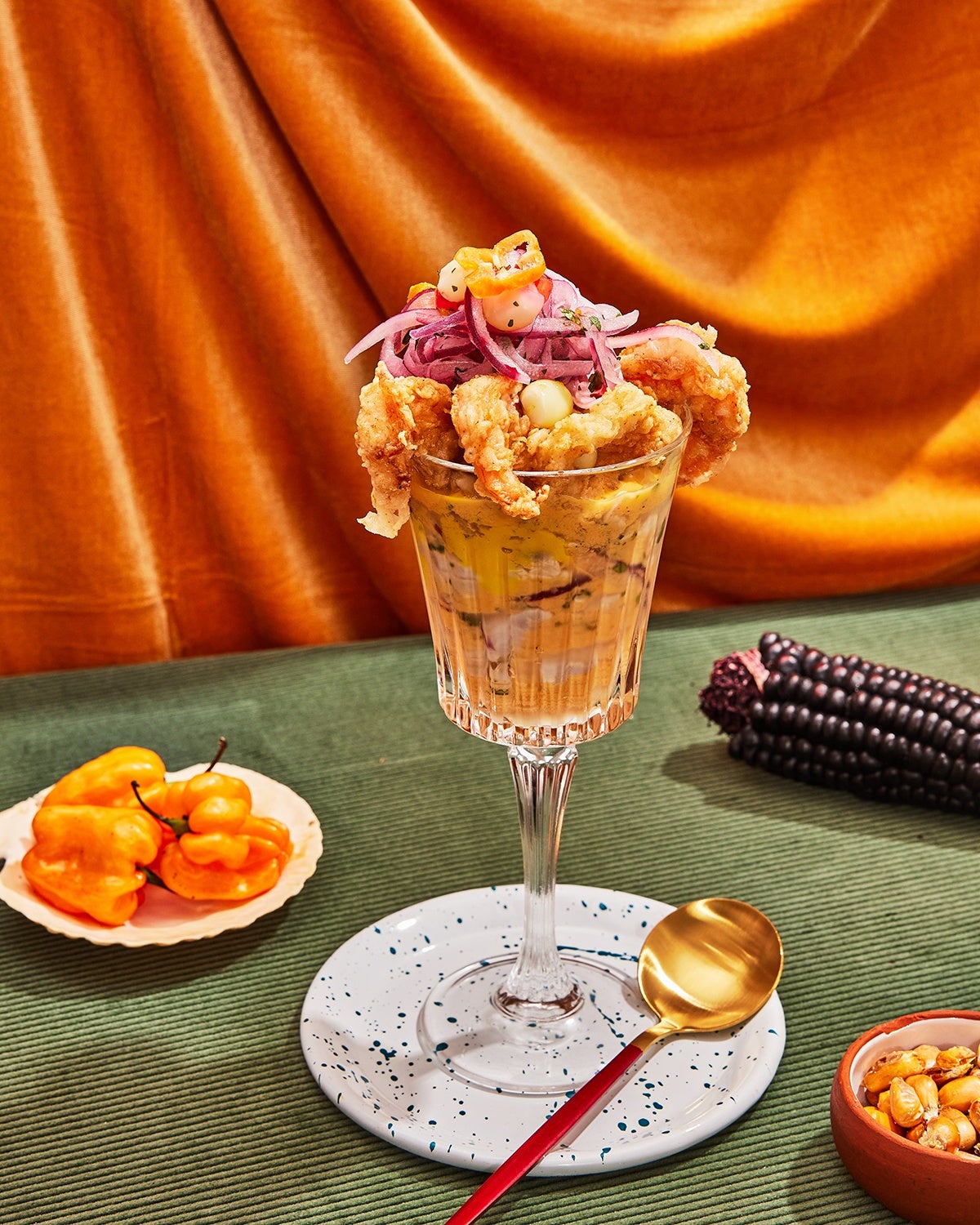
A tall glass of ceviche with shrimp sitting on top is displayed on a green surface in front of a velvety orange drape, with accoutrements surrounding it, including an ear of purple corn.

La Royal’s leche de tigre (tiger’s milk), which the restaurant describes as “essence of ceviche.” / Photograph by Joe St. Pierre; styling by Madison Trapkin

In a city known for its top-notch seafood restaurants, how does one stand out from the crowd? The team behind Cambridge Italian favorite Giulia has an answer in Moëca, where a vivid and wildly creative seafood-centric menu draws inspiration from all over the world (see: a smoked scallop taramasalata that nods to Greece, and a raw fluke aguachile that points to Mexico). It doesn’t hurt that the team inherited Giulia’s talent with fresh pasta and nabbed one of Boston’s best pastry chefs (Renae Connolly) to craft the gorgeous desserts, such as a fluffy aerated cheesecake with a bold blackberry sorbet and jasmine lime curd.

Cambridge | Seafood | Read more | Reservations

When this cozy hangout debuted in February 2020, owners Paola Ibarra and Yhadira Guzmán had little clue a global pandemic was about to unfold. Three years and an expanded dining room later, Barra has forged a unique identity, bringing Mexico City pride to Somerville in the form of cumbia sonidera parties and artisanal mezcal tastings. Food is the centerpiece of the story, made from scratch and served with care. The slow-cooked cochinita pibil—a marinated pork dish—is a perfect example, served with handpressed tortillas made from heirloom masa. Add a tangy prickly pear margarita to be transported straight to CDMX.

Somerville | Mexican | Read more | Reservations
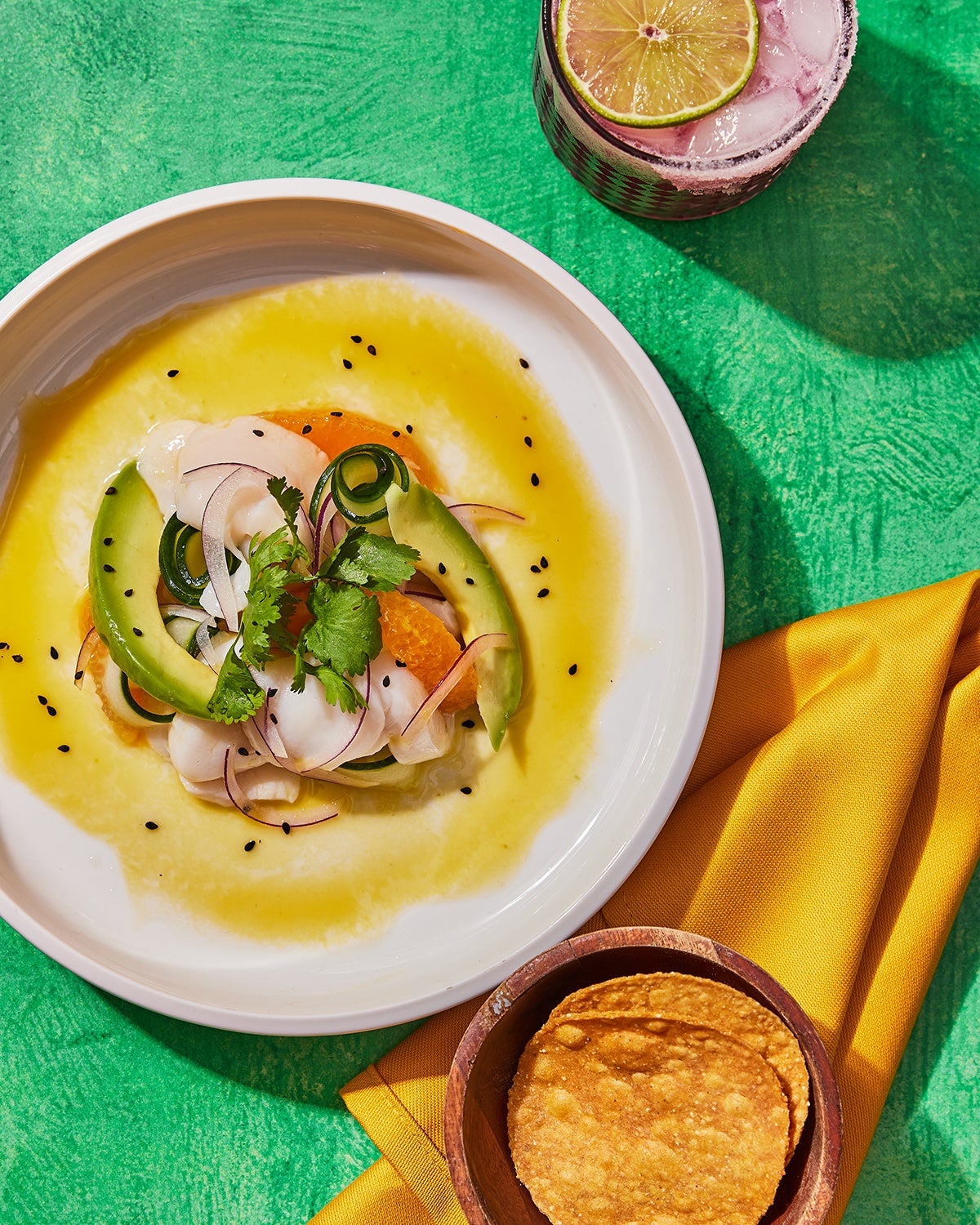
Overhead view of a bright aguachile with avocado and a yellow sauce. A pink cocktail sits nearby.

Barra’s aguachile amarillo with a prickly pear margarita. / Photograph by Joe St. Pierre; styling by Madison Trapkin

From a weekday power lunch to a Saturday date night, this intimate Back Bay hot spot is the place to splurge on an enormous seafood tower dripping with caviar, crudo, and plenty of shellfish, with a baller bottle of bubbly on the side. Or keep it just a little simpler with, say, an herby whole-roasted sea bream or a hearty bowl of bouillabaisse. Both are great examples of how chef and restaurateur Michael Serpa uses Mediterranean-tinged cooking to show off a beautiful bounty of local seafood.

Back Bay | Seafood | Read more | Reservations

After launching its daily aperitivo hour this summer (a longtime favorite at sister restaurant Fox & the Knife), Bar Volpe added a bevy of new southern Italian stuzzichini (a.k.a. snacks) to the menu—and lucky for us, they’re here to stay. Grilled lamb skewers with mint and olive tapenade; crostini topped with gooey stracciatella, slow-roasted tomatoes, and basil; and fried olives stuffed with ’nduja and mortadella are just a few of chef Karen Akunowicz’s fresh bite-size offerings. Of course, with small plates like these, you’ll likely have room for a smattering of classic dishes, too, like the pillowy, potato-and-goat-cheese-filled culurgiones and an amaro-topped affogato for dessert.

South Boston| Italian | Read more | Reservations
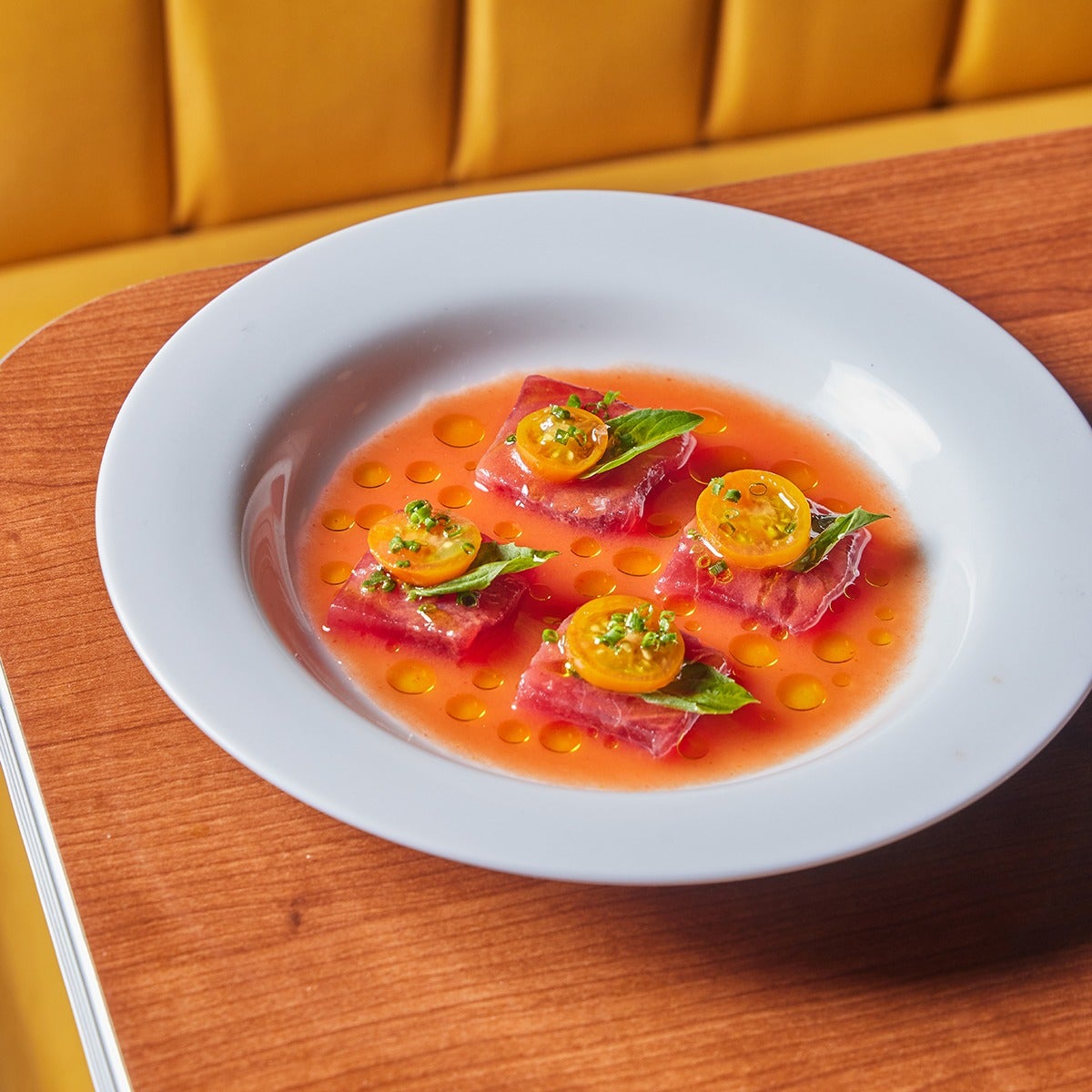
A white bowl of Bar Volpe’s crudo di tonno with acqua pazza (Italian poached fish), sungold tomato slices, and chives on a brown table.

Bar Volpe’s crudo di tonno with acqua pazza, sungold tomato, and chives. / Photograph by Brian Samuels

Sometimes, the occasion calls for a classic steakhouse full of old-school glamour: white tablecloths, cordial hospitality, and, of course, fancy cuts of beef. Enter Grill 23. Celebrating its 40th anniversary this year, the stately restaurant can certainly show a thing or two to those countless chain steakhouses that have recently invaded Boston. We love the lively vibe downstairs best (with a bit of a kitchen view, depending on where you’re seated)—and might we recommend saving room for the signature coconut cake for dessert?

Back Bay | Steakhouse | Read more | Reservations

Toro continues to dazzle diners after nearly two decades in the South End. Maybe it’s the familiarity of tapas like crispy patatas bravas, grilled octopus with pimentón aioli, and garlicky pan con tomate that keeps us coming back. Or perhaps it’s the delicate twinkle of string lights on the COVID-era patio that turns even the most mundane night out into a special affair. We don’t know what to expect from the future of the former JK Food Group now that the J (Jamie Bissonnette) has left to pursue new adventures, but Bissonnette and Ken Oringer certainly hit on something special with their first project together so many years ago, and we’re happy to keep returning for birthdays and anniversaries aplenty.

South End | Spanish | Read more | Reservations
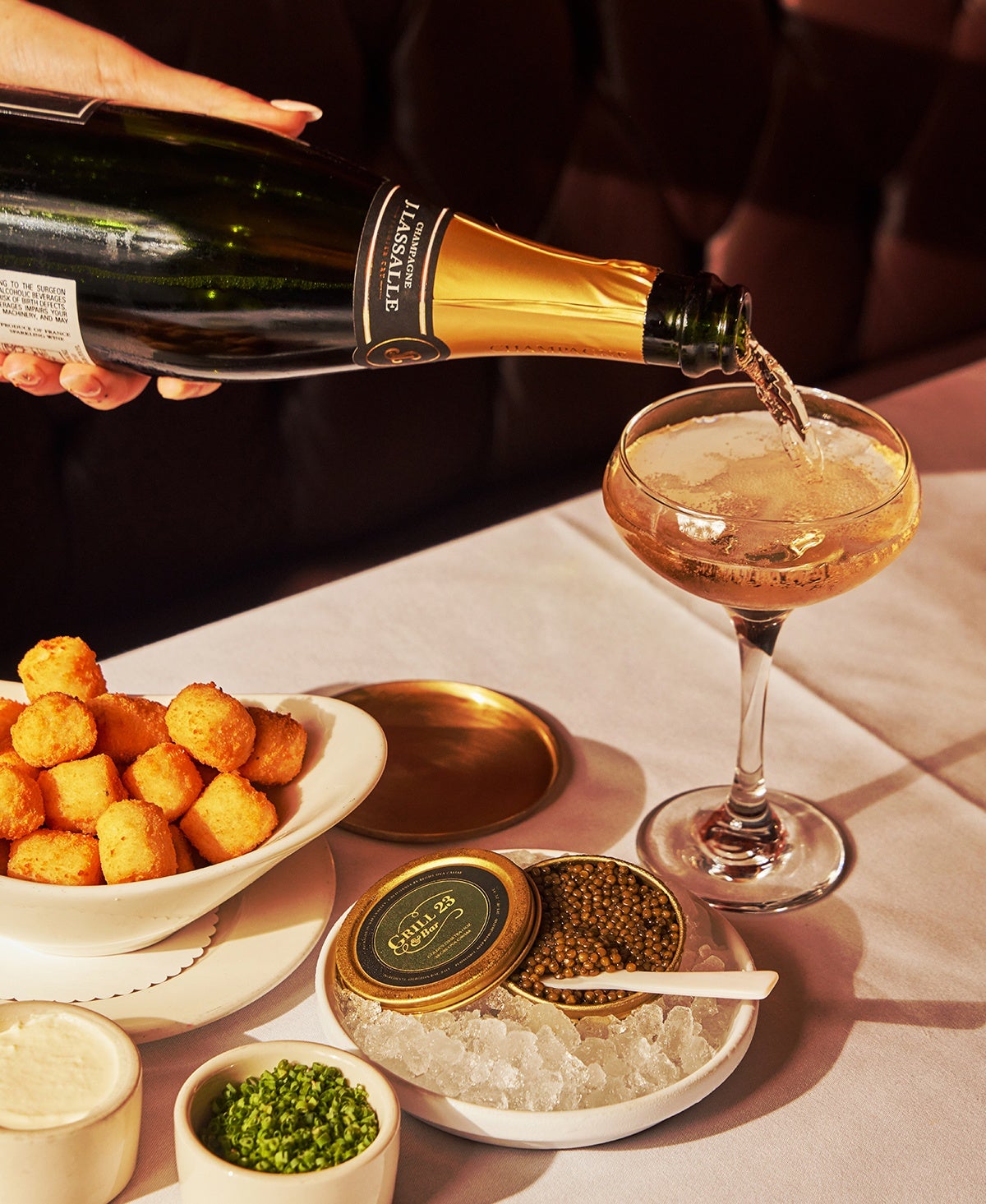
A close-up of a hand pouring champagne into a glass, over a white tablecloth setting of a caviar tin on ice and a bowl of lightly fried tater tots.

Grill 23 & Bar’s caviar service with a side of tots. / Photograph by Brian Samuels

This South End powerhouse of coastal Italian cuisine consistently excels in all areas, thanks to chef Colin Lynch’s triple threat of a menu (elegant crudos, ravishing pasta dishes, gorgeous cooked-seafood entrées). Sweetening the deal are a first-rate bar program anchored by beverage director Ryan Lotz and superstar-with-a-shaker Josey Packard; a warmly polished and hospitable front-of-house staff led by GM Heather Lynch; and a sleekly modern, elegant atmosphere that makes this one of the best restaurants in one of Boston’s best dining neighborhoods.

South End | Italian | Read more | Reservations

It may have moved to a larger location down the street in 2022, but Juliet’s core ethos as a mission-driven, neighborhood-y eatery has remained the same. The thoughtfully decorated new space, however, does lend itself more to special evenings out: Diners can snack on scrumptious honey-drizzled Parmigiano-Reggiano, slurp tagliatelle au pistou with a Provençal pesto-like sauce, or get cozy in the wine room for a frequently changing themed tasting menu. And that old space? The team has turned it into a wine bar and occasional venue for pop-up vendors to serve Filipino breakfast sandwiches, Venezuelan arepas, Guatemalan dobladas, and more.

Somerville | French | Read more | Reservations
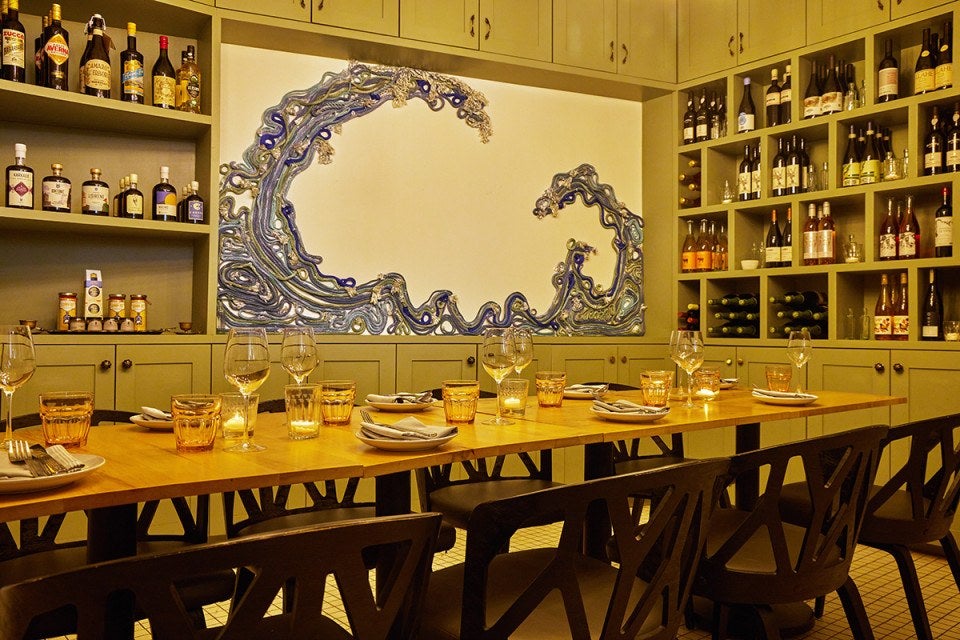
Juliet. / Photograph by Brian Samuels

In a city where you can’t throw a meatball without hitting an Italian restaurant, Giulia has maintained its status as one of the most popular spots for discerning locals, as evidenced by its constantly packed dining room. Born out of chef Michael Pagliarini’s affinity for Umbrian cuisine, Giulia churns out plate after plate of homey yet well-balanced flavors, from the eggplant caponata to the handcrafted pastas. The menu shifts often, depending on the bounty of the season, but some pasta standouts include pappardelle with wild boar cooked in a velvety sauce; casarecce with hen-of-the-wood mushrooms; and saffron cavatelli with calamari.

Cambridge | Italian | Read more | Reservations

In a world where brash, loud, and unbuttoned is the new restaurant standard, Old World elegance is hard to come by. That makes Deuxave’s dove-toned dining room, formally attentive service, and elegant take on fine French cuisine a treasured combination. Forget your generic neighborhood bistro’s moules frites or Le Hamburger; here you’ll find caviar service, trophy sirloins seared in cast iron and dressed in fine French accoutrements, and the city’s most resplendently plated roast duck.

Back Bay | French | Read more | Reservations
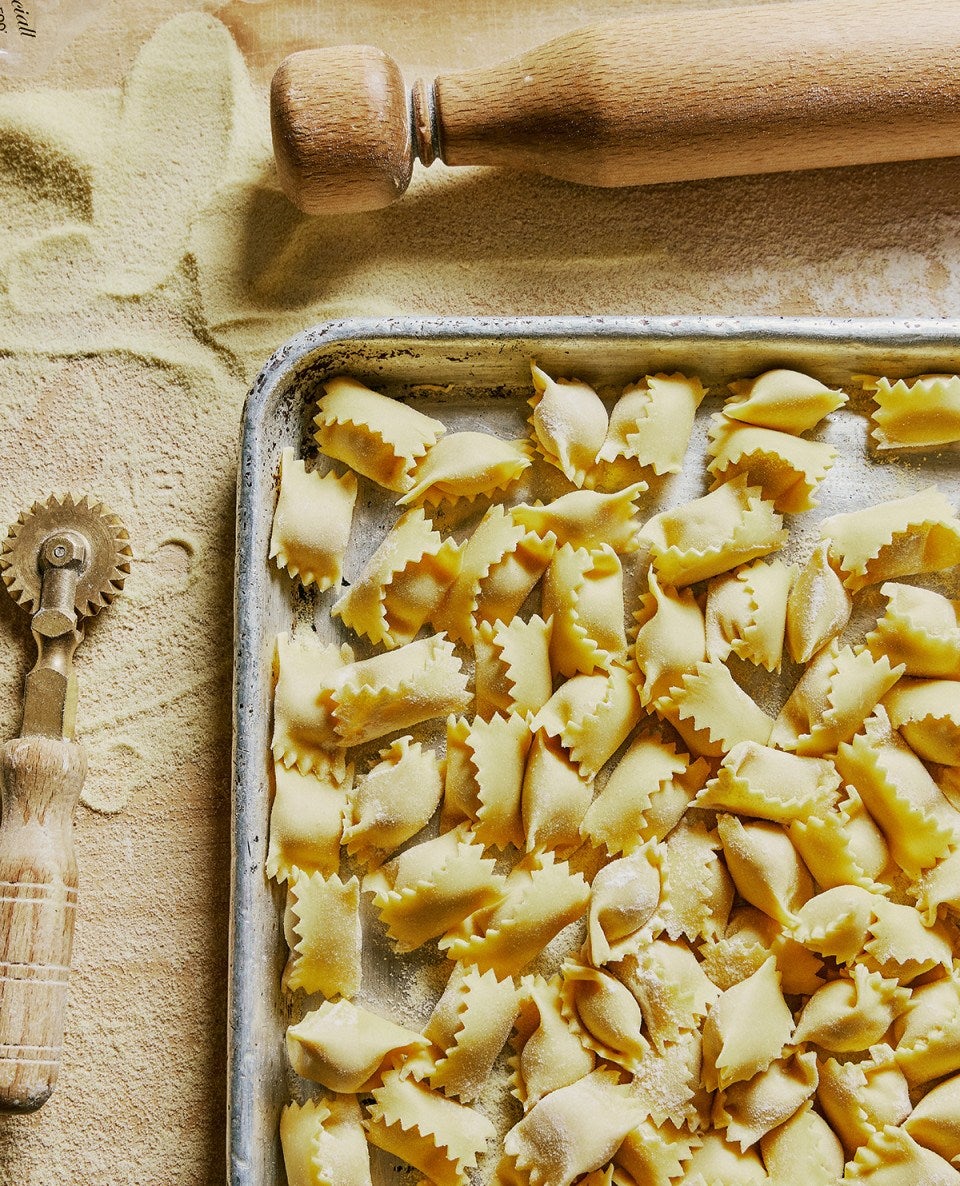
Giulia pasta. / Photograph by Brian Samuels

Why do we love this South End bacaro? Let us count the reasons. For one, each visit introduces us to novel flavor combinations and fresh takes on the classics—e.g., twisted strozzapreti noodles with sausage brightened up by a gorgeous salsa verde. But it’s also the restaurant’s consistently warm hospitality, led by general manager and partner Ted Hawkins, that makes it an easy choice for any occasion—or even none at all.

South End | Italian | Read more | Reservations

There’s no question that Rare, the glitzy steakhouse at Encore Boston Harbor, has the meaty goods. There’s Japanese Wagyu for the true high rollers, but we also enjoy the middle-of-the-road splurge: the domestic Wagyu, a beautifully marbled, melt-in-your-mouth cut in its own right. Add a classic steakhouse side or two—creamed spinach, roasted mushrooms with sherry herb butter, lobster mac ’n’ cheese—and you have yourself quite a night out. You can end with a fiery table-side preparation of citrus-soaked rum cake, much preferable to metaphorically setting your money on fire at the betting table.

Everett | Steakhouse | Read more | Reservations
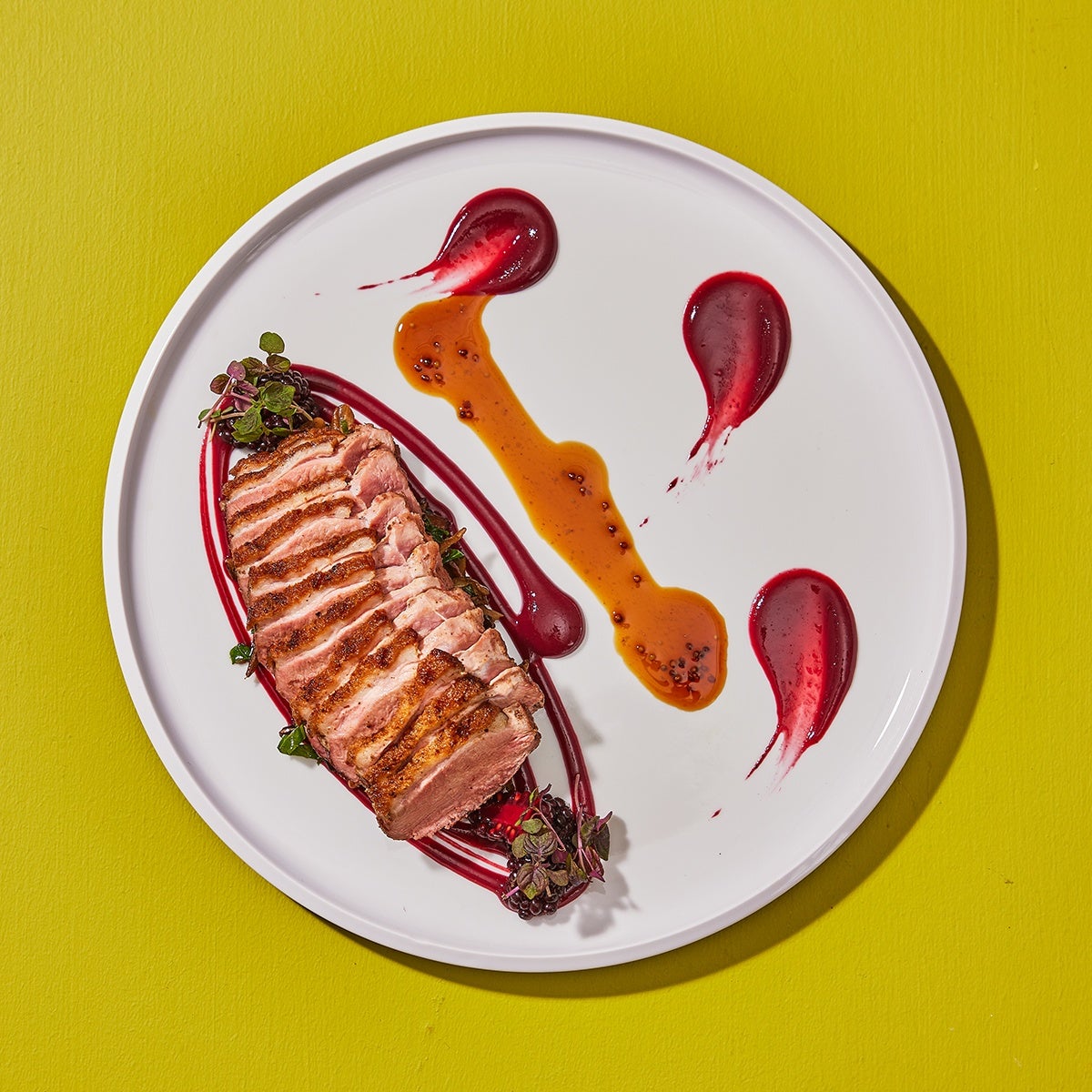
A colorful plate of seared duck breast from French restaurant Deuxave against a green-yellow background.

Accompaniments change seasonally, but you’ll typically find a seared duck breast on Deuxave’s menu. / Photograph by Joe St. Pierre; styling by Madison Trapkin

You’ve gotta have some nerve to take a hallowed Brahmin dining institution like the old Locke-Ober, favored by the Kennedys, and reinvent it as the wildest, sexiest restaurant downtown. That’s exactly what the Yvonne’s team did eight years ago, and it’s still swinging with uniquely gorgeous and sassy décor; shareable plates large and small, including a massive long-bone rib-eye with steak fries and black-garlic butter; superb cocktails, both classic and creative; and dressed-up crowds out for a rip-roaring evening. Perhaps no other restaurant in the city so adroitly combines the hip and the staid, the sacred and the profane, Old Boston and New, into such a cheeky, fun, hard-partying package.

Downtown Crossing | New American | Read more | Reservations

It’s a Boston tradition to complain about non-local restaurant groups coming to town, but we can let the occasional one slide, especially when it’s as good as Major Food Group’s swanky Contessa. The gorgeous venue atop the Newbury Boston pairs its stunning views and impeccable interior design with a glammed-up Italian menu that makes the in-demand reservation worth the effort. Here’s hoping the prettily plated squash carpaccio—dotted with pumpkin seeds, arugula, and agrodolce—never leaves the menu. Same to you, spicy lobster capellini.

Back Bay | Italian | Read more | Reservations

See also: The Most Beautiful Restaurants in Boston

The trouble with a restaurant becoming famous for one particular dish—here, the lobster roll—means that many diners never branch out and realize that it’s serving a lot of other excellent things, too. Your assignment for 2024: Go to North End icon Neptune (get there a little before opening to avoid the long line), and don’t get the lobster roll. Get whatever crudo of the day is scrawled on the mirror—we enjoyed a beautifully fresh Casco Bay halibut with Cara Cara orange and pistachio back in May. Try the razor-clam casino. Order a salad topped with whole Azorean sardines. Go old-school with some fried clams. You won’t be sorry.

North End | Seafood | Read more | No reservations
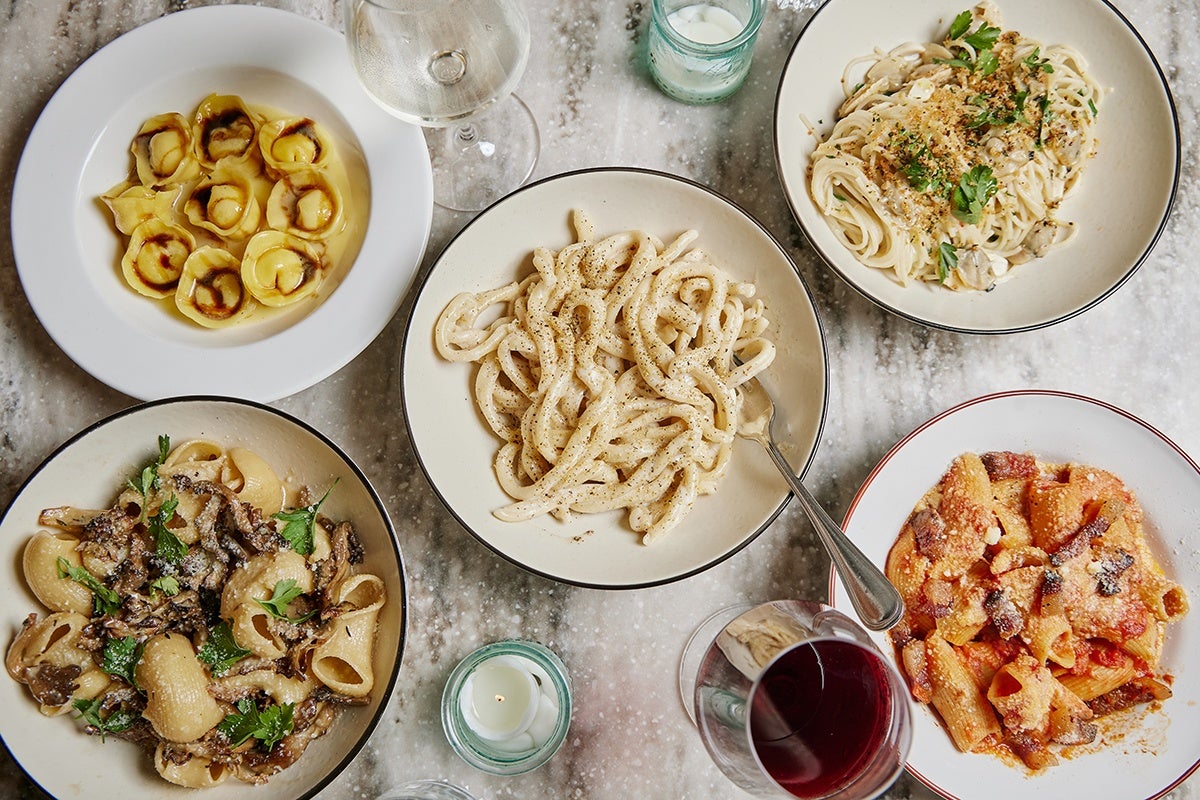
Overhead view of five different pastas on a white marble table.

A spread from Jamaica Plain’s Tonino. / Photograph by Brian Samuels

Pizza and pasta are crowd-pleasers in pretty much any form, but it’s not just the gourmet renditions by chef Luke Fetbroth that, in just one year, have rocketed this Jamaica Plain spot to instant-classic status. Along with business partner and beverage connoisseur Claire Makley, Fetbroth has tapped into the kind of cozy neighborhood vibes that make a meal memorable, from the truly unique aperitivo selection (see: the House Spritz, combining bubbly and bitter Cappelletti with juicy yuzu sake) to the flaky-salt-finished tiramisu.

Jamaica Plain | Italian | Read more | Reservations

The best meals start with the freshest ingredients, and that’s exactly what this quintessential seafood spot serves up day after day. Of course, we’re talking about the briny Duxbury oysters and ruddy lobsters hauled in from Maine, as well as meaty fillets of monkfish and expertly cleaned, sustainably sourced branzino grilled whole. But these pristine specimens achieve their ultimate form when accompanied by just-picked—or pickled-at-peak-season—produce, a food group taken just as seriously by chef Jeremy Sewall and his team of kitchen pros. And as the restaurant marks its 10th anniversary this month, it’s celebrating by doubling down on its devotion to top-notch sourcing at its newest Cambridge location.

Multiple locations | Seafood | Read more | Reservations
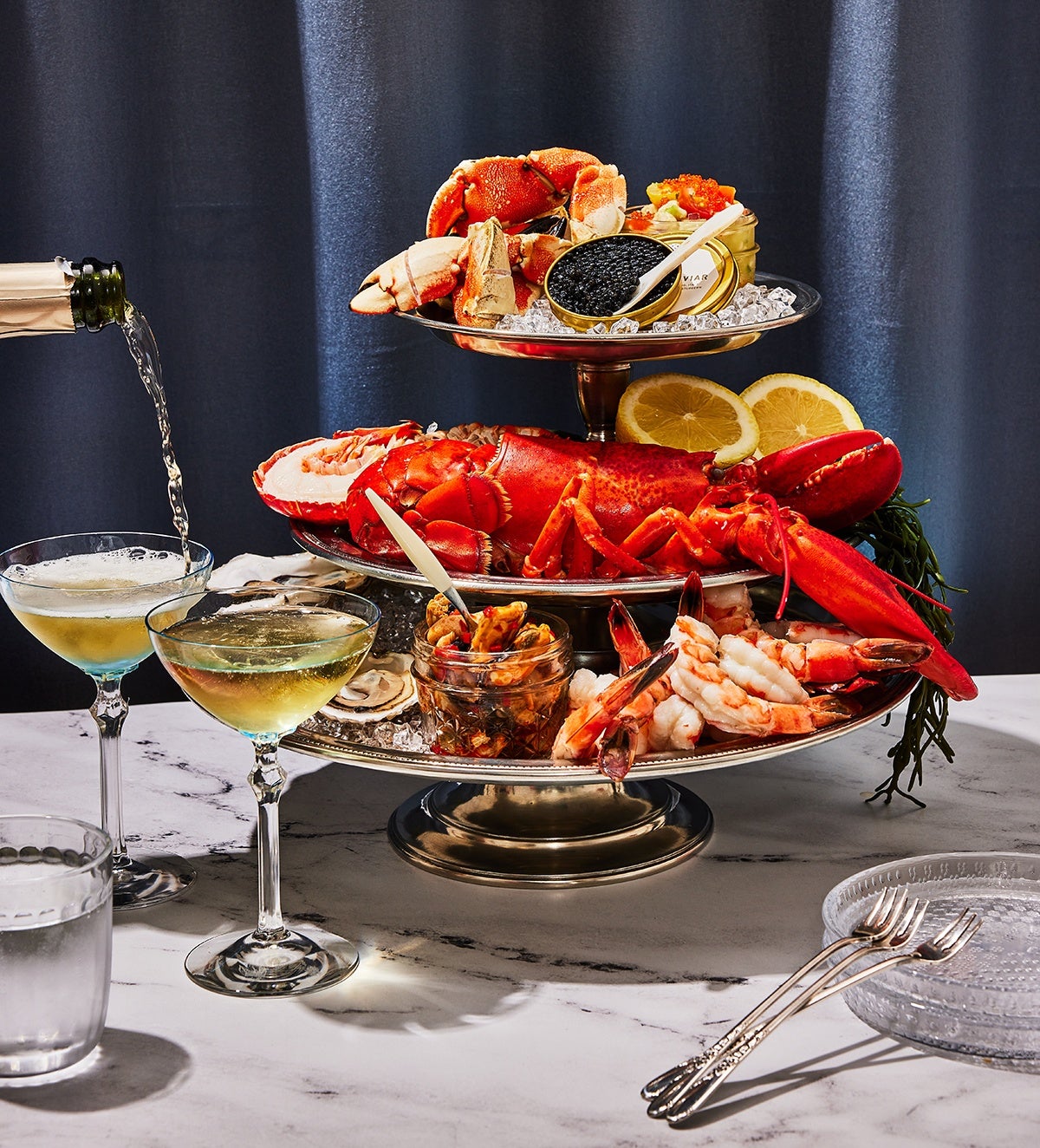
A three-tier shellfish tower from Row 34 with Jonah crab claws, Maine half lobsters, shrimp cocktail, and Island Creek caviar.

The shellfish tower from Row 34 includes Jonah crab claws, Maine half lobsters, shrimp cocktail, and Island Creek caviar. We’ll drink to that. / Photograph by Joe St. Pierre. Styling by Madison Trapkin

Come for the snacks—cutely dubbed “smackerals”—like the luscious buttermilk biscuit slathered with smoked maple-miso butter; stay for the larger farm-to-table entrées such as koji-marinated duck breast with wild-blackberry-barbecue sauce and duck-fat carrots. Or better yet, spring for the adventurous five-course tasting at the chef’s counter and get a front-row seat as chef-owner Erin Miller works her sorcery with the freshest local ingredients. The ambiance is warm, cozy, and not too fancy, but the plates are the epitome of five-star dining. The perfect pairing, as far as we’re concerned.

Cambridge | Farm-to-table | Read more | Reservations

Imagine our surprise when we found one of Greater Boston’s best versions of steak tips at a tiny Eastern Mediterranean nook in Inman Square (it’s all about the date molasses!). And that’s just one of nearly two dozen irresistible small plates on the menu at this gorgeously appointed hideaway. Share feta fritters drizzled with sweet orange-blossom honey; crispy coconut shrimp with mango-ginger chutney; and scallops with harissa barbecue duck for a romantic date. The cocktail menu, which also relies on Mediterranean flavors, pairs brilliantly. Olive-brine-infused mule, anyone?

Cambridge | Mediterranean | Read more | Reservations

After a century of being confined mostly to modest diners and pizzerias, Greek cuisine in Boston is finally getting the respect it deserves. No restaurant better represents that elevation than this lively South End spot, which channels every fabulously sun-splashed trip you’ve ever taken (or envied on social media) to Santorini or Mykonos. It’s all here: the small plates of piquant nibbles; the brilliant dips; the easy-drinking wines; the fire-grilled kebabs, chops, and whole fish. And it’s a fitting spiritual recharge, especially in the middle of a cold, dark Boston winter.

South End | Greek | Read more | Reservations
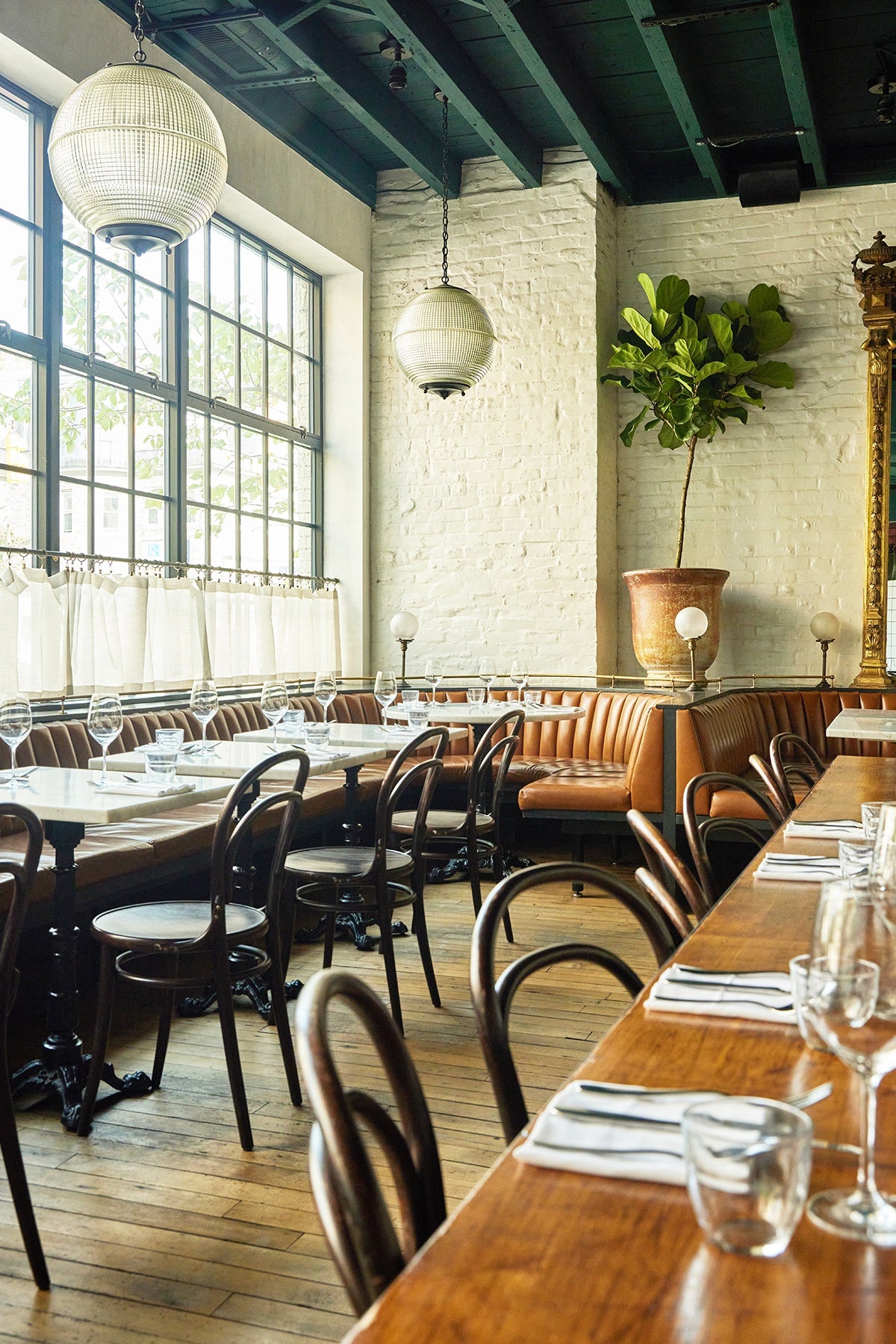
A bright restaurant interior photographed during the day, with white walls, a large potted tree, and the edge of a large mirror with an intricate brass frame.

Pammy’s. / Photograph by Brian Samuels

In 2023, chef Douglass Williams took his Mida magic to the scenic waterfront of East Boston with a brand-new location. You’ll find all the hits—focaccia piled high with Parmesan, handmade bucatini swathed in Mida’s signature guanciale-filled amatriciana, and a tender eggplant parm sandwich—plus an exciting offering not available at the South End original: ultra-thin-crust pizza made to order. And if clam pie and dreamy sunsets weren’t enough to reel you in, the restaurant’s impressive, design-forward interior is guaranteed to make any dinner feel like an artful evening.

East Boston and other locations | Italian | Read more | Reservations

Chef Jody Adams’s lovely downtown space is many things to many people, equally adept at hosting business lunches and happy-hour gatherings as it is nights out with friends and romantic occasions. At the top of our wish list, though, is a solo winter dinner at the bar, tucking into the hearty rosemary-braised lamb phyllo pie with a glass of Greek red. Plates of watermelon fattoush and lamb meatballs are also perfect to snack on while we eagerly await chef Adams’s return to Italian cuisine with the opening of La Padrona at Raffles Boston later this year.

Downtown | Mediterranean | Read more | Reservations

Few new arrivals have thrilled us as much as the Eaves, a transportive sequel from the Cicada coffee bar crew that melds Vietnamese dishes with New England ingredients. An ode to the owners’ lives in both regions, the tiny bar and restaurant—a creative use of former storage space at Somerville’s Bow Market—is brimming with life, from the energetic soundtrack (plenty of disco on one recent visit) to an ever-changing array of flavor-packed dishes (plump duck gyoza were an early winner.) Bonus: Mini cocktail sizing lets you sample more.

Somerville | Vietnamese | Read more | Reservations
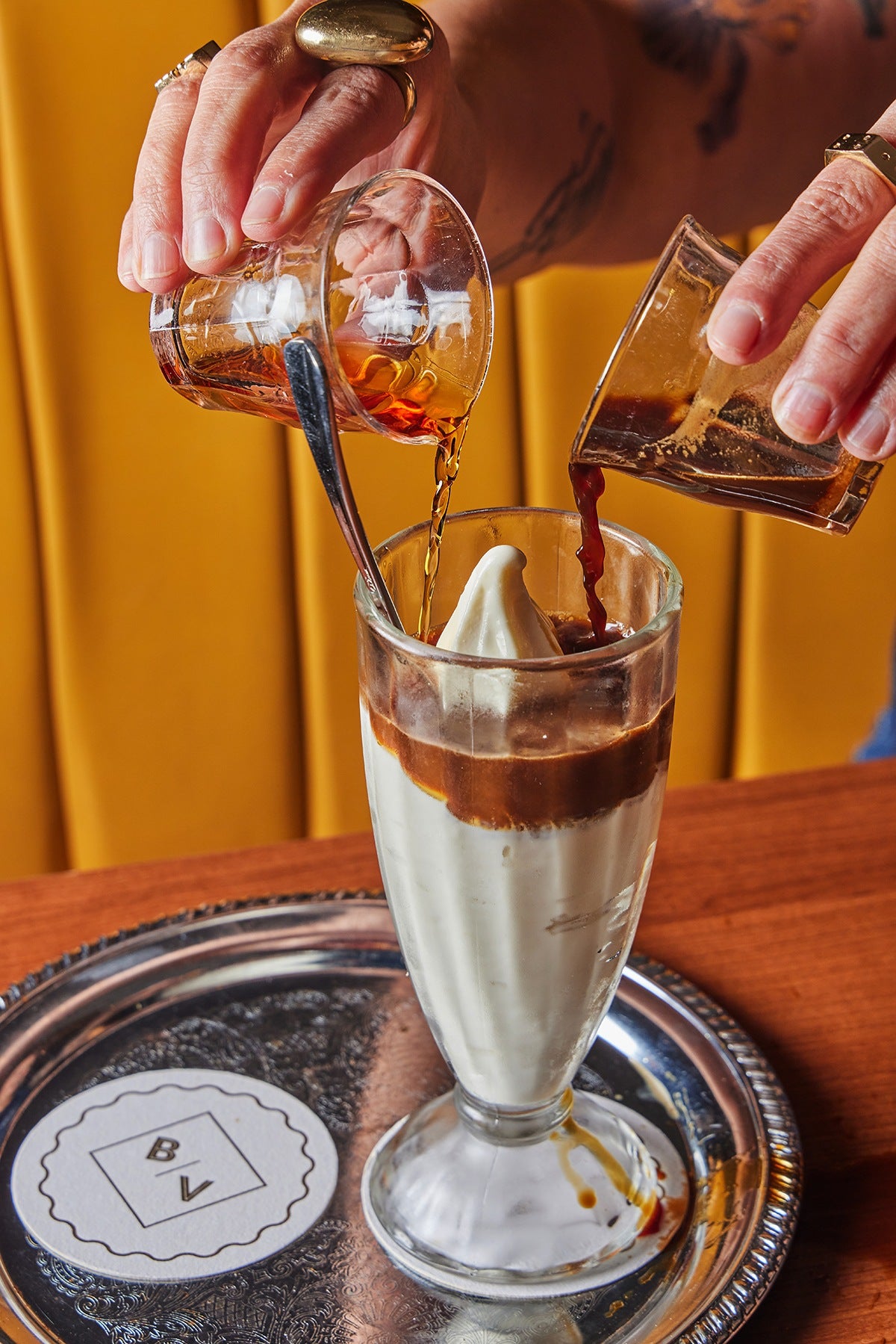
Two hands pour two different liquids—one a red booze, and one coffee—over an elegant glass of soft-serve vanilla ice cream.

Bar Volpe’s affogato. / Photograph by Brian Samuels

Hearty, homey Yemeni cuisine is new to Boston, but Kenmore Square’s sleek Bab Al-Yemen, which opened last year, is keen to show you the ropes. There, you’ll find everything from winter-friendly stews to slow-roasted lamb, all delicately spiced. The fresh-baked bread—a huge, flat round—is a must, as is ending the meal with a pot of Adani tea, aromatic with cloves and cardamom, and date or banana fattah, a sweet dessert featuring shredded bread and honey.

Fenway/Kenmore | Yemeni | Read more | Reservations

The Bay State’s official bird, for which this Seaport spot is named, is known to be friendly and curious. In a neighborhood restaurant, these qualities take the form of polished yet casual service and inspired interpretations of Mediterranean-meets-New England cuisine (see: lobster fra diavolo enhanced with smoky Calabrian chiles and ruffled twists of campanelle pasta; crispy fried chicken with labneh ranch and snap-pea salad; and an apricot-spiked bourbon Old Fashioned). In other words, this spot, helmed by homegrown hospitality experts Ted Kilpatrick and John daSilva, is perfectly in tune with how Bostonians want to dine and drink today.

Seaport | New England/Mediterranean | Read more | Reservations

It may be hard to fathom now, but there was once a time when pork-belly bao buns and sriracha-spiked aioli were unfamiliar to many bar-hopping Bostonians. Then Shōjō came along and remixed the dining scene with the city’s first modern Asian cocktail bar. Still dishing out those staples and more nightly to throngs at its boisterous Chinatown bistro, Shōjō also recently added a larger Cambridge outpost with more Southeast Asian–inspired fare, including a Vietnamese beef carpaccio sprinkled in super-savory fish-sauce vinaigrette, earthy herbs, and rice-cracker crispies.

Chinatown and Cambridge | Asian | Read more | Reservations
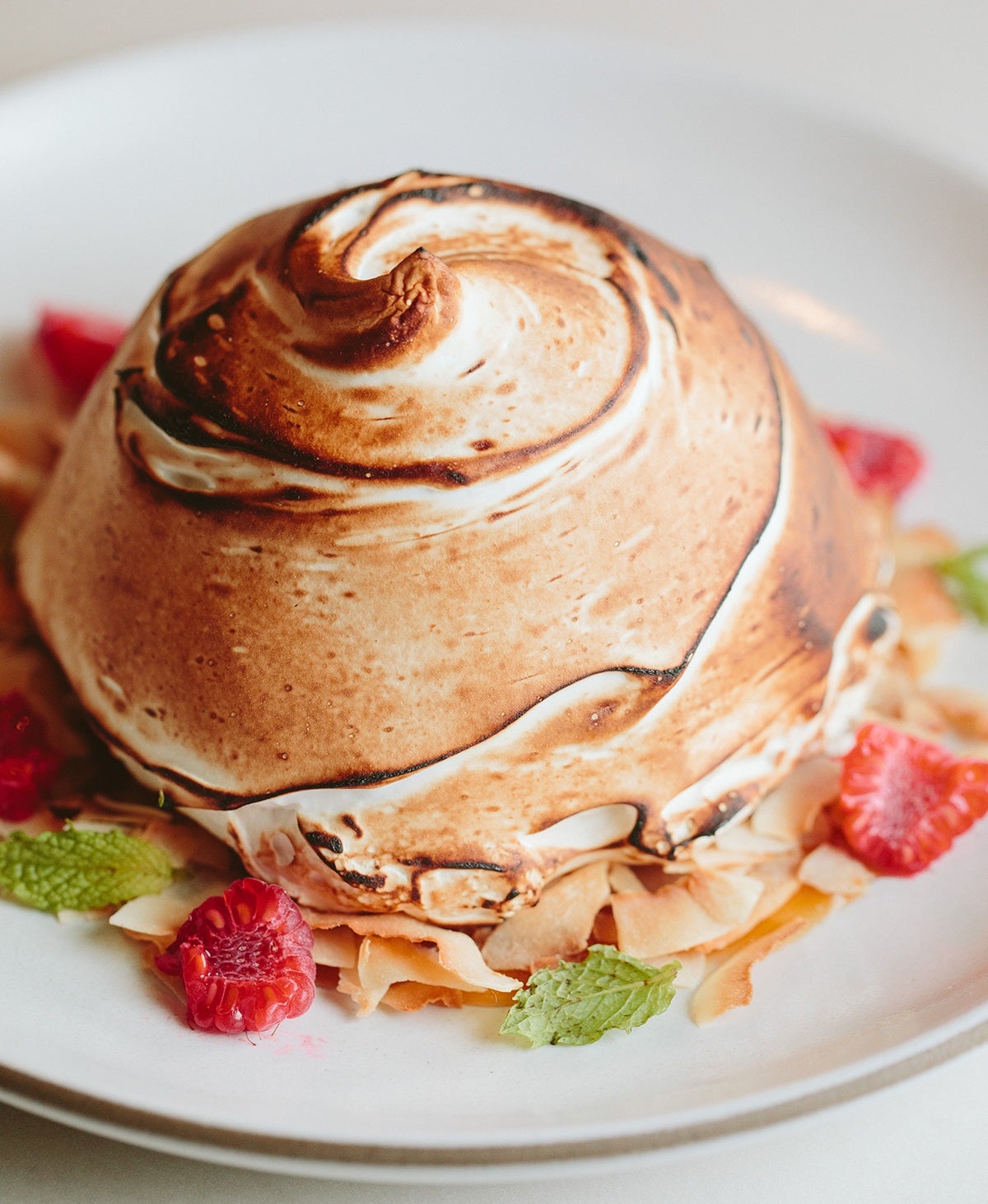
A small meringue dessert garnished with cut up raspberries and leaves.

Chickadee’s baked Alaska. / Photograph of Brian Samuels

A colorful wall of arthouse film posters, a soundtrack of Cuban music, and a mojito—perhaps pineapple or mango—set the scene for a festive dive into Cuban cuisine at this four-year-old Cambridge sequel to the Waltham original. Entrées like ropa vieja and puerco asado offer faithful takes on Cuban classics, while small plates like guava-glazed baby-back ribs and corn fritters with goat-cheese mousse deviate from tradition a bit—in-the-know diners try a little of each. And churros, of course: Don’t forget the churros.

Cambridge | Cuban | Read more | Reservations

We’re not sure who Aunt Wang is—all we know is that her steamed snapper dumplings with chili-and-black-vinegar sauce, on the menu since Chalawan opened in 2019, are among the best balls of dough in town. They’re just one of many delightful bites you’ll enjoy on this whirlwind tour of Southeast Asian fare, from a peanut-y Balinese gado-gado salad to a hearty pork-belly curry from northern Thailand. Lesser restaurants would struggle to do justice to so many cuisines on one menu, but Chalawan pulls it off marvelously.

Cambridge | Southeast Asian | Read more | Reservations

After growing up in his parents’ Sichuan Garden restaurants, Ran Duan (Baldwin Bar, Blossom Bar) decided to join the family business as an adult, adding imaginative beverages to the menu that quickly earned national attention. Duan’s first endeavor outside of his parents’ restaurants, a self-described “seafood emporium,” matches fruits de mer with effervescent drinks in ways that will be refreshing to even those who are weary of the champagne and caviar-on-everything trend (something Ivory Pearl proudly ascribes to). Specializing in stunning seafood towers, lavish plates like local-tuna steak frites, and wine-inspired cocktails such as a crystalline piña colada riff called Coco Chanel, the restaurant is as elaborately, endearingly extra as anything we’ve seen from this Brookline son.

Brookline | Seafood | Read more | Reservations

Restaurateur Will Gilson has gone on to open several more restaurants since Puritan & Co.’s 2012 debut—all wonderful!—but something keeps bringing us back to the original. It’s a celebration of local farms by way of modern American cuisine: think dishes like phyllo-wrapped cod with lobster stew; pan-roasted pork porterhouse with peaches and roasted peppers; and seared scallops with succotash. Whatever you order, definitely start your meal with the pillowy Parker House rolls with cultured butter, a New England classic.

Cambridge | New American | Read more | Reservations

All photographs by Joe St. Pierre or Brian Samuels, as indicated; food styling by Madison Trapkin; props courtesy of Didriks and Weston Table.

First published in the November 2023 print issue.
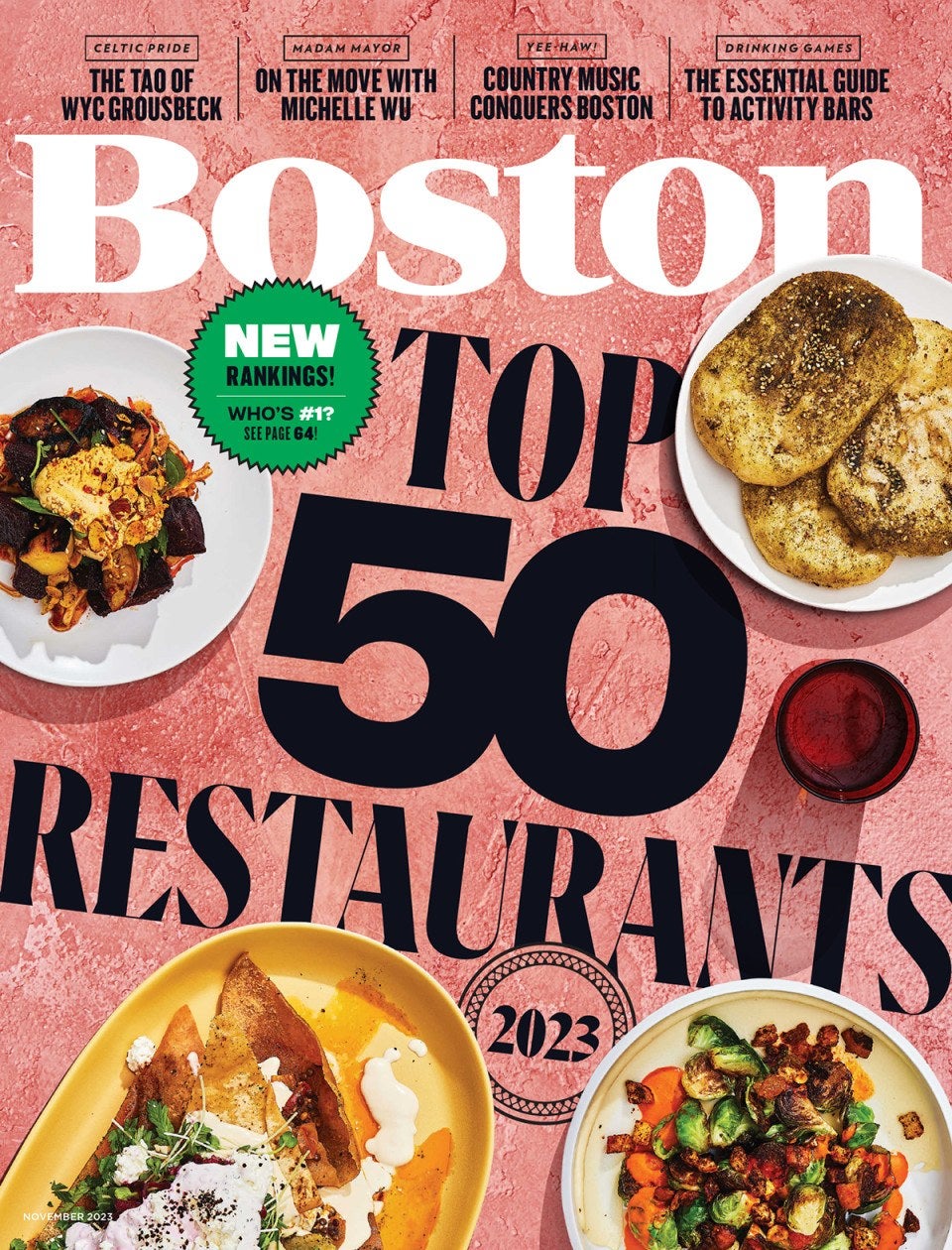
Photograph by Joe St. Pierre; styling by Madison Trapkin


New Restaurants to Try in Boston, October 2026

0

New and exciting restaurants to check out, plus good reasons to visit older spots.

Hawksmoor’s dry-aged, charcoal-grilled porterhouse with bone marrow, creamed spinach, macaroni and cheese, and beef fat fries. / Photo by Rachel Leah Blumenthal

Fall is in full swing, despite today’s 85-degree forecast, and we’re thinking cozy and casual for upcoming meals: French-Canadian comfort in Fort Point (yes, there’s poutine); on-the-go Lebanese wraps, Korean kimbap, and Yemeni coffee; cocktails, charcuterie, and reading in a romantic bookstore. With that, we’re back with our monthly where-to-eat guide, featuring new restaurant openings, expansions and revamps of existing businesses, and loads of caffeine. (Check out last month’s guide here.)

New Restaurants to Try This Month

Recent (or imminent) openings to check out.

About Thyme (Harvard Square)

Fast-casual Lebanese-inspired wraps—on fresh-baked manousheh—are already drawing crowds; try sumac honey chicken or spicy kafta. Iced drinks like cardamom-and-honey lattes and pistachio rose matcha are keeping those crowds coming.

1 Brattle Sq., Harvard Square, Cambridge, aboutthyme.co.

Bap Street (Packard’s Corner)

Korean comfort food stars at this family-owned newcomer on the Boston/Brookline line, with an emphasis on bibimbap and kimbap. The latter—rice-and-seaweed rolls with various fillings—aren’t very prevalent in Boston, despite the city’s broad Korean dining scene, so try them here in varieties such as spicy Buldak chicken or beef bulgogi.

1026A Commonwealth Ave., Boston, bapstreet.com.

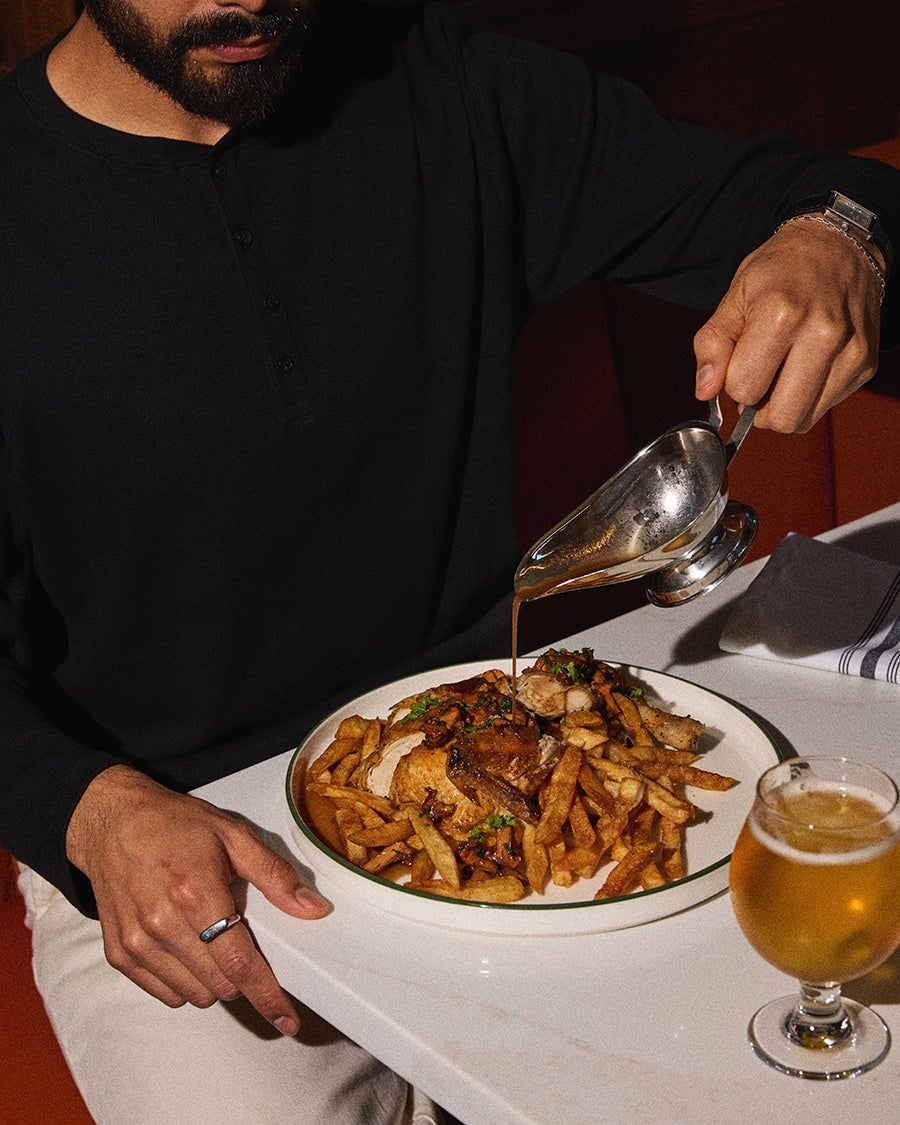
A person wearing a black long-sleeve shirt is pouring gravy from a silver gravy boat onto a plate of roasted chicken and French fries garnished with herbs. A glass of beer is placed on the table next to the plate.

Celine. / Photo by Emily Kan

Celine (Fort Point)

The diva of Fort Point has arrived, bringing steak tartare, moules marinières, and poutine. The cozy Montréal-inspired endeavor comes from the team behind several Italian favorites (SRV, Gufo, Salty Pig) and a Portuguese stunner (Baleia).

324 A St., Fort Point, Boston, codarestaurantgroup.com.

A wooden table set with various dishes including a bowl of risotto, a plate of scallops with corn and sauce, a salad with cherry tomatoes and cucumbers, a plate of roasted vegetables, a bowl of Brussels sprouts with cheese, a dish with a piece of cooked fish in broth, and a plate with three rectangular pastries topped with red garnish. There are also blue water glasses, wine glasses with red and white wine, white plates with folded napkins, and silverware arranged around the table.

Puritan Tavern. / Photo by Brian Samuels

Puritan Tavern (Groton)

Suburbanites, this one’s for you: Chef Will Gilson, owner of Cambridge’s Puritan & Company, skews a little more casual at this New England tavern in his hometown. Watch for the resurrection of the farm-to-table tasting-menu dinners he used to host at sibling spot the Herb Lyceum.

20 Station Ave., Groton, puritantavern.com.

Zhu (Back Bay)

This glam multi-level spot features Chinese seafood, dim sum, and dumplings galore in upscale digs. Currently in soft-opening mode; stay tuned for a full opening soon. (No relation to Arlington’s pan-Asian vegan restaurant Zhu.)

903 Boylston St., Back Bay, instagram.com/zhuboston.

New Drink-Focused Spots to Try This Month

Cafés aplenty—plus bars and a distillery.

A glass of frothy tea with a rich amber color sits on a wooden tray next to a small, clear, flower-shaped glass bowl holding a single ripe strawberry with green leaves. The scene is softly lit with natural light.

Bloom’s strawberry Calpico fizz (strawberry white tea and Calpico foam). / Photo by Christian Doan

Bloom (Seaport)

Christian Doan, a.k.a. the influencer @chopstickmurphys, has rounded up some big names in Boston beverages for his tea-bar-by-day, cocktail-bar-by-night: Michelin-recognized cocktail expert Chompon “Boong” Boonnak, who co-owns Mahaniyom, and Markus Yao, who managed the bar at Shōjō, are the beverage directors; Backbar alum Iruma Shibuya is heading the operations. Snack on Japanese sandos and other small bites; sip intriguing matcha drinks, tea-based cocktails, and more.

60 Seaport Blvd., Seaport, Boston, instagram.com/bloom.boston.

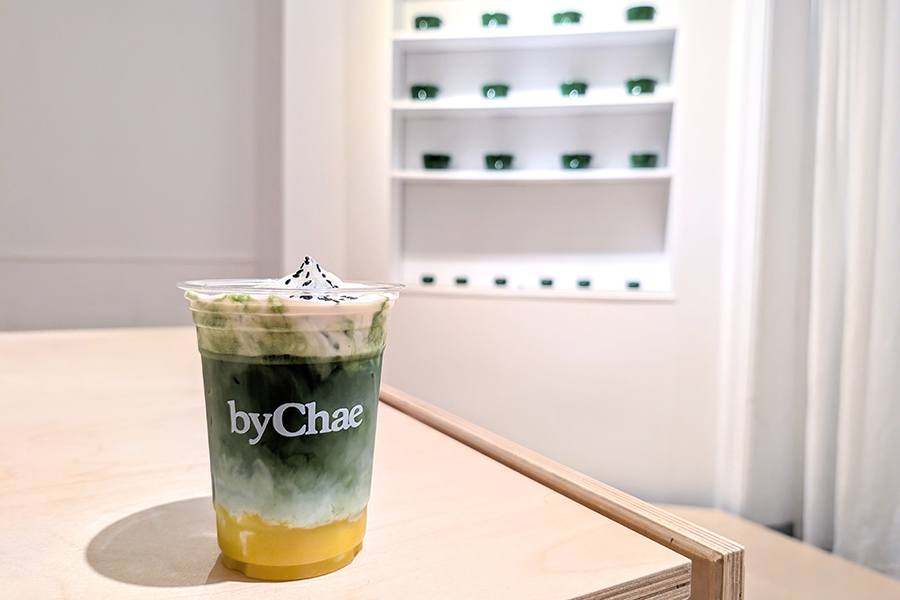
A plastic cup with a logo for the brand byChae is full of a layered matcha drink, with orange puree at the bottom, green matcha, and thick white foam. In the background, shelves hold green ceramic bowls.

ByChae’s mango sticky rice matcha latte. / Photo by Rachel Leah Blumenthal

byChae (Back Bay)

Boston’s having a matcha moment, and nowhere is that more apparent than at ByChae, a pop-up-turned café now open on Newbury Street. One sip of the dreamy coconut-cream-topped “mango sticky rice” matcha, and you’ll never order anything else.

222 Newbury St., Back Bay, Boston, instagram.com/bychaeofficial.

Cafè+ by Pagu (Central Square)

Taiwanese doughnuts, empanadas, bentos, matcha, coffee, and more—Pagu now has a café offshoot in an MIT building nearby. “It’s like a mini Pagu down the street,” says chef-owner Tracy Chang: a chance to reinvent the daytime service that Pagu once offered, as well as an opportunity to showcase Chang and Pagu’s community work by featuring chefs from the Refugee Supper Club organization.

134 Massachusetts Ave., Central Square, Cambridge.

A large, dome-shaped pizza oven with a mosaic tile exterior and a black metal front and legs. The front panel has a metal sign that reads

The C’Yool oven. / Courtesy photo

C’Yool (South End)

A few big Yemeni café chains have appeared in Greater Boston over the past year, but this Yemeni café and bakery is homegrown, from the team behind Fenway’s Bab Al-Yemen. The name (pronounced see-yool) is symbolic of abundance, referring to the swelling of Yemeni rivers after heavy rain (and the start of the coffee harvest). The menu is abundant, too, with savory and sweet breads, pastries, and rich Yemeni coffee.

600 Harrison Ave., South End, Boston, 857-305-3147, cyoolcoffee.com.

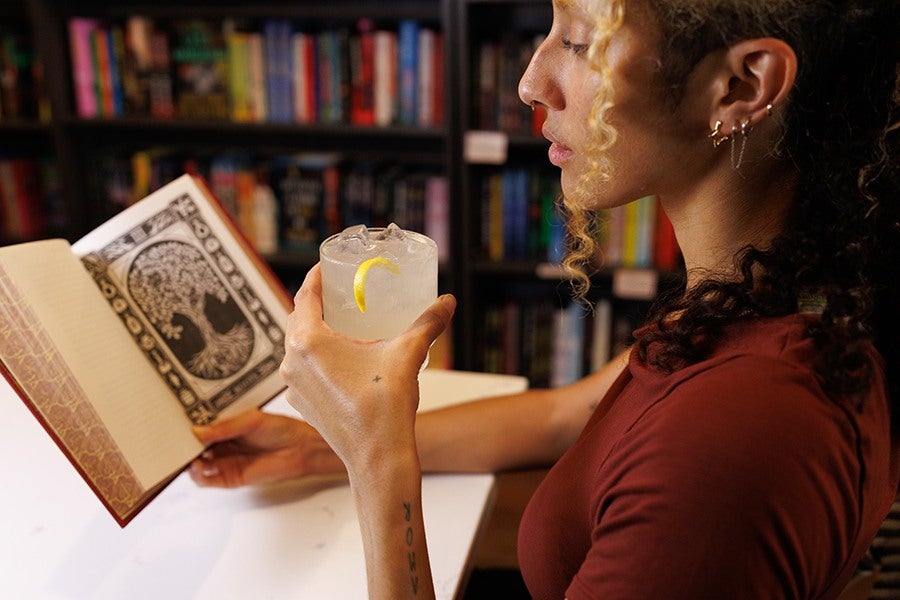
A person with curly hair and multiple earrings is holding a glass of iced lemon drink in one hand and an open book with an intricate black and white illustration of a tree in the other hand. They are seated at a white table with a bookshelf filled with colorful books in the background.

The bar and cafe at Lovestruck Books. / Photo by Sierra O’Mara Moraes

Lovestruck Bar & Cafe (Harvard Square)

Not new, but a revamp: The bar and café in Cambridge’s Best of Boston bookstore Lovestruck Books has been renovated and is being run in-house now instead of by George Howell Coffee (although the breakup was amicable, with the coffee still on the menu and future event partnerships reportedly in the works). The new bar and café operates all day, from breakfast sandwiches and coffee to charcuterie and cocktails. And fans of Somerville’s now-closed 7ate9 Bakery should be sure to stop by as 7ate9 owner Sarah Amaral is now Lovestruck’s COO and has brought some recipes along, including salted Nutella syrup (try it in the salted Nutella latte) and lavender mocha.

44 Brattle St., Harvard Square, Cambridge, 617-286-2346, lovestruckbooks.com.

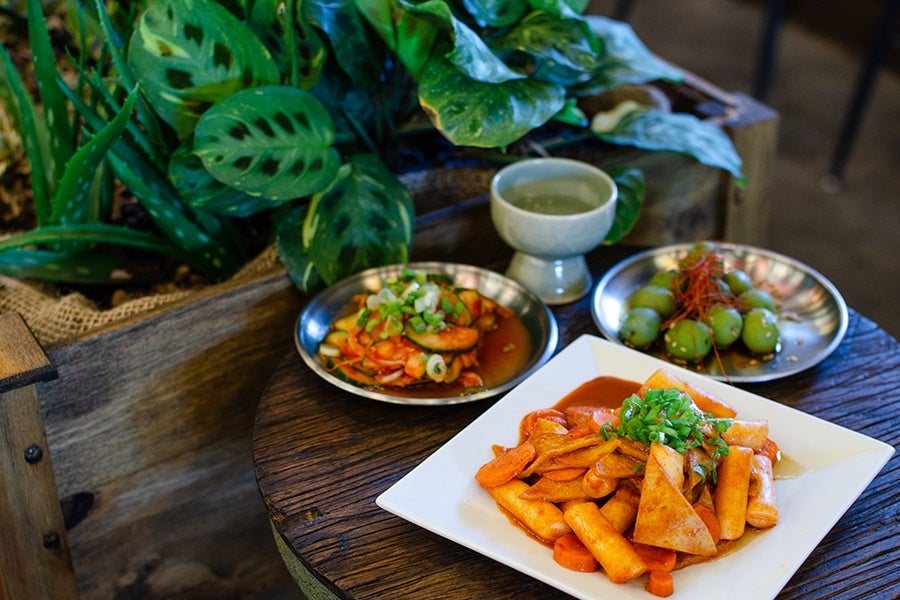
A wooden table holds three dishes and a cup. The main dish on a white square plate contains stir-fried rice cakes with sliced carrots and green onions in a reddish sauce. Behind it, a metal plate has green olives topped with thin red strands, and another metal plate holds a shrimp dish garnished with chopped green onions. A small ceramic cup filled with a light-colored liquid is also on the table. The background features green leafy plants and wooden surfaces.

Namu Distilling Co. features an ever-changing menu of anju, Korean drinking snacks, like the tteokbokki, cucumber salad, and olives pictured here. Namu’s soju cups were made by local ceramic artist Sang Jeong Lee. / Photo by Rachel Leah Blumenthal

Namu Distilling Co. (Mission Hill)

New England’s first soju distillery is here—and founders Will Blessing and Josh Moss are using the fermented-rice base to distill a unique gin, too. Head to the spacious, plant-filled distillery and cocktail bar for Korean drinking snacks and very fun cocktails that highlight Namu’s spirits.

89 Heath St., Mission Hill, Boston, namudistilling.com.

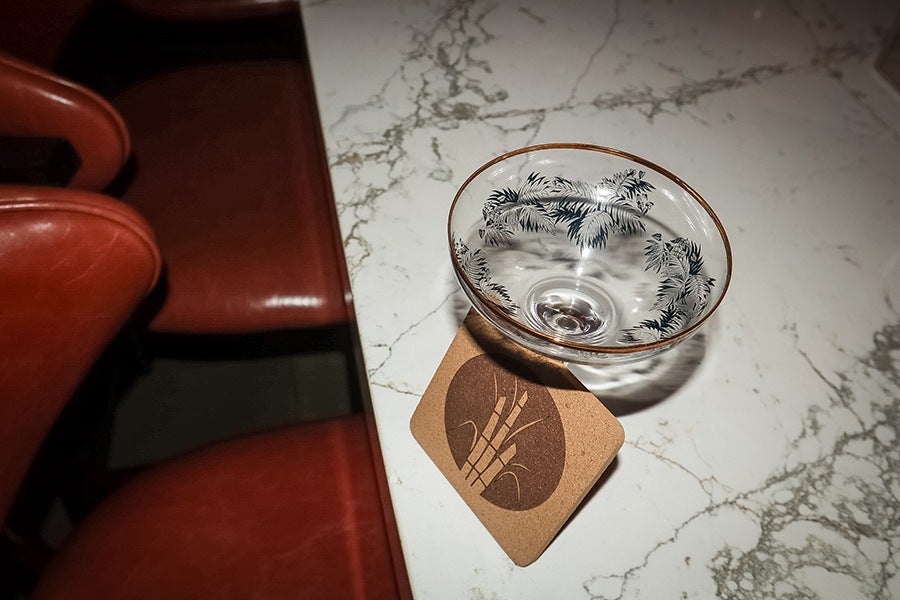
A clear glass bowl with black leaf patterns and a gold rim is placed on a cork coaster featuring a bamboo design. The bowl and coaster are on a white marble surface with gray veining. Red leather chairs are partially visible in the background.

Overproof Cocktail Lounge. / Courtesy photo

Overproof Cocktail Lounge (South Boston)

Rum’s the focus when Overproof Cocktail Lounge opens later this month, courtesy of drink and hospitality experts Jen LaForge and Will Isaza. A place of their own has been a long time coming for the industry vets, who most recently managed Ama at the Atlas and Foxglove Terrace respectively and used to be fixtures at Blossom Bar, Birds of Paradise, and other local cocktail destinations. Isaza teases a drink from opening menu called the Spanglish Remix (Ron Zacapa 23, mango milk, sesame, lime, amontillado sherry), which “perfectly encompasses our bartending journey throughout the years,” he says, combining “a Latin American rum with tropical mango flavors, balanced by savory sesame components and a nutty, rich Spanish aromatized wine.” Watch for an intriguing cobbler featuring cold brew and bell pepper, too. In partnership with Common Craft’s South Boston location (and built into the space that was originally planned as Common Craft’s Stillroom cocktail bar), Overproof will feature bar bites by chef Tony Messina, Common Craft’s executive chef and partner.

85 Damrell St., South Boston, overproofcocktaillounge.com.

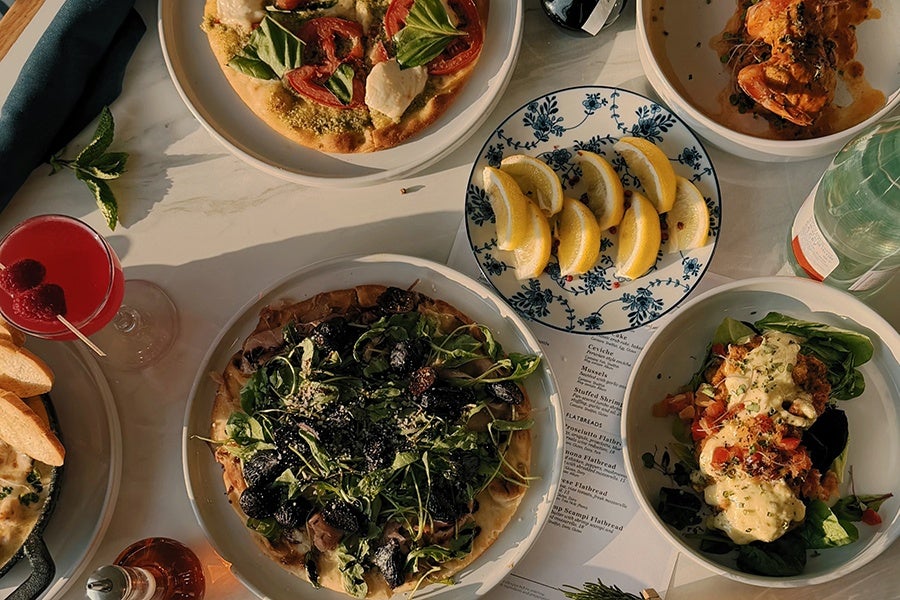
Overhead view of restaurant dishes on a white marble table with dusk-like lighting. There's a salad, a flatbread, a plate of lemon wedges, a pink cocktail, and more.

Pomona Café & Wine Bar in East Boston. / Courtesy photo

Pomona Café & Wine Bar (East Boston)

Sunlight-drenched mornings over a cup of Colombian coffee; evenings full of wine and global small plates. All-day cafés are hot right now, and Eastie’s latest is a hit thanks to its warm hospitality.

18 Meridian St., Maverick Square, East Boston, 617-418-0261, pomonaeastie.com.

Older Restaurants Doing New Things

Expansions and other changes—time for a (re)visit.

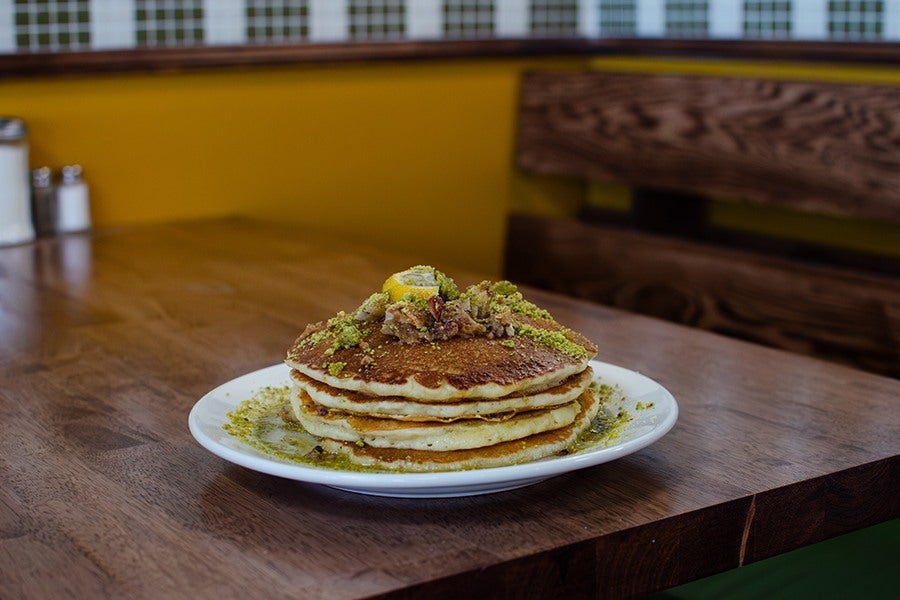
A stack of three golden-brown pancakes on a white plate, topped with chopped nuts, a lemon slice, and green crumbled garnish, placed on a wooden table with a yellow wall and wooden bench in the background.

Brookline Lunch’s baklava pancakes. / Photo by Rachel Leah Blumenthal

Brookline Lunch (South Boston)

Any morning with baklava pancakes is a good one. Southie got a lucky break with the expansion of this bustling, nearly 40-year-old Cambridge brunch favorite.

108 L St., South Boston, instagram.com/blinesouthie.

Comfort Kitchen (Dorchester)

The café is back! The acclaimed Upham’s Corner destination has restarted its casual, neighborhood-y café service on Thursdays and Fridays, offering a petite menu of egg sandwiches, mo:mo (Nepali dumplings), and a few other snacks, plus coffee and tea. (Try the chiya, Nepali milk tea.)

611 Columbia Rd., Dorchester, Boston, comfortkichenbos.com.

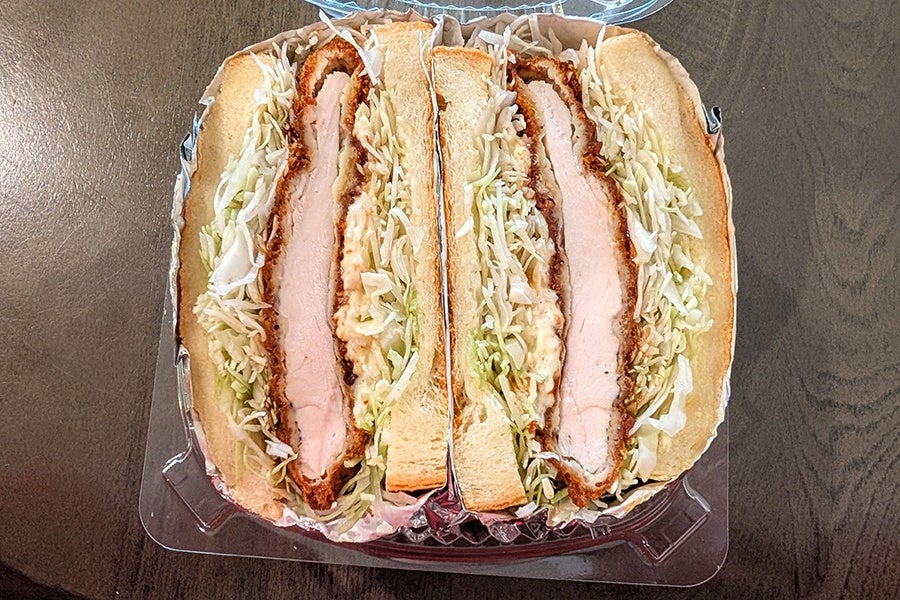
Two sandwich halves with breaded chicken cutlets, shredded cabbage, and a creamy sauce, placed in a clear plastic container on a wooden surface.

A katsu sando during the soft opening of Ebisuya in its new Medford space. / Photo by Rachel Leah Blumenthal

Ebisuya (Medford)

A gone-but-not-forgotten Japanese market has been reborn as a restaurant in a new space, and it’ll soon offer one of Greater Boston’s first tastes of Tokyo-style pizza. (More carb-y good news: Kevin’s popular house-made breads live on.) The menu and hours are limited during the soft-opening phase; watch social media for updates. There are plans for live music, too (small acoustic groups), and Ebisuya is running a Kickstarter campaign to raise funds for music-related expenses.

24 High St., Medford, ebisuyaboston.com.

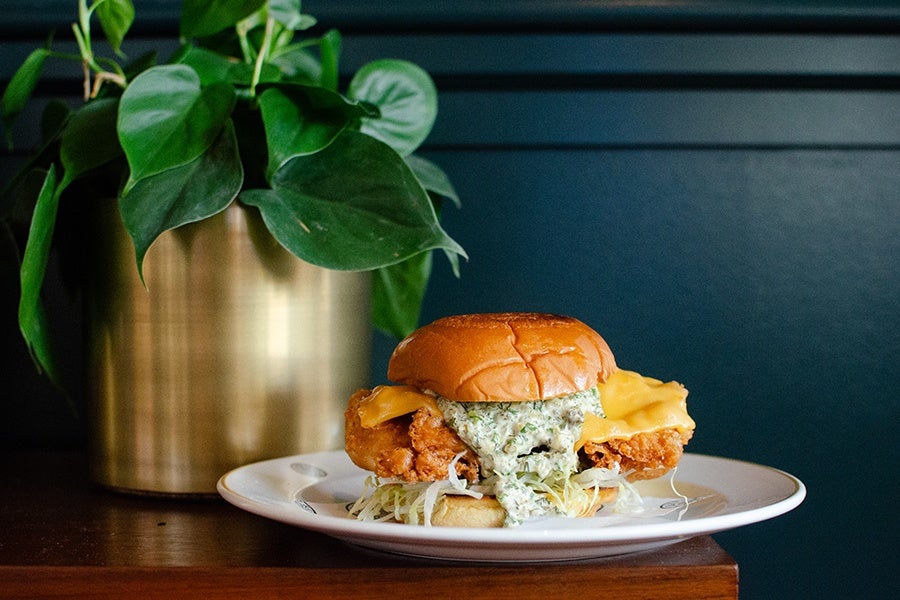
A fried fish sandwich with melted cheddar cheese, shredded lettuce, and a creamy herb sauce, served on a toasted bun on a white plate. A green leafy plant in a gold pot is in the background.

Hawksmoor’s beer-battered fish butty. / Photo by Rachel Leah Blumenthal

Hawksmoor (Fort Point)

We’re chuffed to welcome this U.K. steakhouse chain to the city’s meaty fray. Its British bona fides include a tempting Sunday roast, but the waterfront patio and ice-cold martinis are undeniably New Boston.

15 Necco St., Fort Point, Boston, 781-208-8300, thehawksmoor.com/us.

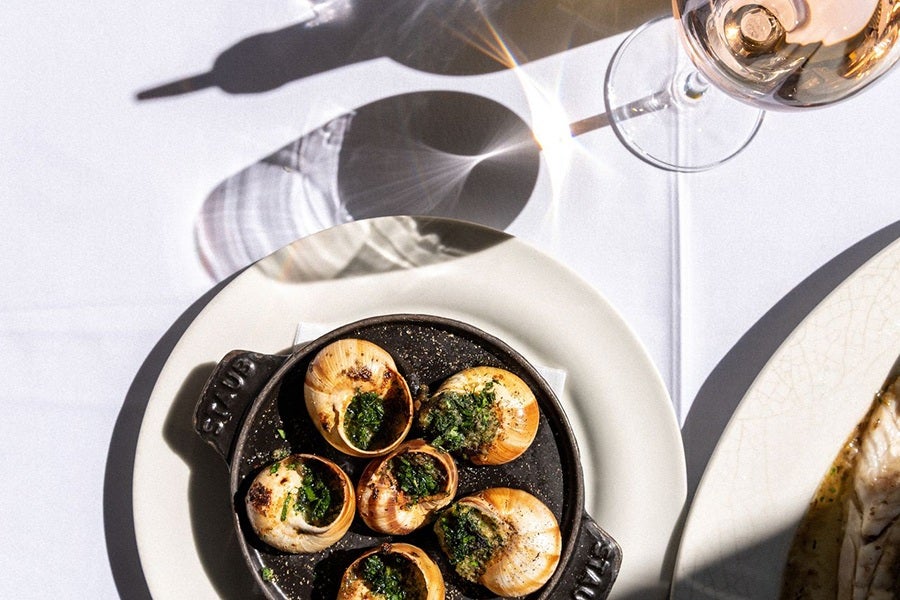
A black cast iron dish containing six cooked escargots topped with green herb butter, placed on a white plate. To the upper right, there is a glass of rosé wine casting a shadow on the white tablecloth. Part of another white plate with food is visible on the right edge.

LPM Restaurant & Bar’s escargot. / Courtesy photo

LPM Restaurant & Bar (Back Bay)

Daydreaming of a Mediterranean vacation? Travel to the French Riviera by way of this new spot at the Four Seasons Hotel One Dalton Street, aided by a tomato cocktail and salt-baked sea bass.

1 Dalton St. (Four Seasons Hotel One Dalton Street), Back Bay, Boston, lpmrestaurants.com.boston.

Má Minh by Việt Citron at Eastern Edge Food Hall (Kendall Square)

Inside Best of Boston food hall Eastern Edge, the popular Vietnamese restaurant Việt Citron has added an offshoot. While you can get hearty dishes like bánh mì, bánh hỏi, and more at the original, head to the Má Minh counter for a snackier menu, featuring summer rolls and sugarcane juice.

290 Main St., Kendall Square, Cambridge, easternedgefoodhall.com.

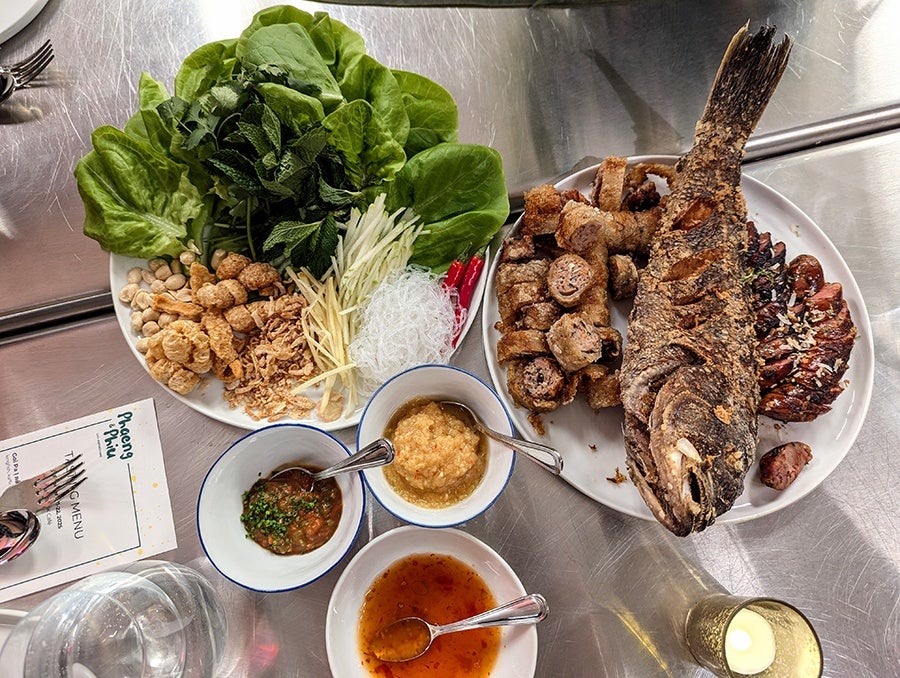
A spread of Lao food, including a crispy fried fish, sausage, fried pork and mushroom rolls, herbs, and sauces.

Pun mieng—Lao-inspired drinking food—at Phaeng & Phiu’s inaugural pop-up series at Rubato, February 2025. / Photo by Rachel Leah Blumenthal

Phaeng & Phiu at Shore Leave (South End)

Chef Veo Robert’s Best of Boston Lao-meets-local pop-up has taken up residence at tropical bar Shore Leave for the bar’s final few months. (Shore Leave, along with siblings No Relation and Bar Mezzana, will close at the end of the year.) Robert is serving plenty of classic Lao dishes while emphasizing local sourcing, such as in pad kee mao talay, a rice noodle dish with New England seafood.

11 William E. Mullins Way, South End, Boston, 617-530-1775, shoreleaveboston.com.

Two white bowls sit on a pale green tray, one featuring thick noodle rolls with fish balls and a swoosh of sriracha, the other with chopped cucumbers.

Rubato’s ji cheung fun (steamed rice rolls) with curry fish balls and a spicy cucumber salad. / Photo by Rachel Leah Blumenthal

Rubato (Quincy)

This tiny Hong Kong-inspired café in Quincy has been bustling since its 2022 debut—but it’s even buzzier these days thanks to chef-owner Laurence Louie’s finalist finish on the 23rd season of Top Chef. While it’s traditionally kept breakfast and lunch hours with the very occasional evening pop-up, Rubato is finally adding regular dinner hours as of October 9. Look for new dishes such as a fried fish sandwich on a steamed chili crisp bao, molten custard black sesame French toast, and a whole clay-pot rice menu section.

412 Hancock St., Quincy, 617-481-2049, rubato-food.com.

Ye Olde Pepper Candy Pantry Pop-Up (North End)

Ye Olde Pepper Candy Companie really is “olde”—it’s the oldest continuously operating candy company in America. Taste history as the Salem shop pops up at Boston’s Old North Church Historic Site through the end of October with old-timey artifacts and, of course, sweets.

193 Salem St., North End, Boston, oldepeppercandy.com.

A version of this guide first appeared in the print edition of the October 2026 issue with the headline “The Hot List.”

Best Real Estate Articles August 2026

0

August is when the summer market starts to show its cracks. Buyers who launched their search back in spring are either under contract, burned out, or still quietly stinging from the home that got away. Sellers who priced based on last year’s optimism are looking at a listing that hasn’t moved and trying to figure out who to blame.

Agents are somewhere in the middle, managing expectations from both directions and doing the kind of careful, patient work that doesn’t look impressive from the outside but is what actually gets deals done.

That tension is exactly what this month’s roundup addresses. Every article I’m highlighting in August gets into the specific details that tend to separate people who close from people who don’t.

Two conventional loan programs that look nearly identical on paper but split decisively based on a single three-digit number. The mortgage mistakes that cost borrowers real money long after the damage is done. How experienced agents actually read comparable sales, and why most buyers and sellers are drawing the wrong conclusions from the same data.

What to do when a listing has already expired and you have to restart from scratch. And a fresh look at what builders are doing with windows in new construction, because what buyers notice first has changed more than most sellers realize.

None of these are flashy topics. They are the ones that come up in real conversations, in lender offices, at listing appointments, and across negotiating tables in every price bracket. Every article in this month’s lineup earned its spot because it answers something people genuinely get wrong and gets specific about what to do instead. Let’s get into it.

Real Estate August 2026

Real Estate August 2026

Two Programs, 3% Down, and One Number That Decides Everything

I’ll lead with my own contribution this month, because this is a question that comes up in almost every first-time buyer conversation we have, and the honest answer is more nuanced than most people expect.

My HomeReady vs Home Possible comparison guide breaks down the two most widely used 3% down conventional loan programs in the market: Fannie Mae’s HomeReady and Freddie Mac’s Home Possible. On the surface, they look like the same loan with two different brand names.

Both let qualified buyers put just 3% down. It caps income at 80% of the area median income. Both offer reduced private mortgage insurance compared to a standard conventional loan, and that mortgage insurance cancels once you reach 20% equity. The overlap is real, and it’s why so many buyers, and even some loan officers, treat these programs as interchangeable.

They are not. Once you get past the shared headline features, five specific differences decide which program actually fits a given borrower’s situation, and those differences involve credit score minimums, who is allowed to be on the loan, eligible property types, how far each program will stretch on debt-to-income ratios, and how each one handles non-traditional income sources like boarder rent or income from an accessory dwelling unit.

Factors That Matter

The credit score split is the biggest one, and it comes up early in every comparison. HomeReady works with scores as low as 620 through automated underwriting, and it even offers a path for borrowers with thin credit files to use rent, utility, and insurance payment history instead of a traditional score.

Home Possible typically requires at least 660, and some lenders push that floor higher for certain loan types. That 40-point gap is decisive for a significant share of buyers. If your score sits anywhere in the 620 to 659 range, Home Possible simply isn’t in play yet, regardless of how strong everything else on your application looks.

The co-borrower rules are the other place where the programs genuinely split in a way that changes outcomes. Home Possible allows a non-occupant co-borrower, meaning a parent or family member can sign onto the loan to help with income qualification without being required to live in the home.

HomeReady generally expects all borrowers to occupy the property. If a buyer is relying on a family member’s income to clear the qualification threshold, that distinction is the whole ballgame.

The guide also covers what changed in 2026 specifically for Home Possible, including an update to eligible fund sources that caught some borrowers off guard mid-transaction, and how the updated area median income limits affect buyers who were told a few months ago that they earned too much to qualify.

For anyone trying to figure out which program they actually belong in, the full breakdown is worth reading before you sit down with a lender and commit to a direction.

What Agents Are Really Looking at When They Pull Comps

Michelle Gibson has spent her entire career working in Wellington and the surrounding South Florida communities, and the depth of that local experience shows in her guide to how real estate agents evaluate comparable sales. It’s the clearest explanation I’ve come across this year of what a professional comp analysis actually involves, and how dramatically different it is from averaging nearby sale prices and calling it a market value.

The framing she leads with is exactly right. The question a well-built CMA is answering isn’t “what have similar homes sold for recently?”

It’s “would the same buyer who toured this home have realistically considered that one?” That buyer overlap test is the foundation of the entire analysis, and most buyers and sellers thinking about comps have never approached it that way.

Two homes that share the same zip code, bedroom count, and square footage might not be competing for the same buyer at all, and using one to price the other produces a number that has nothing to do with what demand will actually support.

From there, Michelle works through the layers that experienced agents add before they ever get to a number. Location factors within a community matter far more than most people realize.

Two homes on the same street can carry meaningfully different values if one backs to a preserve and the other faces a neighbor’s fence, and automated valuation tools have no way to account for that. They can measure proximity. They cannot measure buyer reaction.

Contract Dates Become Crucial

The section on contract dates is one every seller should read carefully before agreeing to a list price. A closing date tells you when the paperwork recorded. The contract date tells you when the buyer actually made their decision, under the market conditions that existed at that moment.

If a home closed in April but went under contract in February, the price reflects February inventory, February buyer urgency, and February negotiating patterns. Pricing off that sale without understanding the timing can put a seller months behind where the market actually sits today.

Michelle also takes a close look at seller concessions and what they do to the apparent sale price in a comp analysis. A home that closed at $525,000 with $12,000 in seller-paid closing costs is a very different data point than a clean $525,000 sale.

The buyer in the first scenario effectively paid $513,000 in net terms, and that gap matters when you’re using that transaction to anchor a new list price.

There’s more in the article on layout livability versus raw square footage, what price reduction history reveals about a comp, and why certain sales get excluded from the analysis entirely.

If you’ve ever heard an agent say a CMA isn’t the same as an automated estimate and wondered what the actual difference is, this article explains it in concrete terms.

Remember there is nothing more crucial than pricing a home accurately.

The Mortgage Mistakes That Have Been Costing Borrowers for Years

Paul Sian is a residential mortgage lender, and his article on the most expensive mortgage mistakes borrowers still make doesn’t waste time on vague warnings. Each mistake gets a specific explanation of what goes wrong, why it happens, and what the real cost is.

He opens with the pre-approval problem, which is the right place to start because this mistake kills deals before a buyer ever writes an offer. The assumption that pre-approval is fast and simple underestimates how much documentation lenders are legally required to collect today, and how long it can take to work through even a minor issue with credit history, employment verification, or conflicting financial records.

Buyers who skip this step and fall in love with a home first are setting themselves up to lose it. The right sequence runs in the other direction.

Paul’s section on credit scores goes further than the standard advice to check your report before applying. He explains that errors on credit reports take time to resolve because the agencies and creditors involved have their own mandated response timelines, and any unresolved dispute in a credit file has to be cleared before a lender can close.

Buyers who discover a problem in month one of their search have options. Buyers who discover it in month four are in a much harder position.

Outstanding Financial Advice

Two other sections stand out. Paul is direct about the gap between borrowing capacity and actual budget, making the point that a lender’s pre-approval amount reflects documented financials, not your real-world financial picture. It doesn’t capture your actual job stability, your normal monthly expenses, or what happens to your cash flow when the water heater goes out.

Buying at the absolute ceiling of what a lender will approve is how buyers end up house-poor within a year.

The section on rate comparison is similarly practical. Paul explains why comparing headline interest rates across lenders misses the real cost of the loan.

Points and fees that get a borrower to a particular rate vary from lender to lender and can change the total cost of the mortgage significantly over its life. The annual percentage rate gives a more complete picture, and shopping on APR rather than rate is the smarter comparison.

If you’re early in the buying process and haven’t sat down with a lender yet, this article is the kind of preparation that pays for itself.

Your Listing Expired. Now What?

Sellers who watch a listing agreement expire without a sale tend to blame one of two things: the market or the agent. Paul Sian’s article on what to do after a home listing expires makes the case, with patience and specifics, that neither response is useful without an honest diagnosis of what actually went wrong. And most of the time, the honest diagnosis points to something the seller controlled.

Price is where he starts, and that’s the right call. An overpriced home in a softer market doesn’t generate showings. Without showings, there’s no feedback, no offers, and no path forward. It is one of the most common house selling mistakes.

Paul points out that the online tools sellers use to check their home’s value are built around ideal conditions, and that a home with dated finishes, deferred maintenance, or cosmetic issues that need attention sits in a different pricing bracket than those tools reflect.

Sellers who anchor to what they paid a few years ago, or to a number generated by an algorithm that has never seen the inside of the house, are pricing for a buyer who doesn’t exist at that number.

Buyer Feedback Matters

The section on buyer feedback is practical in a way I appreciated. Most agents should be collecting feedback automatically after showings, and Paul explains how to decode what buyers actually mean when they use phrases like “needs TLC” or “lacks curb appeal.”

These aren’t vague impressions. They’re signals that translate directly into a decision: fix the problem before relisting, or adjust the price to reflect that whoever buys the home will have to.

Paul also gets into staging, showing schedule flexibility, and marketing quality, and he doesn’t soften any of it. Poor listing photos mean fewer buyers request showings, because the search process today starts online and most buyers have already filtered your home in or out before they’ve spoken to anyone.

A rigid showing schedule means buyers who could have made an offer didn’t get inside on their timeline and found something else. These are controllable variables, and ignoring them the second time around produces the same result as the first.

If your home didn’t sell in the first listing period, this article is the honest conversation you need before you sign anything new.

Why Buyers Keep Stopping to Stare at the Windows

This one is a different kind of article from the rest of the roundup, and I think that’s exactly why it belongs here. Walk through enough new construction homes and something starts to feel different before you can name it. The rooms feel larger than the square footage suggests.

The spaces feel connected to the outside in a way that doesn’t feel accidental. Buyers describe it as bright, open, airy, and they’re right, but most of them can’t explain what’s creating the feeling.

Tami Weiler’s piece on what window styles are dominating new construction right now gives that feeling a name, and explains the intentional design thinking driving it. Builders have shifted from treating windows as a functional feature to treating them as a design system, and the five styles Tami covers are showing up everywhere for specific reasons.

Floor-to-ceiling glass brings the outside into the room in a way that changes how the space feels at every hour of the day. Black frames create crisp visual contrast that works against almost any exterior material, from white siding to natural wood to brick, and they frame the interior view almost like a piece of artwork. Large picture windows stay popular because buyers respond viscerally to unobstructed sightlines and rooms filled with daylight. These aren’t trends that are going away. They’re meeting a need that buyers are increasingly willing to pay for.

Types of Windows

The two that Tami covers which I found most interesting are corner windows and clerestory windows. Corner windows wrap glass around the junction of two walls, giving a room views from two directions at once and creating an openness buyers notice the moment they step into the space.

Clerestory windows sit high on the wall, well above furniture height, pulling in natural light without sacrificing any usable wall space or privacy. They’re a smart solution for hallways, bathrooms, and great rooms where buyers want light without compromising the function of the room.

Tami also includes a perspective from Bridget Gelderman, a real estate agent who works with buyers in the Poconos region, who makes a point that I think is worth sitting with: builders today are thinking about windows as a composition, not as individual units.

The way multiple windows work together, the balance, the grouping, the mix of operable and fixed glass, is what creates the custom quality feel that buyers can’t quite explain but clearly respond to. The overall design matters as much as any single choice.

If you’re shopping new construction or thinking about a renovation, this article gives you the language to understand what you’re reacting to when a home feels right, and what to ask for when it doesn’t.

Final Thoughts

August is not the month to make assumptions. The market rewards preparation more than optimism right now, and every article in this roundup is a version of that same message applied to a different part of the transaction.

Buyers who understand the difference between HomeReady and Home Possible walk into a lender conversation knowing which program fits their situation before anyone else has to tell them.

Many buyers who’ve worked through Paul Sian’s breakdown of mortgage mistakes start the pre-approval process earlier than feels necessary, look at their credit before anyone else does, and compare total loan costs rather than just the rate at the top of the quote. Buyers touring new construction understand why certain homes feel brighter and more connected to the outside in ways that are harder to explain than to feel.

Sellers who understand how Michelle Gibson reads comps know why the closing date on a nearby sale doesn’t tell the whole story, and why the list price their agent recommends might be lower than they expected but grounded in something real. Sellers working through Paul Sian’s expired listing checklist know that relisting without an honest post-mortem is how the same result shows up twice.

The details in each of these articles are the kind that change outcomes quietly. Nobody announces that they read the right thing at the right time. They just make better decisions, avoid the avoidable mistakes, and close when others are still trying to figure out what went wrong.

That’s the thread running through August. Small shifts, done correctly, add up to something you notice at the closing table.

PREVIOUS REAL ESTATE ROUNDUPS

Luke SkarLuke SkarAbout the author: Luke Skar leads the digital strategy behind MadisonMortgageGuys.com, the Delafield, Wisconsin branch of Union Home Mortgage Corp., serving homebuyers across 16 states. With more than two decades in mortgage and digital marketing, he handles both the technical SEO and the content strategy behind the site, translating complex loan programs into guides that everyday buyers can actually use. Connect with Luke on LinkedIn or follow MadisonMortgageGuys on social media for more.

25 Top Restaurants South of Boston

0

Boon Choo Thai Kitchen. / Photo by Heidi Finn

For the Great Suburban Restaurant Hunt, the cover story of our August 2026 issue, we headed south of Boston, exploring the countless excellent restaurants of the South Shore and nearby areas. We ate New England seafood in its many fried, baked, and steamed forms; we devoured bar pies; we cozied up in pubs. (We stayed within I-495 for the purpose of this particular exploration, but check out our Cape & Islands restaurant guides and a look at five iconic South Coast dishes for more south-of-Boston picks.)

See also:

Overhead view of Indian dishes, including grilled shrimp topped with rings of raw red onion, white rice, and naan.

Tandoori grilled shrimp and more at 1947 Norwood. / Photo by Rachel Leah Blumenthal

1947 Norwood

With the tagline “Truly Indian,” 1947 Norwood showcases a wide range of modern Indian fare—from street food like vada pav (fried potato dumplings on a soft roll) to dosa (including a hilariously long paper masala version) to Indo-Chinese dishes (Sichuan street noodles). The menu is huge, the flavors are big: You can’t go wrong. Do try the natu bombs, though—vegetable dumplings with a kick.

997 Boston Providence Hwy., Norwood, 781-269-5466, 1947.boston.

Alma Nove. / Courtesy photo

Alma Nove

Chef Paul Wahlberg (yes, that one) named it after his mother and her nine children. He cooks with wood—for the flavor, absolutely, but also the aroma. The cod cakes come with romesco and hot-and-sour eggplant sauce. The sweet potato gnocchi has broccoli rabe, roasted tomatoes, and pistachio-arugula pesto. Waterfront Hingham Shipyard, fire pit, and walls of glass: Bring someone you really like.

22 Shipyard Dr., Hingham, 781-749-3353, almanovehingham.com.

Khao soi at Boon Choo Thai Kitchen. / Photo by Rachel Leah Blumenthal

Boon Choo Thai Kitchen

Renu Bissanti started cooking Thai food out of her Sharon home during the pandemic, graduated to a beloved food truck, ran a restaurant in Norton, and eventually opened this bright, welcoming dining room back in her own town. Don’t miss the kana moo grob (a crispy pork-belly stir-fry) and the deeply flavored massaman curry with beef.

366 South Main St., Sharon, 781-806-5230, boonchoothaikitchen.com.

Byblos Restaurant

Belly dancers and beef kebabs are the name of the game at this 30-year-old Lebanese favorite. Come with a group, order a family-style platter—packed with dips, salads, meats, kibbe, grape leaves, and more—and get ready for a good time.

678 Washington St., Norwood, 781-762-8998, byblosrestaurant.com.

Cork + Table Kitchen and Bar

Seek out the Southern-inspired dishes on Cork + Table’s wide-ranging American menu: Carolina pimento dip with andouille, for example, or fried green tomatoes with bacon-onion jam, or Lowcountry shrimp and grits. A large wine list (hence the “cork”) adds to the hospitable experience.

23 Court St., Plymouth, 774-454-3683, corkandtableplymouth.com.

The Farmer’s Daughter

Brunch is everything at this farm-to-table favorite, which opened in North Easton in 2013 and later expanded to Sudbury. The signature French toast is a towering hunk of brioche bread pudding with cinnamon honey butter. Chicken and waffles fuse with a Benedict. Mimosas come in flights; a DIY bloody mary can be topped with slab bacon, lobster, and more. Good morning.

122 Main St., North Easton, 508-297-0286, thefarmersdaughtereaston.com.

Few & Far

Cambridge’s Forage is known for its elegant, locally sourced fare. That locavore ethos—and a love of natural wines—carries over to its more casual, more neighborhood-y Dedham Square sequel. You’ll come back again and again for crowd-pleasers like the burger, chicken Milanese, or Thursday fried chicken, but be sure to delve into beautifully seasonal small plates like an herby snap pea and strawberry salad with feta and cornbread croutons or seared halloumi with summer squashes and romesco.

566 High St., Dedham, 781-747-7142, fewandfardedham.com.

Gourmet Kitchen

Some dishes hew to the Haitian playbook (like griot—fried pork—and Haitian spaghetti); others are fun bits of fusion (jerk-chicken wontons, Caribbean chopped cheese). Either way, this Caribbean-American comfort spot from the folks behind Medford’s Neighborhood Kitchen delivers on flavor.

1179 N. Main St., Randolph, 617-588-6584.

Jake’s Seafood Restaurant and Fish Market

This seasonal Nantasket Beach stalwart is a classic for a reason: decades of showcasing the best of New England seafood. Come here for steamed mussels, haddock chowder, and fried seafood platters (which are gluten-free!)—not to mention water views. Or, buy your own provisions at the market to cook at home.

50 George Washington Blvd., Hull, 781-925-1024, jakesseafoods.com.

A green and white bowl holds noodles, crawfish, and salmon roe.

Lê Madeline’s Việt Cajun crawfish noodles: garlic noodles, basil-buttered crawfish, parmesan, salmon roe. / Photo by Rachel Leah Blumenthal

Lê Madeline

This modern Vietnamese restaurant—a revamp of phở mainstay Pho Linh—has been one of the most buzzed-about south-of-Boston spots since its late 2023 debut. It’s inflected with bits of New England and beyond, inspired by the Vietnamese American upbringings of the team, so be sure to try dishes like the lobster roll (currently served with ginger-scallion aioli, fried ginger, and tobiko) or the Việt Cajun crawfish noodles. There are flawless renditions of more classic dishes, too, such as shaking beef.

409 Hancock St., Quincy, 617-328-9600, lemadeline.com.

Levitate Backyard

If your ideal summer involves sipping margaritas and eating “surf fusion”—think: tacos, wood-fired pizzas, and dulce de leche churros—while catching live music at a laidback outdoor venue, this seasonal spot from surf-shop-turned-lifestyle-brand Levitate is the place for you. (The brand is also behind giant annual music festivals in the summer and fall, surf and skate camps, and more.)

1871 Ocean St., Marshfield, levitatebackyard.com.

Mae’s Sandwich Shop. / Courtesy photo

Mae’s Sandwich Shop

There are sandwich shops, and then there’s Mae’s—a tiny Ocean Bluff counter directly across from the Atlantic, where co-owners Eileen Price and Sam Kauff make everything in-house and treat sandwiches like an art form. The house-roasted beef with black-pepper mayo, cheddar, and slow-roasted shallots on sourdough focaccia is the one to get. Then fill the cooler and head to the beach.

563 Ocean St., Marshfield, 781-319-2726, maesmarshfield.com.

Mallebar Brasserie. / Courtesy photo

Mallebar Brasserie

The South Shore may be chock-full of seafood spots, but Mallebar makes the case for meals with a slightly French accent. Chef and co-owner Jim Casey once cooked alongside the grande dame Julia Child, and his Gallic-inspired menu feels like an homage. Case in point: crispy duck leg cassoulet and steak frites with a rich mushroom bordelaise that would make her proud.

15 Main St. Extension, Plymouth, 508-747-0471, mallebarbrasserie.com.

A duck dish at Northern Spy. / Courtesy photo

Northern Spy

Northern Spy sits inside Paul Revere’s 225-year-old copper mill, though its wood-fired menu feels far from old-fashioned. For six years, the bustling spot has brought elevated New England fare to Canton, from fried eggs in spicy lobster marinara for brunch to baked stuffed scrod for supper. Talk about style and substance.

4 Rolling Mill Way, Canton, 781-989-1850, northernspycanton.com.

Island Creek Raw Bar in Duxbury. / Photo by Emily Hagen

The Raw Bar and the Winsor House at Island Creek Oyster Farm

It can’t possibly get fresher than this: hyperlocal shellfish served right next to an iconic oyster farm. Check out the no-reservations raw bar for oysters, conservas, and light bites (indoors or, weather permitting, outdoors); and the cozy, nautical Winsor House for a proper sit-down dinner—how’s that for New England seafood?

The Raw Bar, 403 Washington St., Duxbury, 781-934-2012; the Winsor House, 390 Washington St., Duxbury, 781-934-0991; islandcreekoysters.com.

Two white bowls sit on a pale green tray, one featuring thick noodle rolls with fish balls and a swoosh of sriracha, the other with chopped cucumbers.

Rubato’s ji cheung fun (steamed rice rolls) with curry fish balls and a spicy cucumber salad. / Photo by Rachel Leah Blumenthal

Rubato

This petite, four-year-old Hong Kong-style café has been in the news a lot lately, thanks to chef-owner Laurence Louie’s victory over Bobby Flay and finalist status on Top Chef, not to mention a Chopped win a couple years back. But beyond the food TV stardom, Louie simply makes great food (we’re angling for the Michelin inspectors to take note): savory bowls of congee, dessert-like Hong Kong-style French toast, and sandwiches built on irresistible bolo baos—fluffy, buttery buns with a sweet, crunchy topping.

412 Hancock St., Quincy, 617-481-2049, rubato-food.com.

Salo Bar & Grill

This summer, everyone else discovered Cape Verde, thanks to the World Cup. Brockton’s Cape Verdean community—the largest of any U.S. city—already knew. Chef-owner Salo Afonseca grew up on the islands and moved here at 12 with a dream: bring the real flavors of Cape Verde to Brockton, no Boston drive required. Well done.

810 N. Montello St., Brockton, 774-428-2041, instagram.com/salobarandgrill.

Salt Marsh Winery. / Photo by Zoe Stoner

Salt Marsh Winery

First things first: This is a restaurant, not a winery, named for a mystery novel written by chef-owner Doug Rodrigues’s grandfather. And an excellent restaurant it is, a place where Rodrigues combines his Boston fine-dining chops (Clio and more) with classic New England fare—not to mention the best, albeit a bit nontraditional, French onion soup ever.

17 New Driftway, Scituate, 781-378-3814, thesaltmarshwinery.com.

Steel & Rye. / Photo by Little Outdoor Giants

Steel & Rye

Dough’s the word at this daytime café and nighttime dinner spot. The on-site bakery churns out beautiful artisanal breads—local-flour sourdoughs and more—and pretty pastries; dinner features tasty wood-fired pizzas and a darn good burger, among other seasonal fare. Also check out Two Pence Market, the team’s neighborhood food and coffee hub that opened summer 2026 in a former bank down the street.

95 Eliot St., Milton, 617-690-2787, steelandrye.com.

Stoked Wood Fired Pizza Co.

With food truck roots (and Best of Boston pizza), Stoked has built quite a following at its long-running brick-and-mortar locations in Brookline and Cambridge, following up with a 2025 Cohasset expansion. The pepperoni (crumbled, not sliced), drizzled with hot honey, is a must; General Tso’s wings and a handful of other not-pizza options seal the deal. Plus: a vegan menu nearly as large as the non-vegan menu. And pinball!

380 Chief Justice Cushing Hwy., Cohasset, 781-250-0030, stokedpizzaco.com.

Khao soi and sausage at the Thai Sunday Market at Wat Nawamintararachutis. / Photo by Rachel Leah Blumenthal

Thai Sunday Market at Wat Nawamintararachutis

From May to October, Raynham’s Buddhist temple and meditation center invites the public to a weekly market where vendors sell a dizzying array of Thai food. Steaming bowls of khao soi with chicken, fried meatballs, ultra-crispy pork belly, fiery papaya salad, plump sai krok Isan (fermented pork-and-rice sausages), little cups of coconut custard—how to choose? You’ll just have to come back next Sunday, and the next. Prepare to pay in cash or via Zelle, and grab a spot at one of the picnic tables to enjoy your feast.

382 S St. E, Raynham, 508-823-1800, facebook.com/thaisundaymarket.

The Tinker’s Son

Cozy inside, cozy outside, and frequently featuring live music, trivia, or other fun entertainment, the Tinker’s Son is the epitome of a neighborhood Irish pub. There’s truly something for everyone: a substantial kids’ menu for the little ones; late-night snacks and plenty of whiskey for the grownups. And a dinner menu with the classics (ale-battered fish and chips, featuring Scituate haddock, and shepherd’s pie) and more (Cajun burger, steak tips with Guinness barbecue sauce).

707 Main St., Norwell, 781-561-7361, thetinkersson.com.

Tosca

Date-night vibes abound at this white-tablecloth Italian restaurant, which opened over 30 years ago. (Restaurateur Ken Oringer was chef here in the early days before going on to open Clio, Uni, Toro, and other acclaimed Boston spots.) Fresh pasta shines in dishes such as spaghetti frutti di mare and rigatoni with boar Bolognese, and steak options are plentiful, including a beauty of a cut of American wagyu.

14 North St., Hingham, 781-740-0080, toscahingham.com.

Pickle pizza from Town Spa. / Photo by Rachel Leah Blumenthal

Town Spa

Since 1955, Town Spa has helped set the bar for South Shore bar pizza. Order your pie extra crispy—topped with pickles, perhaps, or bacon—and don’t forget the side of honey-mustard sauce for dipping the crust. Cash only.

1119 Washington St., Stoughton, 781-344-2030, townspapizza.com.

Yaz’s Table

Owner Yasmine “Yaz” Zakhary, a Scampo and Abe & Louie’s alum, blends her Egyptian heritage and broader Middle Eastern influences with comfort-food brunch fare at this bustling spot. Nothing like starting the day with a hearty moussaka skillet, basturma Benedict, or Egyptian beef breakfast tacos on garlic naan. Add a pistachio latte—with a baklava-dust rim—for good measure. And sure, some fresh doughnut holes (in rotating flavors), too. (Don’t want to wait for a table? Grab snacks and drinks at the café and bakery instead.)

1209 Bedford St., Abington, 781-421-6118, yazstable.com.

With additional reporting by Brittany Jasnoff, Camille Dodero, Chris Vogel, and Makena Gera.

Why Boston’s Top Chefs Are Opening Restaurants in the Suburbs

0

The rents are lower, the diners are loyal, and the parking is free. So why did it take so long for city restaurateurs to consider the ‘burbs?

This is part of a series about suburban restaurants, a cover package featured in our August issue.

For most big-name, top-tier Boston chefs, the calculus has always been simple: stay in the city. The press is there. The diners willing to spend $200 a head on a tasting menu are there—or at least that’s the assumption. And the Michelin inspectors are there now, too. “I’m a city kid,” says chef Tony Susi of the North End’s Little Sage, the 2025 revamp of his beloved ’90s restaurant Sage. “I love the energy and the action of the city.” Chef Erin Miller of Urban Hearth never considered leaving Cambridge when searching for a new space, recently moving her restaurant to bigger digs in Inman Square. “The community that we built around the restaurant starts with the people who are local to it,” Miller says. “If we have this community that’s been so supportive, we want to support them back. We want to stay here.”

That loyalty is real. But so is the suburban math—lower rents, more space, a labor pool that can afford to live nearby. And for a growing number of chefs, the math is starting to win.

When Ian Calhoun opened 80 Thoreau in Concord in 2011, he was ahead of the curve. Almost no one was doing delicate tuna crudo and hearty steak frites this far west of the city. And there was a reason. “Prior to opening, I met with potential investors, and while the majority supported and welcomed the project, others cautioned that a restaurant like the one we were describing wouldn’t be supported by the locals,” he says. The skepticism wasn’t about whether suburban diners existed—it was about whether they’d pay city prices for city-caliber food without the city around it. The naysayers, it turns out, were wrong: Calhoun built a loyal following of serious diners who didn’t have to fight traffic to enjoy a serious restaurant.

Illustration by Dale Stephanos

Fast-forward a decade, and for chef Douglass Williams, owner of the local Italian group Mida, opening a location in Newton in 2021 was a no-brainer. “It really comes down to affordability and the market, both from a guest and customer base, but also from a labor base,” says Williams, who notes the lower cost of living for staff near suburban restaurants.

Indeed, Boston is getting less affordable by the year. In late July 2026, Traveler Street Hospitality chef and co-owner Colin Lynch announced that three of the group’s acclaimed South End restaurants—Bar Mezzana, Shore Leave, and No Relation—would close at the end of the year, citing an expected rental increase that would have made margins tight going forward. Another of the group’s restaurants, FiDO Pizza in Allston, closed abruptly in June after less than a year in business.

“The biggest challenge in Boston is the economy right now,” says Lynch, also noting high ingredient costs and slowing restaurant traffic as household budgets tighten. “In general across the restaurant industry, you’re seeing that the highs are still very high, but the lows are getting lower.”

Lynch says he has no plans for the next step yet and is focusing on finishing the three restaurants’ run strong. (The group’s South End brasserie and oyster bar Black Lamb will remain open.) The Globe reported that Lynch might look “outside the city for his next chapter,” but he tells Boston he’s not quite planning a move to the suburbs yet. Still, he understands the draw of a slower pace and more space after 25 years of city living in Boston.

“I think there’s a lot of opportunity in surrounding suburban areas,” says Lynch. “The restaurant industry is very difficult anywhere, but I see the appeal to it. If somebody wants to maybe not have to be open so late, to be able to really know your neighbors and know the people in the town, and to be a part of that community in a more impactful way,” the suburbs might make sense.

Kri Kri Grill’s chicken gyro. / Photo by Brendan Pelley

Others are making the move now. Just this month, Xenia Greek Hospitality culinary director Brendan Pelley launched a counter-service Greek spot, Kri Kri Grill, in his hometown of Chelmsford. And the rest of 2026 will see a handful of other notable debuts: Chef Jason Santos plans to bring an outpost of his Instagram-ready Mexican restaurant Citrus & Salt to Burlington; chef Will Gilson is opening Puritan Tavern, a more casual spin on Cambridge’s Puritan & Company, in his hometown of Groton; and O Ya’s Tim and Nancy Cushman will open the Charles Tavern in Tim’s hometown of Millis.

None of these are Michelin swings. They’re a different bet—that the diners are there, that the labor is more stable, that the rent won’t kill them in year two. It’s a different kind of ambition, and the city’s starting to notice. Because the suburbs aren’t going anywhere. And neither, it turns out, is the opportunity.

A Handy Guide to City Chefs’ Suburban Projects

By Rachel Leah Blumenthal

NOW OPEN

Big Al’s Pizza (Billerica)

Chef Tim Maslow, an alum of David Chang’s Momofuku Ssäm Bar in New York, first became known to Greater Boston audiences for his creative overhaul of his dad’s Watertown diner, Strip-T’s, before inching closer to the city with the renowned Ribelle in Brookline and finally the izakaya-ish Whaling in Oklahoma in Boston’s South End. Nowadays, though, he’s back outside the city with Big Al’s Pizza, which opened in mid 2025, serving exceptional pizza and subs in a no-frills, cash-only shop.

240 Nashua Rd., Billerica, 978-667-6674, bigalsbillerica.com.

Pizza with a wood-fired, lightly charred crust is topped with big pieces of balsamic-drizzled burrata, prosciutto, and arugula.

Bosse’s prosciutto and burrata pizza. / Photo by Andy Ryan

Bosse (Natick)

Pickleball is big business these days, so it wasn’t too surprising to see a massive complex pop up in the suburbs in late 2024. What was surprising, though, was that Boston chef and restaurateur Chris Coombs—known for Deuxave, Boston Chops, and Dbar—was a partner in the venue and filled it with dining options: a café, a sports lounge, and an enoteca serving pizzas, pastas, and more for your carbiest pre- and post-pickleball needs.

1245 Worcester St. (Natick Mall), Natick, bosse.net.

Few & Far (Dedham)

Siblings to farm-to-table Cambridge restaurant Forage, natural wine store Satellite Bottle Shop and adjacent restaurant Few & Far debuted in Dedham in 2023 and 2024, respectively. While Forage is known for its tasting menus, Few & Far takes a little more of a neighborhood-y, come-as-you-are approach. It’s still focused on local sourcing and natural wines, sure, but with burgers, poutine, and barbecue pork sandwiches rather than, say, one perfect local cheese plated beautifully with various accoutrements, or entrée-worthy roast cauliflower with blueberry gastrique.

Satellite Bottle Shop, 570 High St., Dedham, 781-686-9874, satellitebottleshop.com; Few & Far, 566 High St., Dedham, 781-747-7142, fewandfardedham.com.

Kri Kri Grill’s spanakopita. / Photo by Brendan Pelley

Kri Kri Grill (Chelmsford)

Best of Boston chef Brendan Pelley is culinary director for some of Boston’s buzziest Greek restaurants: Kaia, Krasi, and more, under the Xenia Greek Hospitality umbrella. Apart from that group, he opened his first solo brick-and-mortar restaurant in his hometown of Chelmsford in August 2026. He melds tradition (like his papou’s spanakopita recipe) with modernity (like a miso-based gyro marinade) at the fast-casual Kri Kri Grill. Of note: baklava ice cream.

18 Boston Rd., Ste. 200, Chelmsford, krikrigrill.com.

Zocca Cucina Italiana (Dedham)

The Zocca team already had one foot in Boston (Molinari’s in Dorchester) and one in the suburbs (Ravello Italian Kitchen in Watertown) before adding Zocca to the mix south of the city in 2025. Wood-fired pizzas and house-made pastas are the stars here, accompanied by cheesy garlic bread, mussels fra diavolo, fried clams, and more.

585 High St., Dedham, 781-232-0033, zoccadedham.com.

COMING SOON

A piece of white fish with torched edges is topped with a dollop of whole mustard seeds, a bright yellow puree, and microgreens, and it sits on a ball of rice on seaweed.

Matsunori Handroll Bar’s miso cod with pumpkin puree and mustard seed. / Photo by Rachel Leah Blumenthal

Matsunori Handroll Bar (Lynnfield)

OPENING SEPTEMBER 2026

The popular handroll-focused sushi restaurant in Audubon Circle—which has since expanded to New York’s Long Island City—heads north to the MarketStreet retail center later this year, a rare suburban outpost for restaurateur Kevin Liu. He’s also behind French-Japanese restaurant Mai in Boston’s Seaport, Mikiya Wagyu Shabu House in Chinatown, and more restaurants across the country. (One of his other local concepts, an izakaya called NoriNori, has locations a little bit outside the city in Brookline and Chestnut Hill.) At the forthcoming Matsunori, don’t miss the miso cod handroll.

678 Market St., Lynnfield, matsunori.com.

A rendering of a cozy tavern-like restaurant in historical colors with warm lamp lighting.

A rendering of Puritan Tavern. / Image by Joe the Architect

Puritan Tavern (Groton)

OPENING SEPTEMBER 2026

Nearly all of chef and restaurateur Will Gilson’s businesses are in Cambridge, from his 14-year-old Puritan & Co. to newer endeavors like the Italian Geppetto and fast-casual Mediterranean Amba. But he also runs the Herb Lyceum, an event venue, in his hometown of Groton with his father, David. Will used to host elaborate farm-to-table tasting dinners there, but a 2024 fire at the property limited the available space, and the Gilsons doubled down on events like weddings, bidding farewell to the tasting dinners. Now, Will is adding to his presence in the town his family has inhabited for over 300 years with a casual sibling to Puritan & Co., Puritan Tavern, serving classic New England cuisine—and Herb Lyceum-style tasting dinners.

20 Station Ave., Groton, puritantavern.com.

Photo of a pink and white dining room with a ceiling of lush pink flowers.

Citrus & Salt in Boston’s Seaport. / Photo by Mike Diskin

Citrus & Salt (Burlington)

OPENING NOVEMBER 2026

The pretty-in-pink Citrus & Salt, chef-restaurateur Jason Santos’ coastal Mexican spot in Boston’s Fort Point, expands to Burlington’s 3rd Ave shopping center this November. The new location will have a spacious patio and private dining space, and it’ll follow in its big sibling’s footsteps aesthetically. Fingers crossed that the Best of Boston brunch will make its way to Burlington, too, with fun stuff like horchata cheesecake taquitos and frozen margaritas.
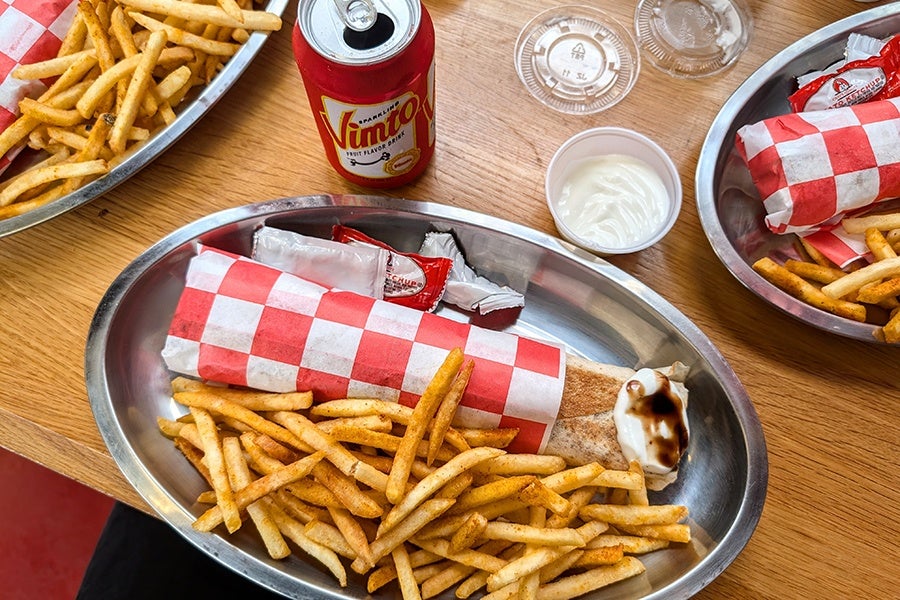
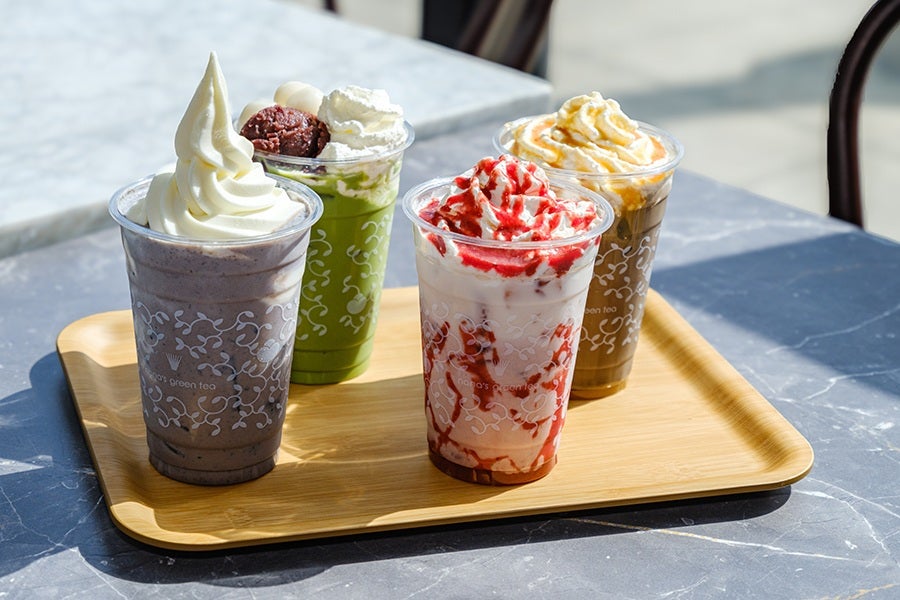
19 Third Ave., Burlington, citrusandsaltboston.com.

Caffé Ducali (Winchester)

OPENING LATE 2026

On the border of Boston’s North and West ends, a little Italian espresso café sits next to its big sibling, Ducali Pizzeria & Bar, serving a streamlined menu of coffee, breakfast sandwiches, a Roman-style pizza of the day, and piadini (Italian flatbread sandwiches); the Winchester café will have a similar menu, plus event space for Italian cooking classes. The businesses are part of Filmark Hospitality Group, which also has a Winchester offshoot of its North End Italian restaurant Lucia, so this expansion isn’t uncharted territory for the Frattaroli family.

959 Main St., Winchester, caffeducali.com.

The Charles Tavern (Millis)

OPENING LATE 2026

Tim and Nancy Cushman—best known for their nearly 20-year-old omakase destination downtown, O Ya, and their fun Fenway izakaya Hojoko—have already expanded beyond city dining with Bianca in Chestnut Hill. (They also ran now-closed O Ya locations in other cities and have several Boston food-hall spots.) Next: a “modern New England tavern … rooted in place, memory, and everyday comfort” in Tim’s hometown of Millis, southwest of Boston. (The team also has nationwide expansion plans for Clucks Deluxe Asian Fried Chicken, an evolution of the fast-casual Time Out Market Boston stall Ms. Clucks Deluxe, and is exploring expansion opportunities for its other existing brands.)

Millis, umamiriot.com.

The Woods (Weston)

OPENING LATE 2026

Restaurateur and Weston resident Brian Piccini (behind Deuxave and more) has been working on opening the Woods in a historical building for over two years; the finish line is in sight for later this year. Located in the Josiah Smith Tavern, which dates back to 1757, this will be Weston’s first public business with a liquor license since Prohibition. The location includes a barn, herb garden, outdoor dining space, and more. Piccini has described the food as “sustainably sourced farm-and-sea-to-table cuisine.”

358 Post Rd., Weston, friendsofjst.org/the-woods-restaurant.

A version of this story first appeared in the print edition of the August 2026 issue, with the headline, “The Other Side of Route 128.”

New Restaurants to Try in Boston, August 2026

0

Guides

New and exciting restaurants to check out, plus good reasons to visit older spots.

Mr. H. / Photo by Josh Jamison

We’re clinging to the last weeks of summer, dreaming of the Cape & Islands: Check out our updated Provincetown guide and a Provincetown-centered preview of the soon-to-be-released Anthony Bourdain film Tony, plus a retrospective on Nantucket’s 35-year-old SeaGrille. Closer to home but outside the city, we’re also taking a deep dive into Greater Boston’s suburbs within I-495: See “The Great Suburban Restaurant Hunt,” and stay tuned for lots more where that came from. But closer to the city, we’re back with our monthly where-to-eat guide: new restaurant openings, expansions and revamps of existing businesses, and a few upcoming debuts we’re watching closely. This month’s list includes everything from tiki on the beach to sushi in the Seaport, from a tiny South End breakfast-and-lunch spot to a Dorchester bakery. Also, so many cafés. (Check out last month’s guide here.)

Jump to:  

Also, check out recently updated guides: All the Best of Boston 2026 food winners | Fort Point and Seaport restaurants, activity bars, cafés, and more | Must-try restaurants north of Boston| Where to eat in Provincetown

New Restaurants to Try This Month

Recent (or imminent) openings to check out.

A dark wooden table with five items: a yellow cocktail in a coupe glass garnished with a green leaf and a small white flower, a toasted meringue dessert in a beige bowl, a rectangular layered chocolate and red jelly dessert on a gray plate with a small dollop of cream and a yellow decoration, a dish with a pink layered dessert in a beige bowl, and a small white cup of espresso on a saucer.

Desserts and drinks at Monarch. / Photo by Rachel Leah Blumenthal

Alice & Monarch (Kendall Square)

Greater Boston is chock-full of speakeasy-like bars, but it didn’t have a hidden, subterranean dessert lounge—until now. Bonus: tasty Italian on the ground floor. We’ve got the team behind Harvard Square’s Source to thank for this dynamic duo.

238 Main St., Kendall Square, Cambridge, 857-856-5055, aliceandmonarch.com. 

Baba Shawarma. / Photo by Rachel Leah Blumenthal

Baba Shawarma (Downtown)

Steps from Haymarket and the Boston Public Market, a streamlined little shawarma shop beckons for lunch, dinner, and late-ish night snacking (it’s open until 11 p.m.). There’s one thing on the menu, and it’s done exceedingly well: Syrian-style chicken shawarma—long, thin, and wrapped in lightly crispy saj bread—embellished with an ultra-garlicky sauce and pomegranate molasses. Your only choices? Fries and/or extra sauce. (But coming soon: soft serve.)

100 Blackstone St., Downtown Boston, 617-857-2222, baba-shawarma.com.

Bey (South End)

Tabbouleh Negronis and olive coladas have entered the chat. This Lebanese newbie is made for glamorous date nights full of creative cocktails, elegant mezze, and grilled whole branzino.

280 Shawmut Ave., South End, beyboston.com.

FAI Canteen (South End)

Boston could use more breakfast-and-lunch spots like this Albany Street newcomer. Gourmet spins on egg-and-cheese sandwiches, meatball subs, and mint-pistachio-pesto-smeared mortadella and stracciatella on focaccia provide much-needed weekday fuel.

535 Albany St., South End, Boston, faicanteen.com.

Wonton Cafe (Leather District)

Greater Boston’s cha chaan teng (Hong Kong-style diner) scene has been growing lately, luckily for fans of the eclectic comfort-food-driven menus. The newest addition, near South Station, highlights wonton noodle soup among a few other offerings, including curry beef stew rice plates and spicy pork strip lo mein.

112 South St., Floor 1, Downtown Boston, wontoncafe.com.

New Cafés to Try This Month

A cheat sheet to some of the many new options for caffeine.

Nana’s Green Tea. / Courtesy photo

  • byChae (Back Bay): A Babson student’s matcha pop-up puts down roots on Newbury Street on August 8, while also continuing a residency at the Kendall Square Dig Inn through the end of the month (Wednesday through Friday afternoons).
  • Grey’s Coffee (Quincy): From South Shore pop-up coffee cart to Quincy Center brick-and-mortar café, Grey’s debuts August 22; you’ll find lattes in flavors like cookie butter, strawberry vanilla, and s’mores.
  • Life Alive (Seaport): The Lowell-born vegetarian chain now numbers over a dozen Greater Boston locations (and a handful around D.C.) and features smoothies, grain bowls, and such, using sustainable, organic ingredients.
  • Moments (West Newton): Matcha (including flavored lattes like mango and strawberry), pastries, and more. In “soft-opening” mode since late July with a grand opening on August 7.
  • Nana’s Green Tea (Back Bay): The Tokyo-born matcha café chain—featuring lattes, ice cream floats, mochi parfait, and more—opened on Newbury Street last month.
  • Ralph’s Coffee (Seaport): Caffeinate before perusing Ralph Lauren polo shirts at the adjacent retail shop.
  • Tradesman Greenway (Downtown): This small local café-by-day, bar-by-night chain continues its mostly-downtown takeover with a Greenway-adjacent outpost—perfect for your espresso and espresso martini needs.

Older Restaurants Doing New Things

Expansions and other changes—time for a (re)visit.

Leopard Lounge at Dalia. / Courtesy photo

Dalia’s new downstairs Leopard Lounge (South Boston)

Gorgeous Spanish-inspired, wood-fired restaurant Dalia has been the talk of the town since its April debut. The hard-to-get reservation might be a little easier now that a new downstairs lounge opens up 75 additional seats Thursday through Saturday night—albeit with a different menu (including highlights from upstairs), lounge-like seating, and intimate ambience. Like the main level, Leopard Lounge was designed by Best of Boston firm Assembly Design Studio. (Meanwhile, Dalia is now serving brunch Saturday and Sunday on the main level—hola, bocadillos.)

429 W. Broadway, South Boston, daliaboston.com.

The Grove at the Lawn on D (Seaport)

Boston’s beloved Lawn on D got a full botanical rebrand: the Grove. Jasmine-draped shipping containers, cabanas, live music, giant screens. It’s still outside. It’s just better.

420 D St., Seaport District, Boston, signatureboston.com/lawn-on-d.

Two pepperoni slices and two basil-topped slices with fresh tomato sit on a counter under a photograph of a pizzeria owner.

Slices (and a photo of founder Joe Pozzuoli) at Joe’s Pizza. / Photo by Rachel Leah Blumenthal

Joe’s Pizza (Fenway)

Want a true thin-crust New York slice? Look no further than Greater Boston’s second location of Greenwich Village-founded Joe’s Pizza. (Joe launched Pino’s Pizza in Cleveland Circle, so he gets local cred, too.)

1363 Boylston St., Fenway, Boston, joespizzanyc.com.

Kajiken (Chinatown)

This Japan-based chain is known for its abura soba, a brothless noodle dish. While the signature version here is topped with chashu (tender pork belly), diners can opt for other toppings—Old Bay shrimp, chicken curry, or a vegan combo of tofu and veggies, among others. (Craving broth? There’s ramen, too.)

83 Harrison Ave., Chinatown, Boston, kajiken-usa.com.

A trio of inari at Kokoro Don Café in Somerville. / Photo by Rachel Leah Blumenthal

Kokoro Everyday Japanese Café (Brighton)

Somerville’s cozy Japanese restaurant Kokoro Don Café isn’t even a year old yet but has already added a Brighton sibling. The new location, albeit with a slightly different name, follows in the Somerville spot’s footsteps with Japanese comfort food: donburi (rice bowls), Japanese-style sandwiches, and a particular focus on inari, tofu pockets stuffed with rice and various fillings.

6 Tremont St., Brighton, Boston, 978-737-9102, kokorobrightonma.com.

Kowloon Tiki on the Beach (Revere Beach)

You can take the Kowloon out of Saugus, but you can’t take the kitschy fun and scorpion bowls out of the Kowloon. The North Shore icon’s Revere Beach sibling thankfully opened in time for summer, with pupu platters and tiki drinks galore.

21 Revere Beach Blvd., Revere, kowloontiki.com.

Marzae Cellar + Provisions (Downtown)

An Acton-based natural winery has expanded to Boston with a new tasting room and restaurant inside Boston Public Market. In “soft opening” mode for the first half of August, Marzae is offering a variety of à la carte dishes highlighting seasonal, local fare, plus local beers, cocktails and nonalcoholic drinks, and, of course, wine (including flights). Once things ramp up, expect casual counter-service dining by day, full-service by night, and brunch starting in the fall.

100 Hanover St. (Boston Public Market), Downtown Boston, marzaewine.com, bostonpublicmarket.org.A hand holds a cone with a tall twist of beige and white soft-serve ice cream instead an old-timey grocery store.

Maple and vanilla soft-serve ice cream at Momma’s Grocery & Wine in Cambridge. / Photo by Rachel Leah Blumenthal

Momma’s Grocery (Brighton)

Cambridge’s favorite shop for local goodies and maple soft serve has expanded to Brighton’s Charles River Speedway. Yep, the soft serve is there, too, along with plenty of snack-y products ideal for relaxing on the Speedway patio, including popcorn, cheese, and more. (No wine at this location, though—but plenty to drink at Speedway neighbors Notch Brewing and the Koji Club.)

525 Western Ave. (Charles River Speedway), Brighton, Boston, mommasgrocery.com.

A rectangular green sushi plate of Mr. H's Jade Roll: bites of spicy salmon, avocado, cucumber, jalapeño ponzu, wasabi crema, and basil in rice and nori.

The jade roll at the revamped Mr. H. / Photo by Josh Jamison

Mr. H (Seaport)

COJE Management Group’s two-year-old Mr. H—previously a Chinese-inspired restaurant with a focus on dumplings—has pivoted to pan-Asian cuisine (inspired by the global tastes of 1940s Shanghai salons) and a more dedicated nightlife focus. Think: sushi and DJs.

225 Northern Ave., Seaport District, Boston, meetmrh.com.

Noodle Lab (Kendall Square)

A counter-service noodle restaurant at Boston Public Market now has a standalone location in Cambridge, too. Southeast Asian flavors star, thanks to dishes such as laksa, beef rendang, and papaya salad, while build-your-own ramen looks to Japan with various classic broths (tori paitan, shio, and more).

238 Main St., Kendall Square, Cambridge, noodlelabboston.com.

A fluffy pita is stuffed with pork, fries, tomato, and greens, presented on a wooden cutting board.

Saloniki’s braised pork pita. / Courtesy photo

Saloniki Greek (Allston and Cleveland Circle)

Lamb meatball pita alert: The decade-old fast-casual Greek chain added two locations in the past month (with a new Fenway outpost opening imminently, replacing the now-closed original in the neighborhood). It’s a good time to try the seasonal summer salad, packed with watermelon, feta, and mint, and Greek froyo in flavors such as sour cherry or Dubai chocolate.

180 Brighton Ave., Allston, Boston, 617-644-0081; 1936 Beacon St., Cleveland Circle, Brighton, Boston; other locations; salonikigreek.com.

A table set with various desserts and snacks on a red and white checkered tablecloth. There are bowls of ice cream, a plate with chocolate chip cookies and a waffle cone, a cup of hot chocolate with marshmallows, a bowl of popcorn, and a small bowl of crackers. A Scrabble board with tiles spelling

A holiday-season spread of Salt & Straw ice cream. / Courtesy photo

Salt & Straw (Seaport)

Creative ice cream flavors from Portland, Oregon: gruyère and tomato custard tart, for example, or wildflower honey and lemon chess pie. There’s also a collab with Taco Bell, the “Tacolate”—a spin on a classic Choco Taco with cinnamon-ancho ice cream, dark chocolate, puffed quinoa, and mango jalapeño and a sweet-spicy sauce.

200 Seaport Blvd., Suite 102, Seaport District, Boston, saltandstraw.com.

South End Buttery (South End)

Who says you can’t teach an old dog new tricks? The South End Buttery just added a tea room to its 20-year-old café-and-bakery operation—vintage vibes, floral cups, afternoon service. Some institutions only get better.

314 Shawmut Ave., South End, Boston, southendbuttery.com. 

Sweet Teez Bakery (Dorchester)

A decade in, Dorchester native Teresa Thompson Maynard’s nut-free (and flavor-filled) baked-goods company has its first storefront. Let’s rejoice over the signature “tipsy cake” (Jamaican rum cake) and cups of locally roasted Yego Coffee.

1211 Dorchester Ave., Suite 2, Dorchester, Boston, 718-473-4112, sweetteezbakery.com.

Looking Ahead

Intriguing spots coming soon (or not-so-soon).

Fried chicken, rice, and a couple pieces of sushi.

Chicken karaage and torched salmon belly at the now-closed Ebisuya Japanese Market, which will be resurrected at a different address as a sit-down restaurant. / Photo by Rachel Leah Blumenthal

Ebisuya

Bad news/good news for Medford Square. The bad: Real Italian Gusto, a High Street staple for Neapolitan-style pizza, pasta, and more, has closed (consolation: the owners are planning a gelato shop elsewhere). The good news: Ebisuya—a beloved Japanese market (with some tables for casual meals of sushi and more) that closed in Medford Square in 2025 due to planned redevelopment of its building—will be resurrected in restaurant form in the Gusto space later this summer. The Ebisuya team promises the return of onigiri, house-made bread, and other favorites from the past, plus Tokyo-style pizza (Gusto’s oven isn’t going to waste), pasta, and Edomae-style sushi “where Japan meets Italy.”

24 High St., Medford, instagram.com/ebisuyamarket.

Harry Hare’s rendering. / Courtesy image

Harry Hare’s

Beacon Hill’s getting a British-inspired pub this fall, serving fish and chips, chicken tikka masala, steak, and more—not to mention cozy vibes (see above). Watch for a convenient schedule that includes weekday lunch, weekend brunch, and dinner.

147 Charles St., Beacon Hill, Boston, harryhares.com.

A version of this guide first appeared in the print edition of the August 2026 issue with the headline “The Hot List.”

Top Restaurants in MetroWest Boston

0

For the Great Suburban Restaurant Hunt, the cover story of our August 2026 issue, we dove into a treasure trove of excellent restaurants west of Boston (omitting Brookline, as we already cover its dining scene frequently). With a border of I-495, here are 25 must-try suburban restaurants we love in the MetroWest—Caribbean-Mediterranean fusion in Watertown, Cuban in Waltham, Japanese in Chestnut Hill, and more.

80 Thoreau. / Photo by Brian Samuels

80 Thoreau

Tucked above the historic Concord Depot, this farm-to-table gem (and big sibling to Boston’s stunning Mooncusser) has been setting the standard for serious suburban dining since 2011. The menu changes with the seasons—sometimes weekly—offering whatever’s best from local farms and New England waters. The annual corn-and-tomato tasting menu has become a MetroWest institution.

80 Thoreau St., Concord, 978-318-0008, 80thoreau.com.

Branch Line. / Photo by Rachel Leah Blumenthal

Branch Line

Rotisserie chicken’s the star at this Eastern Standard cousin (restaurateur Garrett Harker is a co-owner, but this is co-owner Andrew Holden’s baby): Whole or half birds are served in several styles; we love the gently spicy piri piri with garlic fries. Whichever you pick, get an order of super-savory chicken drippings with bread. And then there’s the sugar snap pea salad—the best rebuttal to “You don’t win friends with salad” we’ve ever tasted. Bonus: A spacious, all-season patio.

321 Arsenal St., Watertown, 617-420-1900, branchlinearsenal.com.

Kebabs and yellow-and-white rice, with roasted peppers and tomatoes, sit on a white plate in front of a counter with large lettering reading Cafe Vanak.

The mixed koobideh plate at Cafe Vanak in Belmont. / Photo by Rachel Leah Blumenthal

Cafe Vanak

We’ve got only one bone to pick with this internationally acclaimed Persian spot, and it’s that there might be too many options on the menu. Satisfying stews (herby ghormeh sabzi, tart and earthy fesenjān); saffron chicken over barberry rice; juicy kebabs—they’re all here, and they’re all fabulous. Especially when followed by a saffron pistachio ice cream sandwich. (After, head to Super Vanak, the sibling market next door, to stock your pantry with Persian groceries.)

271-275 Belmont St., Belmont, 617-932-1445, vanakfood.com.

The Cellar Bar & Grille

A family-owned Northborough restaurant that not many people outside a 10-mile radius know about, complete with leather booths, an enclosed patio, and a menu built for lingering. Featuring hot crab dip made with real crab, lobster ravioli, and scallops scampi, it’s the kind of place that makes you wonder why you ever bothered driving into the city in the first place.

369 W. Main St., Northborough, 508-393-8134, cellarbargrille.com.

Cha Yen Thai Eatery

Chef-owner Manita Bunnagitkarn’s Watertown gem for Thai food—and ice cream!—has been a favorite since opening over a decade ago, much of that time in a tiny Mt. Auburn Street space. Fortunately for us, Cha Yen moved into a much bigger space across the street in late 2024, complete with a liquor license and bar. Your must-try list: sweet fried corn cakes with peanut sauce; grilled, house-made E-sarn sausage with sticky rice; and kaeng phaer, a northeastern Thai herbal soup packed with pumpkin and mushrooms. Followed, perhaps, by a Thai tea ice cream cocktail.

620 Mt. Auburn St., Watertown, 617-393-0031, chayenthaicookery.com.

Chef Dave’s. / Courtesy photo

Fewer than 30 seats and a kitchen where chef David Welch—who spent three decades cooking for private clients, Harvard, MIT, and at least one American president—grills every rib-eye himself. Don’t be surprised if he pokes his head out to say hello. Whether you order the Indian-curry-crusted salmon or the za’atar-crusted rack of lamb, you’ll leave this intimate restaurant feeling like you just attended the most exclusive dinner party in town.

A grand fireplace. Prime corn-fed Midwestern beef. A Wine Spectator-awarded list and a bar you won’t want to leave. Coach Grill is the kind of old-school steakhouse the suburbs almost never get right—wood paneling, white tablecloths, attentive service but never fussy. Go to this Best of Boston-winner for anniversaries, big nights, or just a serious glass of wine after work.

Chef-owner Mario LaPosta has worked at pizzerias around the East Coast and Italy for years, so it’s no surprise the wood-fired pizzas grab attention at his Newton restaurant. Go classic with a margherita; get a little adventurous with, say, house-made ricotta, Calabrian chili honey, walnuts, radicchio, and pecorino Crotonese. Pastas and snacks like fried squash blossoms, meatballs, and cheese-stuffed focaccia di Recco are lovingly made, too. Note: Gluten-free pasta and pizza are also available.

“Grain-to-glass” spirits—made from scratch onsite—shine in cocktails meant to highlight them. You could try GlenPharmer’s ghost-pepper-infused vodka, a/k/a BHUT, in the “Smoking Ghost,” for instance, with jalapeño, grapefruit, lime, and simple. But it’s not just about the drinks here: A something-for-everyone food menu runs the jazzed-up-comfort-food gamut, from chicken and waffles (with blueberry vodka-infused honey butter) to mushroom fondue flatbread.

Gustazo Cuban Kitchen & Bar. / Courtesy photo

Gustazo Cuban Kitchen & Bar

Gustazo (“great pleasure”) strikes the perfect balance between tradition and modernity: Sip a classic Hemingway daiquiri with your ropa vieja, or try an original cocktail like the Cuban Cigar (aged rum, scotch, amaro, sherry, bitters) with brown-butter-honey-glazed corn fritters with sunflower seed pesto. Also: Brunch is a good choice.

240 Moody St., Waltham, 855-487-8296, gustazo-cubancafe.com/waltham.

Home Taste

Hand-pulled noodle alert: Chewy, slippery, and filling, they’re available in 20 different preparations, from Sichuan-style dan dan to seared with hot oil and bok choy. If you want even more carbs, the pan-fried dumplings (choose pork or vegetarian), delightfully thick-skinned, are also a must-try at this decade-old fave.

58 Mt. Auburn St., Watertown, 617-923-0227, hometastemassachusetts.com.

The James Pub & Provisions

Start with an Irish pub, add some global twists (Peruvian ceviche, lamb kofta, kimchi-slaw-topped corned beef sandwiches), and you’ve got a welcoming hideaway, complete with a cozy patio and live music a few nights a week. The beer list leans local—a pilsner from Schilling in Littleton, New Hampshire; a lager from Jack’s Abby in Framingham—while the liquor list heavily features Irish whiskies.

1027 Great Plain Ave., Needham, 781-455-8800, thejamespub.com.

Juniper. / Photo by Brian Hofmann

Juniper

Dave Becker made his name at Sweet Basil in Needham. Then in 2014 he opened this Eastern Mediterranean bistro in Wellesley—serving up hand-rolled Israeli couscous, house-made pita and phyllo, and spice blends he mixes himself—and became one of the most interesting chefs west of the city. Bring an open mind and an empty stomach. No reservations.

13 Central St., Wellesley, 781-446-6950, juniperwellesley.com.

La Bodega by Salts. / Courtesy photo

La Bodega by Salts

Gabriel Bremer and Analia Verolo ran Salts, the celebrated Cambridge fine-dining restaurant, for years before trading it for something even more personal: a retrofitted vintage train car tucked in a quiet corner of Watertown, serving Uruguayan and Basque-inflected tapas. The wood-grilled octopus and the whole roasted duck—order the latter 48 hours ahead—are not to be missed.

21 Nichols Ave., Watertown, 617-876-8444, labodegabysalts.com.

Lalibela Ethiopian Restaurant and Bar

It’s not easy to stand out in a globe-trotting suburb like Watertown. But this recently opened Ethiopian spot has the winning recipe: house-made honey wine, tangy injera, spicy kitfo (chili-spiced rare beef, a house specialty), and a husband-and-wife team that makes everyone feel welcome.

5 Spring St., Watertown, 617-655-2741, lalibelaboston.com.

Less Than Greater Than

Find the secret entrance through sibling ice cream shop New City Microcreamery next door to find this hidden cocktail bar. It’s worth the effort for the boozy desserts, in particular—whipped ice cream cocktails dubbed “Spirits & Cream” in flavors like strawberry shortcake or tiramisu. (But you can make a full meal of savory dishes, too, such as tahini Buffalo chicken, lobster ravioli, or short rib pasta.)

28 Main St., Hudson, 978-333-7144, lessthangreaterthan.com.

Masala Art

Grab a window seat—silk cushions, glowing lamps carved into the wall, downtown Needham on full display—and work your way through the regional Indian menu. Then check out the Spice Bar: 11 seats plus a chef cooking in front of you and explaining every ingredient as he goes.

990 Great Plain Ave., Needham, 781-449-4050, masala-art.com.

Mida

With a trio of Mida locations in Boston proper, chef and co-owner Douglass Williams fortunately brought his Italian-inspired, neighborhood-y restaurant to the ‘burbs, too, with this Newton outpost. Pastas are meticulously made crowd-pleasers—bucatini all’amatriciana, rock shrimp carbonara—and pizzas are thin, crispy, and just a bit charred (in a good way). During lunch, indulgent sandwiches join the party: chicken parm with garlic butter, anyone?

261 Walnut St., Newton, 617-546-8010, midarestaurant.com/mida-newton.

Nzuko. / Courtesy photo

Nzuko

The Caribbean and Mediterranean meet in Watertown—and it’s an absolute home run. Crispy conch fritters take a dip in tzatziki; grilled swordfish gets electrified with mango salsa and baba ghanouj; and refreshing cocktails, such as a yuzu-infused mule, wash it all down.

60 Howard St., Watertown, 617-744-6017, nzukowatertown.com.

The Oregon Club

In 1922, Giuseppe Briasco left his job at the Parker House in Boston, took over a farmhouse on a country road in Ashland, and started serving spaghetti and steaks to the neighborhood. It became a speakeasy. Then a members-only club serving above-board liquor to politicians and power brokers. Then, one of MetroWest’s most beloved restaurants.

117 Oregon Rd., Ashland, 508-875-9030, theoregonclub.com.

Phở Viet’s

With roots in Allston dating back 20 years, this family-run, casual Vietnamese restaurant expanded the legacy to Newton back in 2019. Soothing bowls of phở and other noodle soups anchor the menu, with plenty of other options, too, from bún (vermicelli dishes) to bubble tea.

51 Langley Rd., Newton, 617-527-8810, phoviets.com.

Sycamore

David Punch and Lydia Reichert’s love letter to seasonal bistro fare practically defines Newton dining. (With an assist from buzzy sibling spots Little Big Diner, a noodle bar, and Jinny’s Pizzeria.) Open since late 2012, Sycamore draws local regulars and folks from farther away alike for dishes such as toasted corn cavatelli with smoked bacon; grilled whole branzino for two; or charred cauliflower with pozole verde.

755 Beacon St., Newton, 617-244-4445, sycamorenewton.com.

A takeout spread from Terra Brasilis in Framingham. / Photo by Rachel Leah Blumenthal

Terra Brasilis

Framingham is chock-full of unforgettable Brazilian dining options, from bakeries churning out warm pão de queijo to meaty steakhouses. How to pick just one to feature here? How about a pay-by-weight buffet with a little bit of everything? At Terra Brasilis’ two locations, fill your container with mango-studded quinoa salad, bacon-wrapped chicken, plantains, meats sliced right off the skewer to order, sweet little brigadeiros, and so much more.

264 Waverly St., Framingham, 508-665-6740; 94 Union Ave., Framingham, 508-620-9354.

A squash, burrata, and frisee salad.

Thistle & Leek. / Photo by Brian Samuels

Thistle & Leek

Michelin barely touched the suburbs for its first foray into Greater Boston, but this neighborhood favorite got a coveted recommendation from the international guide. You’ll understand why as soon as you settle in for an expert spin on British-inspired gastropub fare. The lamb meatballs in tomato-ginger curry are the dish Michelin called out—start there.

105 Union St., Newton, 857-404-0260, thistleandleek.com.

Overhead view of a white plate of sashimi, garnished with greens and sitting in a pinkish thin sauce.

XOXO Sushi Bar’s hiramasa. / Photo by Joe St.Pierre

XOXO Sushi Bar

Baller omakase, or a little bit of a lower-key, à la carte feast of sushi and robatayaki (charcoal-grilled meats and veggies): You can do either at this Chestnut Hill stunner. The omakase meals in particular emphasize traditional jukusei sushi techniques, featuring dry-aged seafood (think: umami to the max). But chef Kegan Stritchko isn’t afraid to get funky and modern, too, with dishes like steak-and-cheese temaki handrolls, “KFC”—Korean fried cauliflower, and hamachi al pastor.

1154 Boylston St., Chestnut Hill, 617-505-3378, xoxosushi.com.

With additional reporting by Brittany Jasnoff, Chris Vogel, and Makena Gera.

A version of this guide first appeared in the August 2026 print issue of Boston, as part of a feature titled “The Great Suburban Restaurant Hunt.”

Top Restaurants North of Boston

0

From fiery Thai in Everett to North Shore beef worth the wait in Danvers, head to the ‘burbs for some of the best Greater Boston dining.

The DIY temaki setup at Phat Thaiger in Malden, including A5 wagyu nam tok, unagi foie gras, uni ikura, scallop tom kha, ika salted egg, and more. / Photo by Rachel Leah Blumenthal

For the Great Suburban Restaurant Hunt, the cover story of our August 2026 issue, we passed by our usual stomping grounds just beyond Boston (Cambridge, Somerville) to dive deeply into the restaurant scenes of other communities in the vicinity. With a border of I-495, here are 25 top-notch suburban spots we love north of Boston—hand-pulled noodles in Woburn, genre-defying tasting menus in Lynn, wood-fired pizzas in Gloucester, and more.

See also:

  • 25 Must-Try Restaurants West of Boston (coming soon)
  • 25 Must-Try Restaurants South of Boston (coming soon)

Burrata with nettle pesto at A Tavola. / Photo by Rachel Leah Blumenthal

A Tavola

It’s dinner and a show at this Italian stalwart, where those lucky enough to snag a chef’s-counter seat are treated to a front-row view of the crispy cacio e pepe arancini and whole roasted branzino flying out of the open kitchen. On Wednesdays, those coveted seats become the spot for a five-course feast highlighting seasonal pasta dishes: always changing, never to be missed.

34 Church St., Winchester, 781-729-1040, atavolawinchester.com.

Agawam Diner. / Courtesy photo

Agawam Diner

For decades, this pint-size 1954 railcar has been doing exactly one thing: serving the food your mother stopped making. Meatloaf with brown gravy. Chicken pie with all white meat. And pies (banana cream, chocolate cream, blueberry, and more) so good you may just want to start with dessert.

166 Newburyport Tpke. (Rte. 1), Rowley, 978-948-7780, theagawamdiner.com.

Lamb, oysters, tarte flambee, sole meuniere, and more dishes are spread across a white marble table, accompanied by wine and cocktails.

A spread of food at Bernadette. / Photo by Rachel Leah Blumenthal

Bernadette

Chef Aaron Chambers spent years working his way through Daniel Boulud’s restaurant empire before landing in Salem to open this stunning French bistro with his wife, Shanna (preceded by the duo’s other acclaimed spot nearby, Settler). Local oysters with smoked trout roe, Marblehead lobster, pâté en croute from nearby farms. This spot makes Witch City feel like a serious food town year round.

65 Washington St., Salem, 978-224-2976, bernadettesalem.com.

See also: The Best Places to Eat and Drink in Salem Right Now

Overhead view of a bowl of medium-width rice noodles topped with a peanut sauce and chopped scallions.

Spicy satay noodles at BoonNoon Market. / Photo by Rachel Leah Blumenthal

Boonnoon Market

Small space, big flavor. Just a handful of tables, shelves of imported Thai pantry goods, and a kitchen that doesn’t mess around when it comes to heat. (Cool down with the “ORT,” Thai iced tea infused with orange and rosemary.) Start with the yum nem kao tod if it’s available: The fermented-pork-topped Thai-Lao salad hits every taste bud at once.

161 Massachusetts Ave., Arlington, 781-316-0059, boonnoonmarket.com.

Brine. / Courtesy photo

Brine

Nancy Batista-Caswell has won so many awards for her oysters it’s almost unfair to the competition. With live shucking behind the bar, some of the freshest crudo on the North Shore, prime steaks, and Spanish and Italian influences throughout, Brine has been Newburyport’s best excuse to linger over dinner since 2013.

17 State St., Newburyport, 978-358-8479, brineoyster.com.

See also: The Best Restaurants in Newburyport

Damgeuda

Forget what you know about Korean food. At Damgeuda—named for the first step in making kimchi and other Korean staples—a husband-and-wife team filter the cuisine through a seasonal, local lens, drawing upon their experiences cooking locally as well as in Korea, Denmark, and beyond. The result? A unique, compact, ever-changing menu that might include, say, pork tteokgalbi (house sausage with swiss chard, cabbage, pesto, parm, and house mustard) and a dessert of fennel-and-rice soft serve.

21 Washington St., Haverhill, damgeuda.com.

Meatballs on a sub roll are covered with melted cheese and a drizzle of pesto.

The Banzo, a Deep Cuts sandwich, is a vegan option that includes garbanzo “meatballs,” pesto, marinara, and vegan mozzarella. / Photo by Rachel Leah Blumenthal

Deep Cuts

Come for the live music; stay for the sandwiches, burgers, and a handful of snacky options. Oh, and the record store and pinball. There’s a lot going on in this intimate Medford Square music venue. Even if you’re not heading in for the entertainment, the food stands on its own, from a classic pastrami Reuben to a vegetarian (optionally vegan) garbanzo “meatball” sub.

21 Main St., Medford Square, 781-219-3815, deepcuts.rocks.

A bowl of yellow soup is topped with crispy noodles, a lime wedge, pickled mustard greens, and slivers of raw red onions.

Khao soi at Fighting Fish Thai Cuisine in Everett. / Photo by Rachel Leah Blumenthal

Fighting Fish Thai Cuisine

This Best of Boston winner showcases transportive Thai in a cheery space. Start with the kai yang Wichian Buri, sweet-savory grilled chicken from owner Charles Bunchan’s hometown of Phetchabun in north-central Thailand. Then head farther north to Chiang Mai with a rich bowl of khao soi, the famous curry noodle soup. Nam tok kor moo yang, herby grilled pork neck, nods to fiery Isan fare in the northeast.

241 Beacham St., Everett, 617-294-0095, fightingfishthaicuisine.com.

Pierogi with haluski mac and cheese at the Fox Den. / Photo by Rachel Leah Blumenthal

The Fox Den

Portuguese and Polish dishes co-star in this cozy, family-friendly restaurant packed full of fox-themed knick-knacks. Most menu items are one cuisine or the other, but try the caçolia pierogi for a fusion of the two: seared dumplings stuffed with potato and Portuguese spiced, marinated pork.

482 Main St., Woburn, 833-380-4872, thefoxdenwoburn.com.

Takeout bowl of thick noodles dusted with chili powder and cilantro, garnished with a skewer of meat.

Hand-pulled noodles and a lamb skewer from Gene’s Chinese Flatbread Cafe. / Photo by Rachel Leah Blumenthal

Gene’s Chinese Flatbread Café

Here’s all you need to know: Skip the cramped downtown Boston location in favor of the roomier Woburn one. Order the #4 (noodles doused with garlic and crushed cayenne), plus tea eggs and cumin lamb skewers. And lose yourself in Gene’s spectacularly chewy Xi’an-style hand-pulled noodles.

466 Main St., Woburn, 781-938-6888, genescafewoburn.com.

Pizza at Garlic Breath. / Photo by Rachel Leah Blumenthal

Garlic Breath Pizza

Justin Pronovost—who used to own the petite café (and sometimes wine bar) Curio Coffee in Cambridge—grew up in North Andover loving the typical teenager things: pizza, arcade games, soda, etc. Now he runs a pizzeria in his hometown, full of nostalgic wood paneling, Street Fighter II, and thin-crust, New York-style pizza worth the trek. (Plus: scratch-made meatballs, Caesar salad, and big cookies.) Teenage Justin would be proud; modern-day teens and adults alike are very pleased.

733 Turnpike St., Suite 7, North Andover, 978-258-2084, garlicbreathpizza.com.

Ithaki Modern Mediterranean

Following a successful quarter-century serving Ipswich Greek cuisine, Ithaki moved to Peabody in 2022. The modern space—white tablecloths, soothing octopus mural—is open all day, every day. Stop by for breakfasts of bougatsa (phyllo-wrapped milk custard) and egg-and-bacon gyros; easygoing lunches of salads, mezze, and roasted lamb sandwiches; and celebratory dinners of whole branzino and rack of lamb, with wines from Greece and beyond.

1A Newbury St., Peabody, 978-356-0099, ithakicuisine.com.

Photo by John Blanding/The Boston Globe via Getty Images

Kowloon Restaurant

For 75 years and counting, the Wong family’s 1,200-seat Route 1 landmark has been the answer to: Where do you take 14 people when half want sushi and half want pupu platters and all of them want a spectacularly kitschy temple of tiki-god goodness? Redevelopment plans will eventually shrink the Polynesian-themed dining rooms considerably, so go now. (Go, too, to the new Revere Beach offshoot, Kowloon Tiki on the Beach.)

948 Broadway, Saugus, 781-233-0077, kowloonrestaurant.com.

Tacos from La Victoria Taqueria in Beverly. / Photo by Rachel Leah Blumenthal

La Victoria Taqueria

If you’re north or northwest of Boston, you may not be far from an outpost of this local trio of taquerias—each a petite, counter-service ode to Mexican street food. Try carnitas or beef tongue tacos, served on corn tortillas; simple toppings (onions, cilantro, and salsa) let the flavors shine. The namesake Victoria torta, featuring smoked ham and carnitas, is also popular.

Locations in Arlington, Belmont, and Beverly; victoriataqueria.com.

The Modern Butcher’s Saturday-only North Shore beef 3-way. / Photo by Rachel Leah Blumenthal

The Modern Butcher

The Saturday-only, Best of Boston North Shore roast beef sandwich draws lines down the block, but don’t miss the rotating array of other sandwiches during the week (seriously, look at these)—and, of course, the meat at this whole-animal butcher. The sausage selection, which also rotates, is a wonder to behold: Recent flavors have included peach hot honey, cinnamon bun (!), North End, dim sum dumpling, and blueberry maple breakfast.

36 Maple St., Danvers, 978-750-9829, themodernbutchershop.com.

A pale yellow cocktail with a foam top sits next to rare beef-topped maki sitting in a bright yellow sauce, with flower and crispy noodle garnish.

Phat Thaiger’s khao soi A5 wagyu maki with hamachi, avocado, takuan (pickled daikon), red onion, crispy noodles, and a mildly spicy khao soi sauce. On the side, Phat Thaiger’s Secret of Yuki Onna cocktail, with Haku vodka, nigori sake, elderflower, and egg white. / Photo by Rachel Leah Blumenthal

Phat Thaiger

It can be tricky to fuse two cuisines in a way that doesn’t feel gimmicky or dated, but this party of a Thai-Japanese spot from the team behind two Thai restaurants (Crying Thaiger, Thaiger Den) and a Japanese restaurant (Zuru Zuru Ramen & Donburi) totally nails it. Bring a group, sit on izakaya-inspired milk-crate seating, and dine on khao soi A5 wagyu maki and son-in-law agedashi tofu under faux cherry blossom trees.

66 Eastern Ave., Malden, 617-488-8631, phatthaiger.com.

Nightshade Noodle Bar. / Photo by Alyssa Blumstein

Nightshade Noodle Bar

Don’t let the casual “noodle bar” moniker fool you: This is the most serious restaurant north of Boston, and one of the best in the state. Journey through seven to 30 (!) seafood-focused courses drawing inspiration from Vietnam, France, and beyond—and cross your fingers that the fermented-black-bean puttanesca with phở noodles and squid is on the menu.

73 Exchange St., Lynn, 781-780-9470, nightshadenoodlebar.com.

Rusty Can

No reservations. No pretense. Just a North Shore roadhouse doing barbecue the right way—meats sold by the plate or the pound, St. Louis ribs, pulled pork, chopped brisket, cornbread with honey butter on the side. People drive an hour to wait in line here. Get in the car now.

6 Fruit St., Byfield, 978-462-1204, rustycanbyfield.com.

Whole porgy at Short & Main. / Photo by Jim Davis / The Boston Globe via Getty Images

Short & Main

The New York Times named this Gloucester spot one of the best pizza places in the country. And Cape Ann food lovers come when they’re craving wood-fired pies, oysters, and “Sean’s Bar” upstairs—open Tuesday and Wednesday nights only—where concoctions like the “Monkey Never Cramps” (Canadian whiskey, yuzu liqueur, egg white, lemon, and cherry bitters) are worth the trip.

36 Main St., Gloucester, 978-281-0044, shortandmain.com.

Two Neapolitan-style pizzas, one with cheese, tomato, and basil, and the other with pepperoni, sit on a wooden table.

Margherita and pepperoni pizzas at Sogno in Woburn. / Photo by Rachel Leah Blumenthal

Sogno

Italian for “dream,” Sogno embodies its name with, well, dreamy Neapolitan-style pizzas, their crusts as light as air, and irresistible pastas, like creamy burrata ravioli. With a chef’s-counter tasting menu available most nights and live music every weeknight, there’s always something happening at this swanky, expansive space.

304 Cambridge Rd., Woburn, 781-625-1300, sognoitalian.com.

Square Deli’s steak and cheese. / Photo by Rachel Leah Blumenthal

The Square Deli

The vibe? Old-school sub shop. The food? New-school artisanal pizza (Best of Boston, 2025), cheesesteaks (Best of Boston, 2026), and more. The phone’s often busy; online ordering is often paused. Don’t despair: Head in on foot (See? Old-school!), and the line won’t be as bad as you fear. A slice or sandwich here is well worth the wait, anyway.

421 A Broadway, Everett, 617-389-9489, thesquaredelieverett.com.

Talise. / Photo by Ariel Smith

Talise

Watching the sun set over Lobster Cove from the covered patio is reason enough to come. But chef Joshua Smith spent five years at Short & Main (see above) before opening this Annisquam gem, and the daily-changing menu—built around neighboring farms and local waters—gives you a reason to come back. Seasonal, May through October. Reserve early.

33 River Rd., Annisquam, Gloucester, 978-515-7814, taliserestaurant.com.

Thmor Da. / Photo by Rachel Leah Blumenthal

Thmor Da

Cambodian cuisine is one of Greater Boston’s most underrepresented food cultures—but you don’t need to trek all the way to Lowell, where it’s most concentrated, for some of the best. Just steps from Revere Beach, in a cozy dining room, those in the know order the borbor, a comforting porridge, or the kathiew, a phở-like noodle soup—best complemented with a refreshing mango shake.

144 Shirley Ave., Revere, 781-286-2554.

Tonno

Chef-owner Anthony Caturano’s North End restaurant Prezza is one of the best in Boston’s most Italian-restaurant-filled neighborhood, but if you’re not feeling the trip into the city, check out his north-of-Boston Italian seafood duo. With locations in Gloucester and Wakefield, Tonno offers the best of the coast: Try cioppino (fish stew) or perhaps grilled tuna steak or swordfish. There are plenty of non-fish classics, too, from tagliatelle Bolognese to veal or chicken Milanese.

Locations in Gloucester and Wakefield; tonnorestaurant.com.

See also: Top 5 Seafood Restaurants in Gloucester

Woodman’s of Essex

This casual, marsh-side institution is practically synonymous with fried clams, which it claims to have invented 110 years ago. (See “F is for Fried Clams” in our Ultimate Guide to New England Seafood for the backstory.) Regardless of the actual provenance—they’ve been spotted in earlier cookbooks and menus, after all—Woodman’s certainly turned them into a beloved dish that screams “summer in New England.”

121 Main St., Essex, 978-768-6451, woodmans.com.

See also: Top 5 Clam Shacks on Massachusetts’ North Shore

With additional reporting by Brittany Jasnoff, Camille Dodero, and Chris Vogel.

A version of this guide first appeared in the August 2026 print issue of Boston, as part of a feature titled “The Great Suburban Restaurant Hunt.”

Boston Real Estate Times Unveils 2026 Excellence Award Winners: Honoring the Visionaries Shaping New England’s Future

0

BOSTON, MA — The Boston Real Estate Times, New England’s leading multimedia platform covering the commercial real estate industry, today announced the recipients of its prestigious 2026 Excellence Awards—a celebration of the individuals and organizations transforming the region’s built environment through innovation, leadership, and lasting impact.

This year’s honorees will be celebrated at the Annual Excellence Awards Gala on Thursday, September 24, 2026, at the Boston Marriott Burlington in Burlington, Massachusetts. The event, now one of New England’s premier commercial real estate gatherings, will bring together hundreds of industry leaders for an evening of recognition, networking, and celebration from 5:30 p.m. to 9:00 p.m.

“The 2026 recipients represent the very best of New England’s commercial real estate industry,” said Upendra Mishra, publisher of Boston Real Estate Times. “Their vision, innovation, and leadership continue to shape our communities, strengthen our economy, and inspire the next generation of industry professionals. We are proud to recognize these outstanding leaders whose work is redefining the future of commercial real estate.”

From visionary developers and architects to engineering leaders, investors, construction professionals, sustainability champions, and community builders, the 2026 Excellence Award recipients reflect the depth, diversity, and excellence of New England’s commercial real estate industry. Their achievements extend beyond buildings and developments; they create places that foster innovation, economic growth, and vibrant communities.

Each year, the Boston Real Estate Times Excellence Awards recognize individuals and organizations setting new benchmarks in development, design, construction, engineering, finance, investment, property management, and community impact. The annual gala offers a unique opportunity to celebrate excellence while bringing together leaders from across every sector of the industry.

To buy a ticket, please click here.

To explore sponsorship opportunities, please contact: events@MishraGroup.com.

Here is the full list of the 2026 Excellence Award recipients:

Lifetime Achievement Award 2026

Engineering Firm of the Year 2026

Vanderweil Engineers

Alex Vanderweil
Shelley Vanderweil
Presidents

Vanderweil Engineers is honored as the 2026 Engineering Firm of the Year for its enduring commitment to engineering excellence, technical innovation, and sustainable building design. For more than 75 years, the firm has delivered integrated engineering solutions that have shaped landmark projects across the United States. Specializing in MEP/FP engineering, technology design, sustainability consulting, commissioning, and power engineering, Vanderweil has earned a national reputation for solving complex challenges while creating high-performing buildings that enhance both occupant well-being and environmental stewardship.

Under the leadership of Presidents Alex Vanderweil and Shelley Vanderweil, Vanderweil continues to build upon its legacy as one of the nation’s leading independent engineering firms. Both accomplished professional engineers who joined the company in 2002, Alex and Shelley combine deep technical expertise with a collaborative leadership style that emphasizes innovation, operational excellence, and long-term client partnerships. Together, they guide the firm’s strategic direction while preserving the values and culture that have defined Vanderweil for generations.

With more than 500 professionals serving clients from offices across the country, Vanderweil delivers multidisciplinary engineering services across a diverse range of markets and project types. The firm’s integrated approach enables clients to benefit from seamless coordination between engineering disciplines, resulting in efficient, resilient, and sustainable solutions for some of the industry’s most technically demanding developments.

A hallmark of Vanderweil’s success is its investment in its people. Nearly one-third of the firm’s professionals have been with the company for more than a decade, with many serving for over 20 years. This exceptional staff longevity reflects a culture built on mentorship, collaboration, and continuous professional development. By pairing seasoned industry leaders with emerging engineers, Vanderweil fosters an environment where knowledge is shared across generations, ensuring technical excellence and consistent client service on every project.

As one of the country’s largest independent engineering firms, Vanderweil remains committed to maintaining the accessibility, responsiveness, and entrepreneurial spirit that have distinguished the company throughout its history. Its independence enables leadership to make long-term decisions that prioritize client relationships, employee development, and engineering quality, reinforcing the firm’s reputation as a trusted advisor on complex building systems and infrastructure projects.

Investment Firm of the Year 2026

Related

Advertisement

Best Real Estate Articles July 2026

0

The real estate market is shaped by many factors, from technology and financing options to buyer expectations and industry changes. In this roundup, we examine several recent articles on topics important to homeowners, buyers and real estate professionals.

From using AI to solve home maintenance challenges to understanding new housing laws, these insights offer a closer look at the trends and decisions affecting the real estate market today.

July 2026 Real Estate

July 2026 Real Estate

AI for Homeowners: Your Practical Home Repair Assistant

Our first featured article, written by Karen Highland, explores a new way homeowners can address the unexpected problems that come with owning a home. A leaky pipe, a strange noise from an appliance, or an unknown system problem can quickly lead to a costly service call. But before picking up the phone, many homeowners may want to consider using artificial intelligence as a first step.

In “AI for Homeowners: Your Practical Home Repair Assistant,” Karen shares a real-world example of how AI helped troubleshoot an HVAC problem, identify a likely cause, recommend the right tools, and provide step-by-step instructions.

The article also explains where AI can help, where homeowners should be careful, and why this technology can be a valuable resource for understanding your home before calling a professional.

Technology is changing the way homeowners approach everything from maintenance to preparing a property for sale.

But while tools like artificial intelligence can help solve problems after they arise, a successful home sale often starts with understanding what buyers notice before they even make an offer. Our next article explores the subtle details that can shape a buyer’s first impression.

What Home Buyers Notice First (What Sellers Often Miss)

Our next article by Michelle Gibson takes a closer look at the subtle details that shape a buyer’s first impression of a home. Sellers often assume that buyers are primarily focused on price, size, and upgrades, but the decision-making process often begins much earlier.

The approach to the home, the atmosphere of the neighborhood, and even small signs of maintenance can impact how buyers feel before they even step foot in the home.

In “What Home Buyers Notice First (What Sellers Often Miss),” Michelle explains why some homes struggle to get offers despite attractive features and competitive prices.

The article uncovers the overlooked factors that influence buyer confidence, from curb appeal and sense of community to noise, traffic patterns and interior traffic flow. Sellers will discover how focusing on the right details can help their home stand out from the crowd and create a stronger showing experience.

Understanding what buyers are looking for is an important part of preparing and marketing a home, but the process doesn’t end when a buyer finds the right property.

The next step – making an offer – requires careful attention to the details that can determine whether a deal goes smoothly. Find out what buyers should know before making an offer in our next article.

What real estate agents want to know about making an offer

Paul Sian’s next article focuses on one of the most important moments in home buying: making an offer. Many buyers focus on the price they are willing to pay, but there is much more to a successful offer than just a number.

The details in the contract, including deadlines, contingencies and specific terms, can have a big impact on whether the purchase goes smoothly.

In “What Real Estate Agents Should Know About Making an Offer,” Paul explains the most common mistakes buyers should avoid when competing for a home.

From understanding contingencies and expiration dates to knowing the risks of rushing or removing important protections, this article provides valuable insight into creating a compelling offer while protecting your interests throughout the transaction.

A strong offer requires more than choosing the right price. Buyers also need to understand their financing options and the requirements that may impact their ability to purchase a home.

In our next article, we’ll take a closer look at a popular loan program and the income guidelines buyers need to understand before starting their search.

Current USDA Loan Income Limits Eligibility Requirements

Our next article by Luke Skar explains one of the most important but often misunderstood aspects of USDA home financing: income eligibility.

Many buyers know that USDA loans can offer benefits such as: B. No down payment, but they may not realize that qualifying requires more than just looking at the borrower’s paycheck. The size of the household, location, and income of other adults living in the household may affect eligibility.

In “Current USDA Income Limit Requirements for Loans,” Luke explains how USDA income limits are calculated and explains the difference between household eligibility and mortgage qualification. The article addresses common questions buyers have, including what income counts, what deductions can be helpful, how USDA compares to other loan programs, and why reviewing the details before beginning a home search can make a significant difference.

Financing is a part of the home buying process, but the real estate industry itself is also experiencing major changes that could impact the way homes are marketed and discovered.

Our final article examines a growing industry dispute between two major real estate companies and the broader questions it raises about access to listings, technology and consumer choice.

Compass files ethics complaints against Zillow in 26 states

Our next article will address one of the most significant disputes currently affecting the real estate industry: the ongoing dispute between Compass and Zillow over access to listings, marketing practices and control of real estate data.

The article takes a closer look at the competing arguments of both companies and examines why this conflict matters to agents, sellers and buyers who rely on online platforms to find and market homes.

In “Compass Files Ethics Complaints Against Zillow in 26 States,” the author breaks down the latest developments in the dispute, including allegations about how active listings are displayed and concerns surrounding private listing strategies.

Rather than presenting easy winners and losers, the article examines the larger questions at stake: who controls real estate information, how listings reach consumers, and what these changes could mean for the future of the real estate industry.

While understanding financing options is an important step for today’s buyers, the future of housing also depends on broader changes affecting supply, affordability and access to home ownership.

New laws can impact the real estate market over time, but before jumping to conclusions from the headlines, it’s important to understand what these laws actually entail.

The five things you should know about the ROAD to Housing Act

Our final article looks at the recently passed 21st Century ROAD to Housing Act and the five things homebuyers need to know about this comprehensive housing legislation. The article was written to help readers look beyond the headlines. He explains what the law aims to do and why many of its changes will take time while federal agencies create programs, guidelines and regulations.

In this article, Chris Highland explains how the legislation aims to increase housing supply, improve access to financing, strengthen local housing markets, and create a more transparent and fair housing system.

From zoning and housing to mortgage access, rural communities and consumer protection, the article provides a clear overview of what this law could mean for buyers, homeowners and the future of the housing market.

Diploma

The real estate landscape is constantly changing, and staying current can help homeowners and buyers make better decisions. Whether you’re preparing for a sale, buying your next home, exploring financing options, or simply staying up to date on industry developments, these articles provide helpful perspectives on the issues shaping homebuilding today.

PREVIOUS REAL ESTATE ROUNDUPS

Karen HighlandKaren HighlandAgent Chris Highland of eXp Realty in Central Maryland has been helping people buy and sell homes in and around Frederick, Maryland for over 34 years. “We are passionate about educating consumers about the ins and outs of residential real estate and the local market and giving them realistic expectations when buying and selling a home.”

Boston Real Estate & the Massachusetts Exodus Crisis: What the Data Shows

0

Massachusetts is losing wealth — and the people behind it — at a pace that should worry anyone involved in the state’s real estate market, its tax base, or its nonprofit and cultural institutions. The numbers are no longer anecdotes. They’re included in IRS migration data and tell a consistent story: high earners are leaving, taking billions of dollars with them.

The data: Billions in lost income, year after year

IRS income migration statistics — the most reliable measure of who is moving in and out of a state and how much income moves with them — show that Massachusetts has experienced a net loss in adjusted gross income (AGI) in every last tax year since records began. The losses were significant and in some years even increased.

Data and images courtesy of the Pioneer Institute

In the 2021-2022 tax year, Massachusetts lost a net $3.9 billion in AGI due to outmigration, with the majority of that going to high earners. In 2022-2023, about 30,000 more people left Massachusetts than moved in – one of the highest net losses of any state – taking with them a net $4.2 billion in AGI, the Boston Globe reported on the IRS release. A separate Pioneer Institute analysis of the same 2023 data puts the figure at $4.18 billion, disproportionately borne by young workers and high earners. Across multiple tax years, the cumulative AGI losses associated with outmigration are well into the billions — a trend that several state policy organizations have called historically unprecedented for Massachusetts. It’s no coincidence that this began in the first full year after Massachusetts’ 4 percent additional tax on income over $1 million went into effect.

Earners making $200,000 or more were responsible for a disproportionate share of lost income compared to their share of people who actually left—in some years, nearly 30% of those leaving, but a majority of the dollars. It is important to be specific and note that the $200,000 threshold represents the IRS reporting limit. This means that the data covers a much broader group of high earners than those who are actually subject to the additional tax. However, the pattern for high earners is more than clear: they want to move to more tax-friendly states. The Tax Foundation calculates that Massachusetts lost about $141,672 in AGI for each net resident who left the country – one of the highest per capita losses of any state in the country, well above comparable figures for New York, New Jersey and Illinois.

Where does the money go?

The vast majority of these residents and their money go to states with no income tax. Florida alone saw a net AGI gain of $20.6 billion, the largest of any state, representing about $184,771 in incoming wealth per new resident. Texas, the Carolinas and Tennessee also saw strong increases. The pattern is a direct reflection of what Massachusetts is losing.

It’s worth noting that affordability – housing and child care costs – is likely an additional reason for migration, as residents can make better money elsewhere. Regardless of personal reasons, the AGI numbers themselves are indisputable.

Real Estate in the City of Boston

Why this is important for real estate

Every AGI dollar that leaves the state is a dollar that is not reinvested in Massachusetts housing, commercial real estate, or the local economy that supports both. Wealthy households are disproportionately the investors behind development projects, and funders support the civic institutions that make Massachusetts communities desirable in the first place. They left because they no longer believed Massachusetts was competitive and business-friendly.

The rent debate – and a bullet we dodged

This spring’s fight over a statewide rent control initiative was in many ways a proxy war over this very question of competitiveness. At Boston Pads, we strongly opposed the measure – not because we reject affordability as a goal, but because the only sustainable solution to the housing shortage is greater supply.

In June 2026, the Massachusetts Supreme Court settled the question for this cycle. In Cella v. Attorney General, the SJC ruled that Initiative Petition 25-21 — which would have overturned the state’s 30-year ban on rent control and capped annual rent increases at 5% or the rate of inflation, whichever is lower — was constitutionally barred from the November 2026 ballot. The court found that an exemption included in the religious and nonprofit housing petition caused the measure to fail under Article 48 of the Massachusetts Constitution, which prohibits ballot questions that “refer to religion, religious practices, or religious institutions.”

Essentially, the ruling had nothing to do with the merits of rent control as a policy measure – it was about a wording decision by the petition’s authors and not an assessment of the rent caps themselves. It’s worth being honest: this was not a rejection of rent control on the merits, and a future petition without the exemption for religious housing could overcome the same hurdle.

But for now it’s still a win. Massachusetts’ statewide ban on rent control, in place since 1994, remains in place, and the market has been spared policies that would stifle new housing investment precisely when the state needs more of it, not less. When voting in November, property developers and investors will have more leeway for planning with regard to the current rules than to a real, unresolved threat to rent increases. The underlying battle isn’t over yet – it will most likely return in a cleaner form in a future cycle – but for now, supply-side proponents have breathing room they didn’t have a few months ago.

The bigger picture

None of this changes the fundamentals that make Massachusetts a place worth building. It remains home to world-class universities, hospitals, and a life sciences cluster that few states can rival. But “world-class institutions” and “competitive place to build wealth” are not the same claims, and migration data suggests a growing gap between the two.

For real estate—residential, commercial, and everything in between—the implication is clear: demand from wealthy buyers and investors is a function of confidence in the state’s long-term trajectory, not just its current amenities. Maintaining that trust and the resulting capital will depend less on electoral battles over rent caps and more on whether Massachusetts can credibly compete with Florida, Texas and the Carolinas on costs, taxes and ease of doing business.

Intercontinental Real Estate Corporation Acquires Lakeland Town Center in Auburn, Washington for $69.5 Million

0

Lakeland Town Center

The grocery-affiliated retail center serves the affluent Lakeland Hills community and strengthens the company’s West Coast retail portfolio.

BOSTON – Intercontinental Real Estate Corporation has taken over Lakeland Town Centera 125,233-square-foot retail center and grocery store in Auburn, Washington, for $69.5 millionthereby expanding the company’s presence in high-demand neighborhood retail markets.

Lakeland Town Center is located in the Seattle/Tacoma suburb of Auburn in the commercial heart of Lakeland Hills, an affluent master-planned community approximately 25 miles south of downtown Seattle. The acquisition reflects Intercontinental’s continued focus on well-located, responsive retail properties supported by strong demographics and sustained tenant demand.

Strong location and established tenant base

Built in 2002, Lakeland Town Center sits on 12.61 acres and serves a commercial area of ​​approximately 52,000 households with an average household income of over $183,000.

The property features pad and inline retail space, supported by 704 parking spaces and excellent visibility along Lake Tapps Parkway East, where more than 16,000 vehicles pass through the center daily.

The fully rented property is anchored by Haggen Northwest Fresha regional premium grocery store and subsidiary of Albertsons/Safeway (NYSE: ACI). Haggen is the only full-service grocery provider serving the Lakeland Hills and Lake Tapps commercial areas, making the center an important destination for the daily needs of surrounding residents.

The tenant list includes a mix of restaurants, fitness providers, health services and neighborhood businesses, including Subway, Hops N Drops, Rock Wood Fired Pizza, Puerto Vallarta Mexican, Sushi Konami, Ichi Teriyaki, Legendary Donuts, Nekter Juice Bar, Menchie’s, Pacific Cataract and Laser Institute, Gentle Dental and Orthodontics, Outpatient Physical Therapy, Edward Jones, McDonald’s, Wells Fargo, UPS Store, Orangetheory Fitness and Club Pilates.

Investment strategy focused on long-term performance

Following the acquisition, Intercontinental plans to implement a targeted capital improvement program focused on lifecycle roof replacements and property upgrades as tenants renew their leases.

Additionally, the Company will pursue a leasing strategy designed to maintain and enhance the Center’s existing mix of restaurants, fitness offerings, medical providers and neighborhood services.

Intercontinental says the goal is to maintain Lakeland Town Center as a convenient community hub where residents have access to essential services close to home.

“Lakeland Town Center is the premier destination for everyday convenience in a connected, high-income commercial area, supported by a strong grocery anchor and one of the densest retail submarkets in the greater Seattle area,” he said Jessica Levin, Managing Director, West Coast and Associate CIO at Intercontinental. “With retail vacancy in East Pierce County at 2.4% and virtually no new supply under construction, we believe the property has the ability to provide sustained cash flow over the long term.”

Tight retail market supports takeover

The acquisition comes as retail fundamentals remain strong in East Pierce County, where the vacancy rate is approximately 2.4%, below the region’s 10-year average of 3.0%.

There is no retail space currently under construction in the submarket, with only 150,000 square feet planned over the next eight quarters. There have been no new deliveries in the district center segment since 2020, which further supports demand for well-positioned existing properties.

“This acquisition reflects our focus on well-located, grocery-anchored retail stores with strong demand fundamentals,” he said Ross Karetsky, Associate Director, Acquisitions at Intercontinental. “Lakeland Town Center’s consistently high occupancy over the past decade-plus demonstrates how well this location serves its community. Our goal is to continue to create a mix of dining, fitness, health and community service tenants that keep locals coming back.”

Expansion of Intercontinental’s retail portfolio

The acquisition strengthens Intercontinental’s strategy of investing in established retail properties with strong tenant demand, limited competition and long-term earnings potential.

The property was marketed on behalf of the seller Geoff Tranchina, Gleb Lvovich, Dan Tyner and Tess Berghoff of JLL Capital Markets.

Advertising

Elizabeth Holmes Earns SIOR Designation, Joining Elite Global Network of Commercial Real Estate Professionals

0

Elizabeth Holmes

The managing director of RW Holmes Commercial Real Estate will be one of around 3,300 commissioners of the Society of Industrial and Office Realtors worldwide.

BOSTON – Elizabeth Holmes, Director of Corporate Services at RW Holmes Commercial Real Estate, received the prestigious award Society of Industrial and Office Brokers (SIOR) Appointed as Office Specialist and joining an elite network of approximately 3,300 commercial real estate professionals worldwide.

Widely recognized in the commercial real estate industry as a mark of professional achievement, the SIOR award recognizes individuals who demonstrate a high level of experience, transaction volume and ethical standards in industrial and office real estate.

Advising companies on real estate strategy

As Director of Corporate Services at RW Holmes Commercial Real Estate, Holmes advises both corporations and property owners on commercial real estate strategies, oversees transactions, and helps clients align their real estate decisions with broader business goals.

Throughout her career, she has worked with organizations ranging from startups to Fortune 500 companies across a variety of industries, including professional services, technology and life sciences.

The focus of her practice is to provide comprehensive advisory services, including transaction management, demographic and location analysis, workplace strategy and other real estate advisory services to support long-term business growth.

Holmes also works closely with landlords and specializes in value-added building repositioning strategies that help transform underperforming properties into stabilized, high-performing assets.

Carrying on a family legacy

Holmes said receiving the SIOR award has personal meaning and continues a family tradition of involvement in the organization.

“SIOR has been an integral part of RW Holmes Realty since my grandfather’s appointment decades ago and my father’s ongoing legacy,” said Holmes. “The SIOR community has a wonderful peer network that has greatly helped our company and our customers. I look forward to continuing the legacy, deepening relationships and ensuring world-class service for our customers.”

Recognized industry qualification

The SIOR award is given to commercial real estate professionals who meet rigorous standards of experience, professional performance and ethical conduct. The members benefit from an international network of specialists and at the same time offer their customers specialist knowledge in the office and industrial real estate markets.

With her new appointment, Holmes joins a select group of professionals recognized for their expertise and leadership in the commercial real estate industry, while strengthening RW Holmes Commercial Real Estate’s longstanding connection to the SIOR organization.

Advertising

Young K. Park of Berkeley Garbe to Receive 2026 Lifetime Achievement Award for Visionary Leadership and Transformative Impact on New England Real Estate

0

Young Park

Boston Real Estate Times Honors Industry Leader Who Has Redefined Urban Development Through Innovation, Design, and Community Building 

BOSTON — Young K. Park, founder and president of Berkeley Investments, and now CEO of the recently formed strategic joint venture, Berkeley Garbe, will receive the 2026 Lifetime Achievement Award from Boston Real Estate Times at its annual Excellence Awards Gala on September 24, 2026, at the Boston Marriott Burlington in Burlington, Massachusetts. 

The award recognizes Park’s remarkable career spanning more than three decades, during which he has transformed underutilized urban properties into vibrant mixed-use destinations, pioneered sustainable development strategies, and built one of New England’s most respected privately held real estate investment and development firms. 

To buy a ticket for the gala, please click here.

Under Park’s leadership, Berkeley has become synonymous with thoughtful urban planning and revitalization, adaptive reuse, transit-oriented development, and innovation-driven real estate—creating projects and developments that strengthen communities while generating long-term value. 

“Young Park has consistently demonstrated that great real estate is about far more than buildings—it is about creating places where innovation, business, culture, and community come together,” said Upendra Mishra, publisher of Boston Real Estate Times and Life Sciences Times. “For more than 30 years, he has quietly transformed neighborhoods, preserved historic landmarks, advanced sustainable development, and elevated Boston’s position as one of the world’s premier innovation ecosystems. His leadership, integrity, and long-term vision make him exceptionally deserving of our 2026 Lifetime Achievement Award.” 

Park said this award is a reflection of the extraordinary people he has the privilege to work alongside each day.

“I am truly honored to receive this award from the Boston Real Estate Times. Receiving this recognition at such an exciting moment—following the recent announcement of our new joint venture, Berkeley GARBE—makes it especially meaningful,” Park said. “This marks an important new chapter for me personally and our Berkeley GARBE team since we’re all looking forward to partnering with this world-class, institutional organization to help us expand our entrepreneurial real estate initiatives while preserving the collaborative, team-oriented culture that has been the foundation of Berkeley’s success for many years.”

“This award is a reflection of the extraordinary people I have the privilege to work alongside each day. I share this honor with our talented and dedicated team, whose commitment and professionalism continue to inspire me every day. I’m also proud to stand among the distinguished recipients who have received this award before me—individuals whose leadership has helped shape our industry. Together, we remain committed to strengthening the Greater Boston commercial real estate community and contributing to its continued growth and success,” added Park. “Finally, I would like to express my deepest appreciation to my wife, Anja, and our three children for their unwavering love, encouragement, and support throughout my career. Their belief in me has made this achievement possible.”

Building a Legacy of Vision 

Founded in 1991, Berkeley Investments has grown into one of the region’s leading real estate investment and development firms, with a portfolio spanning Flex/R&D, laboratory, life sciences, multifamily residential, office, mixed-use, arts, and commercial properties throughout Greater Boston. 

Park has guided the company with a philosophy that innovative design, strategic urban planning, place making, and deep local knowledge create enduring value—not only for investors but for cities and neighborhoods and the residents who live and work there. 

His developments have consistently anticipated market shifts, from the adaptive reuse of historic industrial buildings to the emergence of life sciences, clean technology, and transit-oriented urban redevelopment. 

Today, Berkeley Garbe’s current development plans are concentrated in the Greater Boston market, encompassing approximately 2.5 million square feet of creative office and life science space, and nearly 1,000 multifamily units in the new joint venture’s pipeline. 

Expanding onto the Global Stage 

This year marked one of the most significant milestones in Berkeley’s history. 

In June 2026, Berkeley announced a landmark strategic joint venture with GARBE, one of Europe’s largest real estate investment and asset management firms. The partnership created Berkeley Garbe LLC, a new investment platform designed to pursue industrial, multifamily, infrastructure, and mixed-use opportunities throughout the Northeastern United States. 

The alliance represents GARBE’s first major expansion into the United States and positions Berkeley on an international platform while preserving the entrepreneurial culture Park established more than three decades ago. 

“Through this joint venture, Berkeley has established a long-term partnership with a global institutional platform that strengthens our entrepreneurial initiatives while preserving the privately owned, team-oriented culture that has defined Berkeley for years,” Park said when announcing the partnership. 

The venture is expected to accelerate investment throughout New England while bringing significant international capital to one of the nation’s strongest innovation economies. 

Championing Neighborhoods, Design, Innovation and the Clean Energy Economy 

Park has long recognized that real estate plays a critical role in supporting emerging neighborhoods, scientific discovery and technological advancement. 

One of Berkeley’s most important and pioneering projects is Fort Point’s FP3 and the acquisition of 13 historic brick-and-beam warehouse buildings, two parking garages, and several surface lots along Congress Street in this historic neighborhood in 2004. As one of the earliest investors in this market, Park converted two buildings and a vacant lot into the award-winning, design savvy FP3 Condominiums, re-positioned the office properties to attract some of the city’s most innovative companies and start-ups, and attracted some of the city’s top chefs who launched the district’s first high-end restaurants and cafes, including Row 34, Flour Bakery, Menton, Drink, Sportello, to name just a few. Through visionary investment and lasting design, Park led the transformation of this neighborhood long known for its vast parking lots into one of Boston’s most popular neighborhoods, paving the way for the vibrant and popular Seaport area today. 

Another major adaptive re-use project spearheaded by Park and Berkeley is the award-winning Waltham Watch Factory which successfully integrates 171,000 square feet of first class office space, 163 loft style apartments, and a café and restaurant, in an historic mill complex that also boasts landscaped urban courtyards, exceptional views of the Charles River and numerous on-site amenities that make the Watch Factory one of the most unique office and residential communities in the Greater Boston / Route 128 region. 

Exchange 200 in Malden stands out as a success for Park as well, given this is where battery technology company Alsym Energy opted to relocate its headquarters in one of Greater Boston’s largest recent cleantech laboratory leases. The project reinforced Exchange 200’s emergence as one of the region’s premier destinations for clean technology, advanced manufacturing, and research companies. 

Exchange 200

Similarly, Berkeley’s redevelopment of 64 Pleasant Street in Watertown transformed a historic mill building into state-of-the-art laboratory and research space, attracting innovative companies like Via Separations, whose breakthrough filtration technology is helping reduce industrial carbon emissions worldwide. 

The significance of the project was highlighted when Governor Maura Healey selected 64 Pleasant as the site to announce Massachusetts’ landmark Climate Tech Initiative, underscoring Berkeley’s role in helping position the Commonwealth as a global center for climate innovation.

64 Pleasant Street

And presently, Berkeley Garbe just announced the groundbreaking for 161 Concord Road in Billerica, a 150,000 square foot Flex / R&D building that is expected to be completed by April 2027. This new advanced manufacturing and innovation hub is taking shape along the Route 3 Corridor, one of Greater Boston’s most established centers for technology and industrial growth, and will be developed entirely on spec in order to be ready to accommodate the timing requirements of tenants in this prolific market. 

A Commitment to Design Excellence 

Park’s background uniquely bridges architecture, urban planning, and real estate development. 

A graduate of MIT with a degree in Urban Studies and holder of a Master of Architecture in Urban Design from the Harvard Graduate School of Design, Park has consistently emphasized that successful development begins with thoughtful planning and exceptional design. 

As noted, his projects—including the adaptive reuse of the historic Waltham Watch Factory, several of Fort Point’s landmark brick-and-beam conversions including FP3 and 381 Congress Street, and a brand new residential building, The Charley in Allston, along with numerous revitalization efforts in Malden, Somerville, Watertown, Charlestown, and Billerica—reflect a commitment to preserving historic design while preparing communities for the future. 

His current flagship project at 176 Lincoln Street in Allston, Berkeley Garbe’s largest development project, exemplifies that philosophy by developing an innovation village of more than 1 million SF combining housing, laboratory-ready office space, retail, arts, and publicly accessible open space into a dynamic mixed-use neighborhood in Allston. 

Leading Beyond Real Estate 

Park’s influence extends well beyond development. 

Throughout his career, he has dedicated significant time to civic leadership and public service. 

He is a former president and current board member of the Massachusetts Chapter of NAIOP, serves on the Executive Committee of A Better City, is a board member of Beth Israel Lahey Health alongside his wife, Anja Langbein-Park, and serves on the Visiting Committee of MIT’s Department of Architecture as well as the Real Estate Advisory Board at Roger Williams University. 

His leadership has helped strengthen collaboration among government, business, educational institutions, and nonprofit organizations across Greater Boston. 

Building for the Next Generation 

Colleagues describe Park as a thoughtful leader who balances entrepreneurial vision with humility, collaboration, and long-term stewardship. 

His approach has enabled Berkeley to remain agile through changing economic cycles while continuing to invest in projects that benefit both investors and communities. 

Whether revitalizing historic neighborhoods, supporting groundbreaking research companies, creating new, diverse housing opportunities, expanding internationally, or mentoring future industry leaders, Park has consistently demonstrated that successful development is measured not only by financial returns but by lasting public impact. 

As Boston Real Estate Times presents its 2026 Lifetime Achievement Award, it honors more than a distinguished career. It celebrates a visionary whose work has helped reshape Greater Boston’s built environment, foster innovation, strengthen communities, and establish a lasting legacy that will influence the region for generations to come. 

Advertisement

Thomson Reuters to sell 51% stake in global print business to KKR for $500 million By Reuters

0

July 14 (Reuters) – said it would sell a 51% stake in its Global Print business to for about $500 million and form a venture with the private equity firm that would hold exclusive license to distribute its content in print and digital books.

The deal, announced on Tuesday, will allow Thomson Reuters to keep intellectual property rights and editorial control over its content portfolio, as well as a 49% stake in the venture.

The global print business supplies legal and tax information to customers worldwide in print and digital book formats and offers commercial printing services to book publishers.

It brought in $490 million in revenue last year, accounting for nearly a quarter of the total, but the unit’s sales are expected to decline each year as customers migrate to online products.

Selling the stake would allow Toronto-based Thomson Reuters to focus more on its “Big 3” business segments of legal professionals, corporates and tax, and audit and accounting.

“We believe this transaction with KKR provides our Global Print business with the focused investment, operational capabilities, and independence to thrive as a standalone business,” said Steve Hasker, CEO of Thomson Reuters.

“At the same time, it sharpens Thomson Reuters focus on providing innovative fiduciary-grade AI solutions for the legal, tax, audit and compliance industries.”

U.S. shares of the company were down about 1.3% in premarket trading.

KKR, one of the world’s biggest private equity firms, has been buying up media and publishing units that larger owners are shedding to focus on faster-growing digital businesses.

Under the deal, Thomson Reuters said it would provide some financial support to guarantee KKR a minimum return on its investment in the joint venture in certain circumstances.

Thomson Reuters, which is the parent company of Reuters News, expects the deal to close in the fourth quarter of 2026.


Source link

Galvanize Real Estate Enters Boston Market with Acquisition of Three-Property Industrial Portfolio

0

Galvanize real estate

BOSTON– Galvanize Real Estate (GRE), the sustainable real estate investment strategy of global asset manager Galvanize, has entered the Massachusetts market with the acquisition of a three-building, 360,000-square-foot industrial portfolio in the Boston area.

The acquisition of the Liberty Logistics portfolio in the MetroWest and Metro South regions represents GRE’s first investment in Massachusetts and expands its national industrial portfolio to 3.2 million square feet in the Northeast, Mid-Atlantic and Midwest.

“Boston has consistently stood out as an attractive market for us, driven by its strategic location and deep pool of skilled talent that can support the local blue-chip manufacturing industry,” said Joseph Sumberg, managing partner and principal of Galvanize Real Estate. “We are pleased to enter this critically important and dynamic market by acquiring three high-quality assets, each poised to benefit from our differentiated value creation program through decarbonization.”

According to the company, the acquisition is in line with its strategy to invest in industrial properties that can be modernized while improving environmental performance through energy efficiency and clean energy technologies.

Rachel Reardon, managing director of acquisitions at Galvanize Real Estate, said the age of Greater Boston’s industrial stock presents opportunities for redevelopment.

“82 percent of Greater Boston’s industrial properties were built before 2000. As a result, the vast majority of well-located warehouses lack the basic functionality that modern tenants desire,” Reardon said. “This presents GRE with an exciting opportunity to modernize while decarbonizing, which we believe will create more resilient, efficient and attractive properties for current and future tenants.”

GRE plans to implement a number of sustainability initiatives across the Liberty Logistics portfolio, including building electrification, energy efficiency improvements, rooftop solar and battery storage systems. The company estimates that the renewable energy program will generate approximately 2.4 megawatts of clean energy capacity while helping to reduce electricity costs and improve energy resilience.

Participation in utility demand response programs is also expected to reduce strain on the local electric grid during periods of high demand.

As a result of the planned upgrades, GRE estimates that the portfolio’s on-site CO2 emissions will be reduced by 104% compared to the current baseline.

“From the state’s generous SMART 3.0 program to its diverse demand response programs, Massachusetts is a perfect fit for GRE’s profitable decarbonization strategy,” said Nicolette Jaze, Head of Sustainability at Galvanize Real Estate. “We plan to leverage government programs that incentivize energy efficiency, electrification and clean energy production to help significantly reduce carbon emissions, benefiting renters and local communities alike.”

The acquisition expands Galvanize Real Estate’s footprint in one of the country’s largest industrial markets while advancing the company’s strategy of combining real estate investments with sustainability-focused real estate improvements.

Advertising

JPMorgan hires veteran banker Michael Flynn to lead small-cap banking business By Reuters

0

July 8 (Reuters) – has hired veteran banker Michael Flynn to lead a newly created banking business, according to a memo seen by Reuters on Wednesday.

Flynn joins as head of small-cap investment banking, which expands the bank’s existing mid-cap franchise to cover clients in commercial and specialized industries with enterprise values of roughly $100 million to $500 million.

Wall Street’s biggest banks expect 2026 to be a strong year for dealmaking, driving investment in new teams and broader client coverage.

Flynn, who has over 25 years of experience in investment banking, corporate development and private equity, joins from G2 Capital Advisors, where he was a managing director. He will be based in New York.

The new team will also include Arash Farin, who joined as a managing director in Los Angeles from Centerstone Capital, and Jamie Eastham as executive director.

The small-cap investment unit will operate from hubs in Atlanta, Chicago, Dallas, Los Angeles and New York.

It will initially focus on diversified industries, consumer and retail, and business services.


Source link

Lantronix to acquire Vecima’s IoT business for $11.5 million By Investing.com

0

IRVINE, Calif. – Lantronix Inc. (NASDAQ:LTRX) announced today an agreement to acquire the industrial IoT business assets of Vecima Networks Inc. (TSX:VCM), including its Nero Global Tracking software-as-a-service platform, for approximately $11.5 million.

The acquisition adds $5.3 million in total revenue, including $4.5 million in annual recurring revenue and approximately 125,000 asset tags under management, according to a press release statement. The business operates with gross margins in the high-60% range.The deal represents approximately 4.5% of Lantronix’s current revenue base of $118.6 million over the last twelve months, while the acquired business’s high-60% gross margins notably exceed Lantronix’s own 43% margin. According to InvestingPro analysis, the company maintains a strong current ratio of 2.74, indicating solid financial capacity to execute the acquisition. While Lantronix hasn’t been profitable over the last twelve months, analysts predict the company will turn profitable this year—one of several key insights available in the comprehensive Pro Research Report covering LTRX and 1,400+ other US equities.

The transaction increases Lantronix’s software and services revenue to more than 10% of total company revenue. The deal is expected to close in the near term, subject to customary closing conditions.

Nero Global Tracking provides GPS-based vehicle and asset tracking for fleet operators, municipalities, restoration contractors and industrial customers throughout North America. The approximately 30-person IIoT team will join Lantronix.

“This acquisition is consistent with our platform strategy and advances exactly where we are looking to take Lantronix: toward higher-margin, recurring-revenue solutions that combine our edge hardware, connectivity and software capabilities,” said Saleel Awsare, President and CEO of Lantronix.

Sumit Kumar, President and CEO of Vecima Networks, stated the transaction “gives our IIoT team, customers, and channel partners access to a larger global platform with a more comprehensive, end-to-end solution.”

The purchase price excludes working capital and other customary adjustments, as well as acquisition-related costs.

Lantronix describes itself as a provider of Edge AI and Industrial IoT solutions. Vecima Networks operates in broadband and video markets.

In other recent news, Lantronix Inc. announced the pricing of a $30 million stock offering at $7.20 per share. This offering is expected to generate gross proceeds of approximately $30 million before expenses. Additionally, Lantronix launched the SLC 9000 console manager, designed for AI data centers and other industrial applications, which integrates with its Percepxion cloud management platform. This new device offers features such as remote access and cloud-native fleet management.

In analyst coverage, both Needham and Canaccord Genuity initiated coverage on Lantronix with buy ratings, setting price targets of $11.00 and $10.50, respectively. These firms view Lantronix as a significant player in next-generation unmanned systems and edge computing. Furthermore, Lantronix is set to be included in the preliminary list of additions to the Russell 3000 Index, as published by FTSE Russell. This inclusion reflects the company’s growing market presence.

This article was generated with the support of AI and reviewed by an editor. For more information see our T&C.


Source link

Boston Commercial Real Estate Market Shows Mixed Trends as Office and Industrial Demand Remain Strong

0

The Cushman & Wakefield report concludes that office leasing remains robust, industrial demand is near a four-year high and the life sciences sector continues to stabilize after rapid expansion.

BOSTON – Greater Boston’s commercial real estate market continued to move in different directions in the second quarter of 2026, with the office and industrial sectors seeing strong leasing activity while the life sciences market continued to adjust after years of rapid growth post-pandemic, according to new reports from Cushman & Wakefield.

The company’s second-quarter 2026 commercial real estate reports in Boston found that office leasing remained stable, industrial demand reached its second-highest quarterly level in nearly four years, and life sciences companies continued to make strategic long-term decisions despite increased availability in the market.

“The Greater Boston area continues to demonstrate the resilience that has long characterized its commercial real estate market,” he said Riley McMullanSenior Manager, Boston Research at Cushman & Wakefield. “Office occupiers remain active across the region, particularly in high-value spaces, reflecting continued confidence in Boston’s long-term fundamentals despite continued shifts in workplace strategy.”

Office market remains dynamic

The Greater Boston office market remained one of the most stressed major gateway markets in the country, despite a slight increase in vacancies. Total vacancy increased 30 basis points in the second quarter 19.0%which represents the smallest quarterly increase in more than a year.

Office leasing activity was adding up 1.7 million square meters during the quarter, slightly exceeding first quarter activity and increasing first half 2026 leasing volume 3.4 million square meters.

Demand remained broad-based: eight of the 19 office submarkets in the Greater Boston area recorded leasing activity of more than 100,000 square meters in the first half of the year. While Downtown Boston experienced negative absorption during the quarter, most major market clusters reported occupancy increases, reflecting continued demand for well-located, high-quality office space.

The industrial sector continues its strong performance

The industrial market remained one of the best-performing commercial real estate sectors in the Greater Boston area with strong leasing activity 2.0 million square meters in the second quarter.

The quarterly total represented the second-highest level of industrial demand in nearly four years, trailing only the exceptionally strong first quarter. By the first half of 2026, the industrial leasing volume has already more than doubled compared to the same period last year.

Strong tenant demand continued to support pricing, with direct asking rents increasing 8.0% year over year to a record $16.06 per square foot. The overall vacancy rate in industry rose 12.4% when a new offering came onto the market.

The life sciences market is moving toward equilibrium

The region’s life sciences sector continued its gradual normalization after several years of unprecedented expansion. The total vacancy rate rose to a record high 34.9%This is primarily due to increased availability along the Route 128 corridor.

Direct asking rents are moderated $80.31 per square footalthough Cambridge remained the region’s most expensive life sciences market, with average asking rents of $92.07 per square foot.

Leasing activity amounted to approx 367,000 square meters a slowdown over the course of the quarter compared to the strong first quarter. However, renewal activity reached its highest quarterly level since the second quarter of 2025, indicating that many existing life sciences companies remain committed to the region for the long term.

“The three sectors are going through different phases of the real estate cycle, but the commonality is that tenants continue to make strategic, long-term real estate decisions,” McMullan said. “Demand for high-quality office and industrial space remains healthy as the life sciences market continues to establish a more sustainable long-term equilibrium after several years of exceptional growth.”

Cushman & Wakefield said the latest market data underscores the continued strength and adaptability of Greater Boston’s commercial real estate landscape, with companies prioritizing quality, location and long-term value as they address evolving workplace and operational needs.